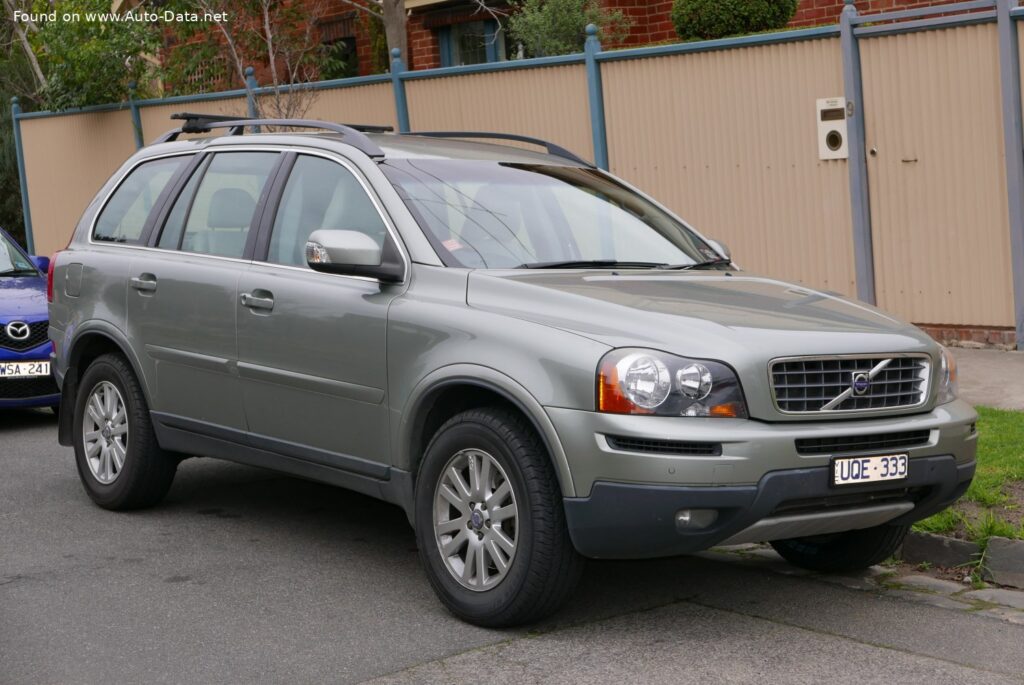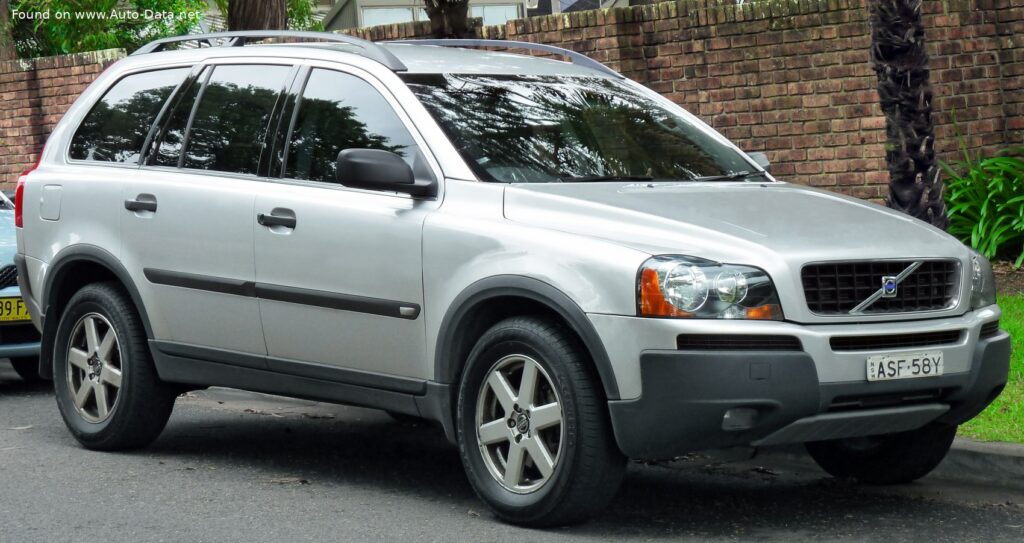
The Volvo XC90, launched in 2002, represented a pivotal moment for the Swedish automaker. It was Volvo’s first foray into the burgeoning luxury SUV segment, and quickly became a sales success, establishing a new benchmark for Scandinavian design and safety. The first generation, produced through 2014, offered a compelling blend of practicality, comfort, and all-weather capability. This article focuses on the early models, specifically those equipped with the 2.8-liter 24V inline-six engine producing 272 horsepower, manufactured between 2002 and 2006.
The Volvo XC90 2.8 24V: A Scandinavian SUV
The XC90 was designed to appeal to families seeking a safe, spacious, and refined vehicle. Unlike many SUVs of the time that were based on truck platforms, the XC90 utilized a modified version of Volvo’s P2 platform, shared with the S60 and S80 sedans. This unibody construction contributed to its car-like handling and ride quality. The 2.8-liter engine option, while not the most fuel-efficient, provided strong performance and a smooth driving experience. The XC90 quickly became a popular choice in North America and Europe, solidifying Volvo’s reputation for building durable and dependable vehicles.
Engine & Performance
The heart of the XC90 2.8 24V is its 2.8-liter inline-six cylinder engine, designated the B6294T. This engine features a sophisticated 24-valve dual overhead camshaft (DOHC) configuration and is equipped with a turbocharger and intercooler, boosting output to 272 horsepower at 5400 rpm and 380 Nm (280.27 lb.-ft.) of torque at 1800 rpm. This provides a good balance of power and responsiveness for everyday driving and highway cruising. The engine utilizes multi-port fuel injection for precise fuel delivery. The engine’s 8.5:1 compression ratio contributes to its reliability and ability to run on regular unleaded gasoline. Acceleration from 0 to 60 mph is achieved in approximately 8.8 seconds, while 0-100 km/h takes 9.3 seconds. The XC90’s top speed is electronically limited to 210 km/h (130.49 mph). The engine’s power-to-weight ratio is 7.7 kg/Hp, and the torque-to-weight ratio is 5.5 kg/Nm, contributing to its respectable performance.
Design & Features
The Volvo XC90 boasts a distinctive Scandinavian design aesthetic, characterized by clean lines, a robust stance, and a focus on functionality. Its five-door SUV body style offers ample space for passengers and cargo. The interior is designed with comfort and practicality in mind, featuring supportive seats and a well-organized dashboard. The XC90 seats five passengers as standard, with an optional seven-seat configuration available. Safety was a paramount concern in the XC90’s design. It incorporates a reinforced safety cage, side impact protection system (SIPS), whiplash protection system (WHIPS), and a comprehensive airbag system. Standard features included ABS (Anti-lock Braking System), hydraulic power steering, and a four-speed automatic transmission. The XC90’s all-wheel-drive system provides enhanced traction and stability in various weather conditions. Trunk space is generous, ranging from 249 liters (8.79 cu. ft.) with all seats in place to a substantial 2404 liters (84.9 cu. ft.) with the rear seats folded down.
Technical Specifications
| Brand | Volvo |
| Model | XC90 |
| Generation | XC90 |
| Type (Engine) | 2.8 24V (272 Hp) |
| Start of production | 2002 |
| End of production | 2006 |
| Powertrain Architecture | Internal Combustion engine |
| Body type | SUV |
| Seats | 5 |
| Doors | 5 |
| Fuel consumption (urban) | 18.5 l/100 km (12.7 US mpg) |
| Fuel consumption (extra urban) | 9.6 l/100 km (24.5 US mpg) |
| Fuel Type | Petrol (Gasoline) |
| Acceleration 0 – 100 km/h | 9.3 sec |
| Acceleration 0 – 62 mph | 9.3 sec |
| Acceleration 0 – 60 mph | 8.8 sec |
| Maximum speed | 210 km/h (130.49 mph) |
| Weight-to-power ratio | 7.7 kg/Hp |
| Weight-to-torque ratio | 5.5 kg/Nm |
| Power | 272 Hp @ 5400 rpm |
| Torque | 380 Nm @ 1800 rpm (280.27 lb.-ft. @ 1800 rpm) |
| Engine layout | Front, Transverse |
| Engine Model/Code | B6294T |
| Engine displacement | 2783 cm3 (169.83 cu. in.) |
| Number of cylinders | 6 |
| Engine configuration | Inline |
| Cylinder Bore | 81 mm (3.19 in.) |
| Piston Stroke | 90 mm (3.54 in.) |
| Compression ratio | 8.5:1 |
| Number of valves per cylinder | 4 |
| Fuel injection system | Multi-port manifold injection |
| Engine aspiration | Turbocharger, Intercooler |
| Valvetrain | DOHC |
| Engine oil capacity | 6.6 l (6.97 US qt | 5.81 UK qt) |
| Coolant | 10.5 l (11.1 US qt | 9.24 UK qt) |
| Kerb Weight | 2100 kg (4629.71 lbs.) |
| Max. weight | 2800 kg (6172.94 lbs.) |
| Max load | 700 kg (1543.24 lbs.) |
| Trunk (boot) space – minimum | 249 l (8.79 cu. ft.) |
| Trunk (boot) space – maximum | 2404 l (84.9 cu. ft.) |
| Fuel tank capacity | 72 l (19.02 US gal | 15.84 UK gal) |
| Length | 4800 mm (188.98 in.) |
| Width | 1890 mm (74.41 in.) |
| Height | 1740 mm (68.5 in.) |
| Wheelbase | 2860 mm (112.6 in.) |
| Front track | 1635 mm (64.37 in.) |
| Rear (Back) track | 1625 mm (63.98 in.) |
| Drive wheel | All wheel drive (4×4) |
| Number of gears and type of gearbox | 4 gears, automatic transmission |
| Front suspension | Coil spring |
| Rear suspension | Coil spring |
| Front brakes | Ventilated discs |
| Rear brakes | Disc |
| Assisting systems | ABS (Anti-lock braking system) |
| Steering type | Steering rack and pinion |
| Power steering | Hydraulic Steering |
| Tires size | 235/65 R17 |
| Wheel rims size | 17 |
The Volvo XC90 2.8 24V, while superseded by newer generations, remains a highly regarded SUV. Its combination of Scandinavian design, robust engineering, and focus on safety established it as a benchmark in its class and cemented Volvo’s position as a leader in the luxury SUV market. Its enduring popularity is a testament to its quality and practicality.