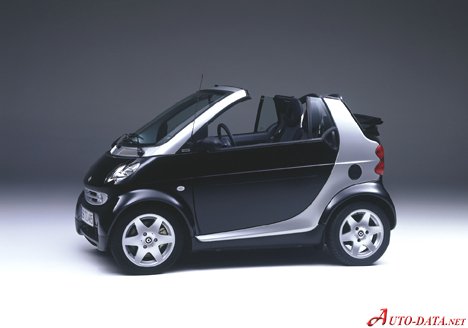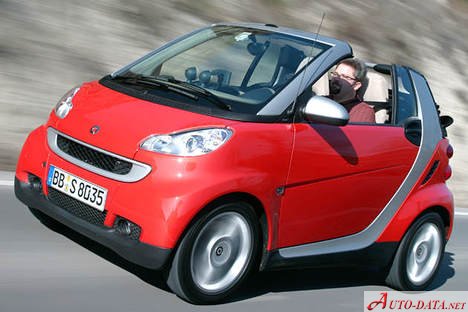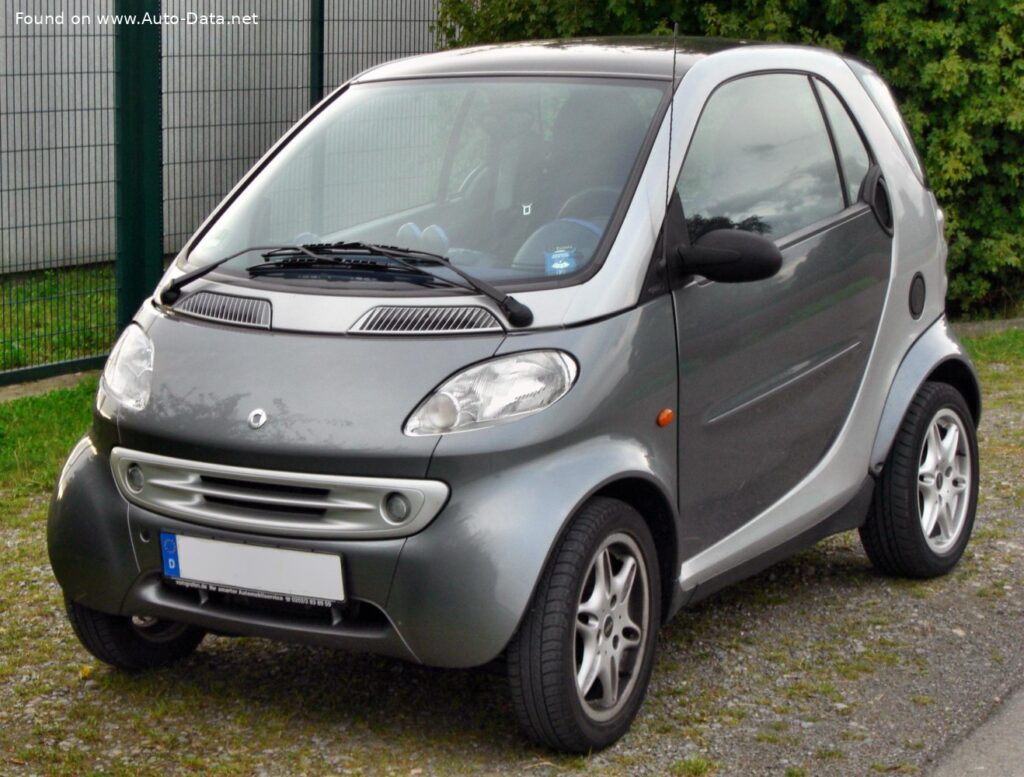
The Smart Fortwo Coupe (C450) 0.8d, produced between 1999 and 2006, represents the initial foray into the microcar segment by Smart, a brand then owned by Daimler-Benz. This diminutive coupe, primarily marketed in Europe, aimed to revolutionize urban transportation with its exceptionally small footprint and fuel-efficient diesel engine. While never officially sold in the United States during its original production run, the Fortwo gained notoriety for its unique design and parking convenience. The C450 generation laid the foundation for the Smart Fortwo’s enduring appeal as a city car.
Smart Fortwo Coupe (C450) 0.8d: A Detailed Overview
The Smart Fortwo, even in its first generation, was a radical departure from conventional automotive design. Conceived as a solution to urban congestion and parking challenges, the C450 prioritized compactness and efficiency. Its two-seater configuration and short wheelbase contributed to its maneuverability, making it ideally suited for navigating narrow city streets. The 0.8d variant, powered by a small-displacement diesel engine, further emphasized fuel economy, a key selling point in European markets where fuel costs are typically higher.
Engine & Performance
The heart of the Smart Fortwo Coupe (C450) 0.8d is a 799 cc inline-three cylinder diesel engine, designated OM 660.940. This engine, despite its small size, utilizes a turbocharger and a diesel commonrail fuel injection system to produce 41 horsepower at 4200 rpm and 100 Nm (73.76 lb.-ft.) of torque at 1800 rpm. The power-to-liter ratio is a respectable 51.3 hp/l. While acceleration is not a strong suit – taking 19.8 seconds to reach 100 km/h (62 mph) and 18.8 seconds to 60 mph – the engine prioritizes fuel efficiency. Combined fuel consumption is rated at 3.8 l/100 km (61.9 US mpg or 74.3 UK mpg), making it exceptionally economical for its time. The engine is transversely mounted at the rear of the vehicle, driving the rear wheels.
Design & Features
The Smart Fortwo Coupe (C450) is instantly recognizable by its extremely short length of 2500 mm (98.43 in) and narrow width of 1515 mm (59.65 in). The three-door coupe body style provides access to the two seats. The design, while unconventional, was intended to maximize interior space within a minimal exterior footprint. Safety features for the era included an Anti-lock Braking System (ABS), a notable inclusion for a vehicle of this size. The Fortwo’s structural design incorporated a high-strength steel safety cell, intended to protect occupants in the event of a collision. Practicality was also considered, with a fuel tank capacity of 33 liters (8.72 US gal) and a maximum load capacity of 185 kg (407.86 lbs). The vehicle’s kerb weight is 805 kg (1774.72 lbs), contributing to its relatively nimble handling.
Technical Specifications
| Brand | Smart |
| Model | Fortwo |
| Generation | Fortwo Coupe (C450) |
| Type (Engine) | 0.8d (41 Hp) |
| Start of production | 1999 |
| End of production | 2006 |
| Powertrain Architecture | Internal Combustion engine |
| Body type | Coupe |
| Seats | 2 |
| Doors | 3 |
| Fuel consumption (urban) | 4.5 l/100 km (52.3 US mpg, 62.8 UK mpg, 22.2 km/l) |
| Fuel consumption (extra urban) | 3.6 l/100 km (65.3 US mpg, 78.5 UK mpg, 27.8 km/l) |
| Fuel consumption (combined) | 3.8 l/100 km (61.9 US mpg, 74.3 UK mpg, 26.3 km/l) |
| Fuel Type | Diesel |
| Acceleration 0 – 100 km/h | 19.8 sec |
| Acceleration 0 – 62 mph | 19.8 sec |
| Acceleration 0 – 60 mph | 18.8 sec |
| Maximum speed | 135 km/h (83.89 mph) |
| Weight-to-power ratio | 19.6 kg/Hp, 50.9 Hp/tonne |
| Weight-to-torque ratio | 8.1 kg/Nm, 124.2 Nm/tonne |
| Power | 41 Hp @ 4200 rpm |
| Torque | 100 Nm @ 1800 rpm (73.76 lb.-ft. @ 1800 rpm) |
| Engine layout | Rear, Transverse |
| Engine Model/Code | OM 660.940 |
| Engine displacement | 799 cm3 (48.76 cu. in.) |
| Number of cylinders | 3 |
| Engine configuration | Inline |
| Cylinder Bore | 65.5 mm (2.58 in.) |
| Piston Stroke | 79 mm (3.11 in.) |
| Compression ratio | 18.5:1 |
| Number of valves per cylinder | 2 |
| Fuel injection system | Diesel Commonrail |
| Engine aspiration | Turbocharger |
| Valvetrain | OHC |
| Engine oil capacity | 2.7 l (2.85 US qt | 2.38 UK qt) |
| Coolant | 4.5 l (4.76 US qt | 3.96 UK qt) |
| Kerb Weight | 805 kg (1774.72 lbs.) |
| Max. weight | 990 kg (2182.58 lbs.) |
| Max load | 185 kg (407.86 lbs.) |
| Fuel tank capacity | 33 l (8.72 US gal | 7.26 UK gal) |
| Length | 2500 mm (98.43 in.) |
| Width | 1515 mm (59.65 in.) |
| Height | 1549 mm (60.98 in.) |
| Wheelbase | 1812 mm (71.34 in.) |
| Drivetrain Architecture | ICE, Rear wheel drive |
| Drive wheel | Rear wheel drive |
| Number of gears and type of gearbox | 6 gears, automatic transmission |
| Front brakes | Disc |
| Rear brakes | Disc |
| Assisting systems | ABS (Anti-lock braking system) |
| Tires size | 145/65 R15; 175/55 R15 |
The Smart Fortwo Coupe (C450) 0.8d, while not a performance vehicle, successfully carved out a niche for itself as a practical and economical city car. Its innovative design and focus on efficiency paved the way for subsequent generations of the Fortwo, solidifying its position as a unique and recognizable vehicle in the automotive landscape. Although not initially available in the US market, its influence on urban mobility concepts is undeniable.