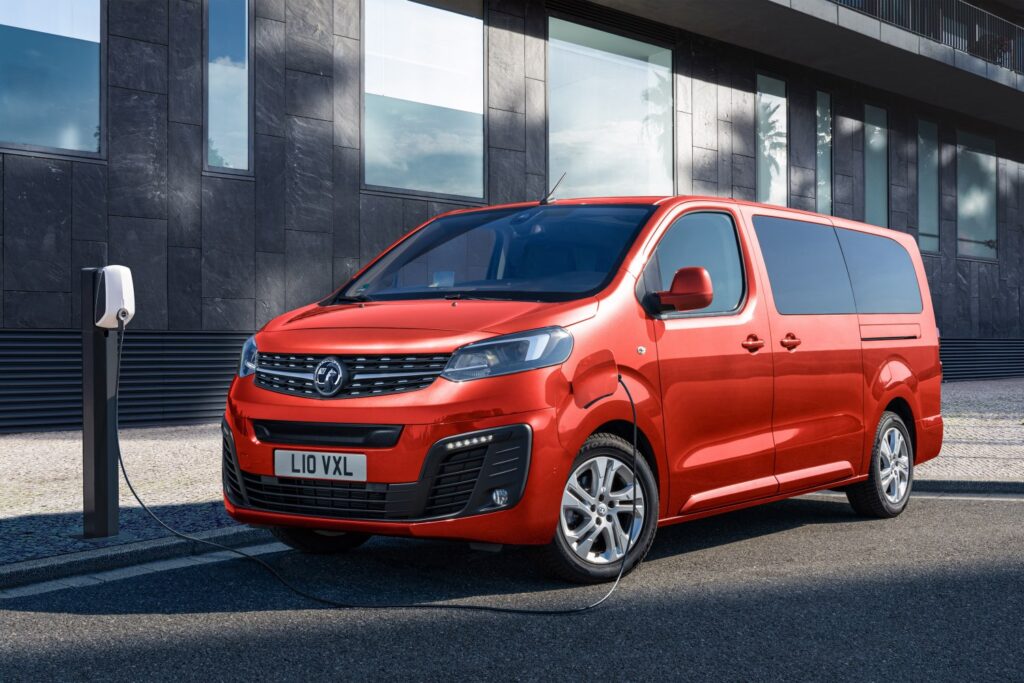
The Vauxhall Vivaro-e Life L is an all-electric, front-wheel-drive minivan introduced in 2020. Part of the broader Vivaro range, it represents Vauxhall’s entry into the electric multi-purpose vehicle (MPV) segment. While Vauxhall is a British brand, the Vivaro platform is closely related to the Citroën SpaceTourer and Peugeot Traveller, developed under the Stellantis umbrella. The “e-Life” designation signifies the electric powertrain variant, aimed at providing a practical and environmentally conscious transportation solution for families and businesses. This model is primarily marketed in Europe, where MPVs and vans adapted for passenger use remain popular, offering a versatile alternative to traditional SUVs.
Vauxhall Vivaro-e Life L: An Overview
The Vivaro-e Life L, specifically equipped with the 50 kWh battery pack, delivers a balance of range and affordability within the electric Vivaro lineup. It caters to buyers seeking a spacious, adaptable vehicle for carrying passengers or cargo, with the added benefit of zero tailpipe emissions. The ‘L’ designation indicates a long wheelbase version, maximizing interior space. The vehicle’s design prioritizes practicality and functionality, making it suitable for a variety of uses, from family transport to accessible passenger services.
Engine & Performance
The Vivaro-e Life L utilizes a fully electric powertrain, eliminating the need for a traditional internal combustion engine. It features a single electric motor, positioned transversely at the front axle, producing 136 horsepower (Hp) and 260 Nm (191.77 lb.-ft.) of torque. This electric motor drives the front wheels through a single-speed automatic transmission. Acceleration from 0 to 60 mph is achieved in approximately 12.4 seconds, while 0-62 mph and 0-100 km/h take 13.1 seconds. The vehicle has a maximum speed of 130 km/h (80.78 mph). The weight-to-power ratio is 21.8 kg/Hp, and the weight-to-torque ratio is 11.4 kg/Nm. The 50 kWh lithium-ion battery, located under the floor, provides a WLTP-certified all-electric range of between 292.9 and 346 kilometers (182 to 214.99 miles). Energy consumption is rated at 24.3-26.6 kWh per 100 kilometers (39.11 – 42.81 kWh per 100 miles), translating to 86-79 MPGe and 4.1-3.8 km/kWh (2.6-2.3 mi/kWh).
Design & Features
The Vauxhall Vivaro-e Life L is a five-door minivan, typically configured to accommodate between eight and nine passengers. Its body style is characterized by a functional, van-derived silhouette, prioritizing interior space and practicality. The long wheelbase contributes to a generous interior, offering ample headroom and legroom for all occupants. The vehicle’s design emphasizes usability, with features such as sliding rear doors for easy access, and a configurable interior layout. Safety features include ABS (Anti-lock Braking System) and a robust braking system with ventilated discs at the front and discs at the rear. The interior is designed with durability and ease of cleaning in mind, making it suitable for commercial or family use. The vehicle’s dimensions are: length 5306 mm (208.9 in.), width 1920 mm (75.59 in.), height 1935 mm (76.18 in.), and wheelbase 3275 mm (128.94 in.).
Space, Volume and Weights
The Vivaro-e Life L excels in providing substantial interior space. The kerb weight ranges from 2965 to 3030 kg (6536.71 to 6680.01 lbs.). Trunk space is highly versatile, offering a minimum of 3500 liters (123.6 cu. ft.) and expanding to a maximum of 4500 liters (158.92 cu. ft.) with rear seats folded or removed. This makes it ideal for transporting large items or accommodating passengers with significant luggage. The front overhang measures 881 mm (34.69 in.), while the rear overhang is 1153 mm (45.39 in.).
Technical Specifications
| Brand | Vauxhall |
| Model | Vivaro |
| Generation | Vivaro-e Life L |
| Type (Engine) | 50 kWh (136 Hp) Automatic |
| Start of production | 2020 |
| Powertrain Architecture | BEV (Electric Vehicle) |
| Body type | Minivan |
| Seats | 8-9 |
| Doors | 5 |
| Fuel Type | Electricity |
| Acceleration 0 – 100 km/h | 13.1 sec |
| Acceleration 0 – 62 mph | 13.1 sec |
| Acceleration 0 – 60 mph | 12.4 sec |
| Maximum speed | 130 km/h (80.78 mph) |
| Weight-to-power ratio | 21.8 kg/Hp |
| Weight-to-torque ratio | 11.4 kg/Nm |
| Gross battery capacity | 50 kWh |
| Battery technology | Lithium-ion (Li-Ion) |
| Battery location | Below the floor |
| All-electric range (WLTP) | 292.9-346 km (182 – 214.99 mi) |
| Average Energy consumption (WLTP) | 24.3-26.6 kWh/100 km (39.11 – 42.81 kWh/100 mi) |
| Electric motor power | 136 Hp |
| Electric motor Torque | 260 Nm (191.77 lb.-ft.) |
| Electric motor location | Front axle, Transverse |
| System power | 136 Hp |
| System torque | 260 Nm (191.77 lb.-ft.) |
| Kerb Weight | 2965-3030 kg (6536.71 – 6680.01 lbs.) |
| Trunk (boot) space – minimum | 3500 l (123.6 cu. ft.) |
| Trunk (boot) space – maximum | 4500 l (158.92 cu. ft.) |
| Length | 5306 mm (208.9 in.) |
| Width | 1920 mm (75.59 in.) |
| Width including mirrors | 2204 mm (86.77 in.) |
| Height | 1935 mm (76.18 in.) |
| Wheelbase | 3275 mm (128.94 in.) |
| Front overhang | 881 mm (34.69 in.) |
| Rear overhang | 1153 mm (45.39 in.) |
| Drivetrain Architecture | One electric motor drives the front wheels. |
| Drive wheel | Front wheel drive |
| Number of gears and type of gearbox | 1 gears, automatic transmission |
| Front brakes | Ventilated discs |
| Rear brakes | Disc |
| Assisting systems | ABS (Anti-lock braking system) |
| Steering type | Steering rack and pinion |
| Power steering | Electric Steering |
| Tires size | 215/65 R16; 215/60 R17 |