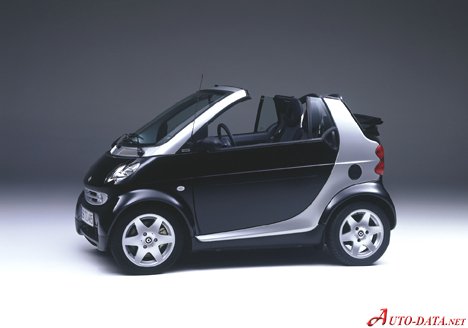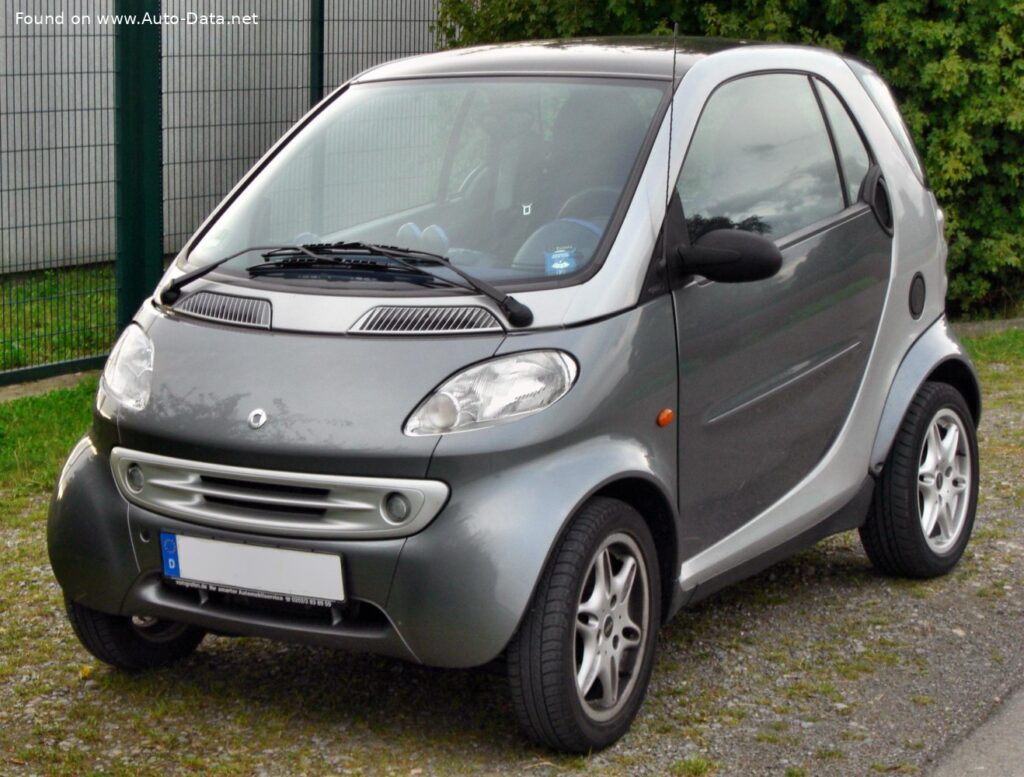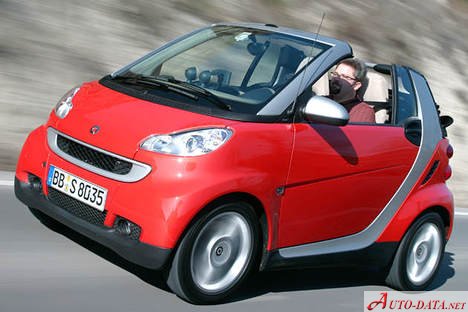
The Smart Fortwo II Cabrio (A451) 0.8d, produced from 2007 to 2014, represents a unique offering in the microcar segment. Primarily sold in Europe, the Fortwo aimed to address urban mobility challenges with its exceptionally small size and fuel efficiency. While not officially sold in the United States during this generation, its innovative design and focus on practicality garnered international attention. This particular variant, powered by a 0.8-liter diesel engine producing 45 horsepower, was designed for city driving, prioritizing economy and maneuverability over outright performance. The A451 generation marked a significant evolution for the Fortwo, building upon the success of the original City-Coupe and offering an open-air experience with the Cabriolet version.
Smart Fortwo II Cabrio (A451) 0.8d: An Overview
The Smart Fortwo II, and specifically the Cabriolet version, was conceived as a solution to the increasing congestion and parking difficulties in European cities. Its diminutive footprint allowed for easy navigation through narrow streets and effortless parking in tight spaces. The A451 generation introduced a redesigned exterior and interior, along with improved safety features and a more refined driving experience compared to its predecessor. The 0.8d model, with its turbocharged diesel engine and automatic transmission, was a popular choice for drivers seeking a fuel-efficient and convenient urban runabout. The Cabriolet top provided an enjoyable open-air driving experience, further enhancing the car’s appeal in warmer climates.
Engine & Performance
The heart of the Smart Fortwo II Cabrio 0.8d is a 799cc inline three-cylinder diesel engine, designated OM 660.950. This compact powerplant utilizes a turbocharger with an intercooler to boost power output to 45 horsepower. Despite its modest output, the engine delivers a respectable 56.3 horsepower per liter, showcasing the benefits of forced induction. Power is delivered to the rear wheels via a five-speed automatic transmission. While acceleration is not a priority, the Fortwo 0.8d offers sufficient power for navigating city streets and maintaining highway speeds, with a maximum speed of 83.89 mph (135 km/h). A key strength of this engine is its exceptional fuel economy. Combined fuel consumption is rated at 3.4 liters per 100 kilometers (69.2 US mpg or 83.1 UK mpg), making it one of the most fuel-efficient vehicles available during its production run. The weight-to-power ratio of 17.3 kg/Hp further contributes to its nimble handling and efficiency.
Design & Features
The Smart Fortwo II Cabrio is instantly recognizable by its incredibly compact dimensions and unique proportions. As a two-door, two-seater Cabriolet, it offers an open-air driving experience with its retractable soft top. The A451 generation featured a more rounded and contemporary design compared to the original City-Coupe. The interior, while minimalist, was designed for functionality and ease of use. Safety features, while limited by the car’s size, included ABS (Anti-lock Braking System) and a reinforced safety cell designed to protect occupants in the event of a collision. The trunk space, while modest, offers 7.77 to 12.01 cubic feet of storage depending on the configuration. The rear engine layout contributes to the car’s unique handling characteristics and frees up space in the front for passengers. The Fortwo’s small turning radius makes it exceptionally maneuverable in tight urban environments.
Technical Specifications
| Brand | Smart |
| Model | Fortwo |
| Generation | Fortwo II cabrio (A451) |
| Type (Engine) | 0.8d (45 Hp) Automatic |
| Start of production | 2007 |
| End of production | 2014 |
| Powertrain Architecture | Internal Combustion engine |
| Body type | Cabriolet |
| Seats | 2 |
| Doors | 2 |
| Fuel consumption (urban) | 3.5 l/100 km (67.2 US mpg, 80.7 UK mpg, 28.6 km/l) |
| Fuel consumption (extra urban) | 3.3 l/100 km (71.3 US mpg, 85.6 UK mpg, 30.3 km/l) |
| Fuel consumption (combined) | 3.4 l/100 km (69.2 US mpg, 83.1 UK mpg, 29.4 km/l) |
| Fuel Type | Diesel |
| Maximum speed | 135 km/h (83.89 mph) |
| Emission standard | Euro 4 |
| Weight-to-power ratio | 17.3 kg/Hp |
| Power | 45 Hp |
| Power per litre | 56.3 Hp/l |
| Engine layout | Rear, Transverse |
| Engine Model/Code | OM 660.950 |
| Engine displacement | 799 cm3 (48.76 cu. in.) |
| Number of cylinders | 3 |
| Engine configuration | Inline |
| Cylinder Bore | 65.5 mm (2.58 in.) |
| Piston Stroke | 79 mm (3.11 in.) |
| Compression ratio | 18.5:1 |
| Number of valves per cylinder | 2 |
| Fuel injection system | Diesel Commonrail |
| Engine aspiration | Turbocharger, Intercooler |
| Valvetrain | OHC |
| Engine oil capacity | 2.7 l (2.85 US qt | 2.38 UK qt) |
| Kerb Weight | 780 kg (1719.61 lbs.) |
| Max. weight | 1050 kg (2314.85 lbs.) |
| Max load | 270 kg (595.25 lbs.) |
| Trunk (boot) space – minimum | 220 l (7.77 cu. ft.) |
| Trunk (boot) space – maximum | 340 l (12.01 cu. ft.) |
| Fuel tank capacity | 33 l (8.72 US gal | 7.26 UK gal) |
| Length | 2695 mm (106.1 in.) |
| Width | 1559 mm (61.38 in.) |
| Height | 1542 mm (60.71 in.) |
| Wheelbase | 1867 mm (73.5 in.) |
| Drivetrain Architecture | Rear wheel drive |
| Number of gears and type of gearbox | 5 gears, automatic transmission |
| Front brakes | Disc |
| Rear brakes | Disc |
| Assisting systems | ABS (Anti-lock braking system) |
| Tires size | 155/60 R15; 175/55 R15 |
| Wheel rims size | 15 |
In conclusion, the Smart Fortwo II Cabrio 0.8d (A451) represents a niche vehicle designed for a specific purpose: providing efficient and convenient urban transportation. While its limited power and size may not appeal to all drivers, its fuel economy, maneuverability, and open-air driving experience made it a popular choice for city dwellers, particularly in Europe. Its innovative design and focus on practicality continue to influence the microcar segment today.