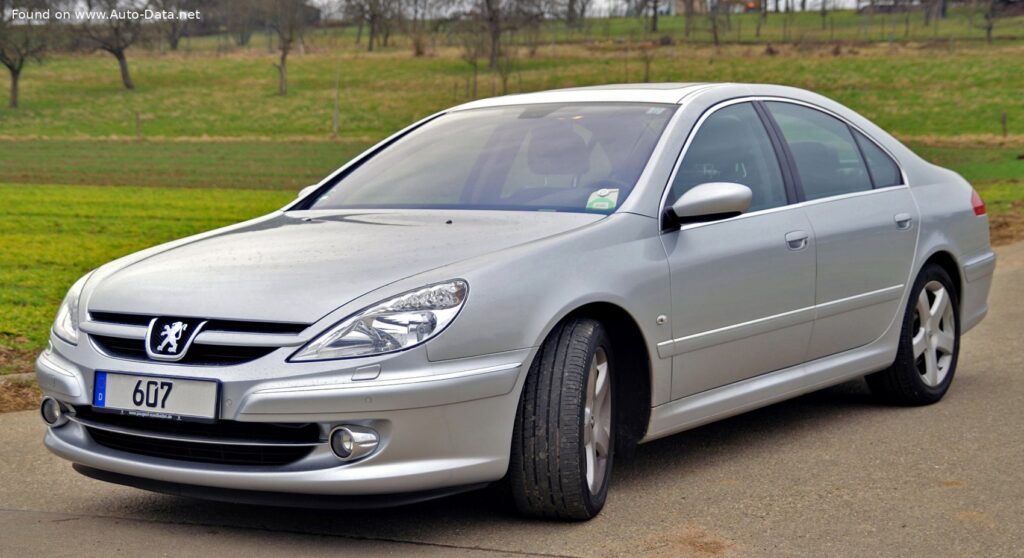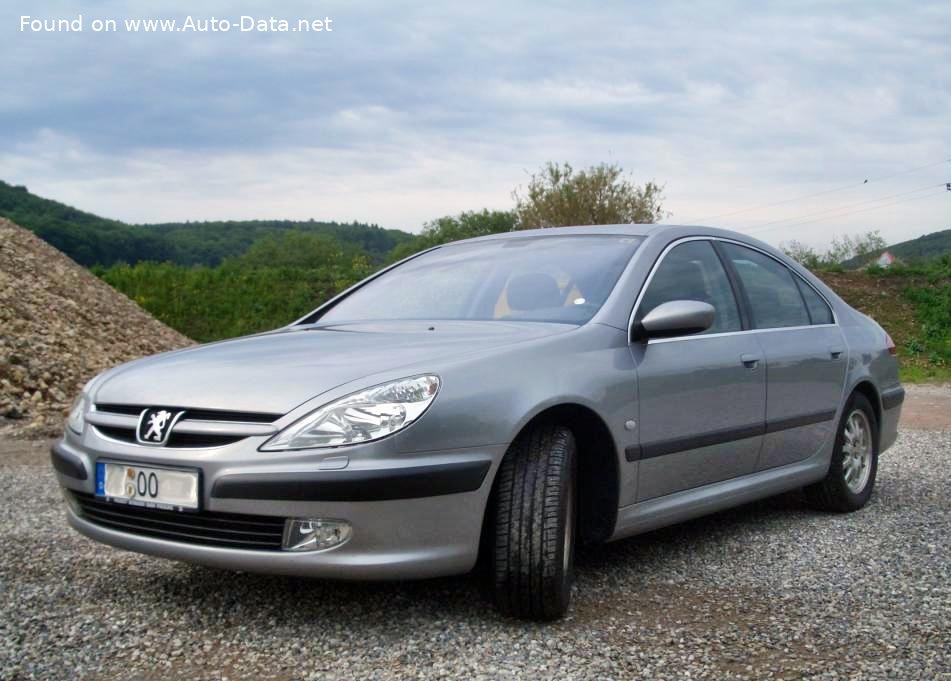
The Peugeot 607 3.0 V6 24V, produced between 1999 and 2004, represents Peugeot’s ambitious entry into the executive car segment. Designed to compete with established German rivals like the BMW 5 Series and Mercedes-Benz E-Class, the 607 aimed to offer a blend of French style, comfort, and technology. While not a major sales success in all markets, particularly outside of Europe, it showcased Peugeot’s engineering capabilities and commitment to producing a sophisticated, large sedan. The 607 was positioned as a flagship model, offering a more premium experience than Peugeot’s smaller offerings.
Peugeot 607: An Overview
The 607 was the successor to the Peugeot 604, and it represented a significant step forward in terms of design, technology, and refinement. It was available with a range of engines, including petrol (gasoline) and diesel options, catering to different market preferences. The 3.0 V6 24V variant, detailed here, was a popular choice for those seeking a balance of performance and fuel efficiency. The car’s design was distinctly French, characterized by flowing lines and a focus on interior space and comfort. It was a vehicle intended to convey a sense of prestige and sophistication.
Engine & Performance
The heart of the Peugeot 607 3.0 V6 24V is a naturally aspirated 2.9-liter (2946 cm3) V6 engine, designated XFX ES9J4S. This engine produces 207 horsepower (Hp) at 6000 rpm and 285 Newton-meters (210.21 lb.-ft.) of torque at 3750 rpm. The engine features a double overhead camshaft (DOHC) valvetrain with four valves per cylinder, and utilizes multi-port fuel injection. This configuration delivers a relatively smooth and refined power delivery, suitable for long-distance cruising. Power per liter is rated at 70.3 Hp/l.
Power is transmitted to the front wheels via a four-speed automatic transmission. This drivetrain configuration allows for a 0-100 km/h (0-62 mph) acceleration time of 9.9 seconds, and a 0-60 mph time of approximately 9.4 seconds. The car boasts a maximum speed of 232 km/h (144.16 mph). The weight-to-power ratio is 7.9 kg/Hp, and the weight-to-torque ratio is 5.7 kg/Nm, indicating a reasonable level of performance for its size and class. Fuel economy is rated at 10.2 l/100 km (23.1 US mpg) combined, with 14.4 l/100 km (16.3 US mpg) in urban conditions and 7.8 l/100 km (30.2 US mpg) on the extra-urban cycle.
Design & Features
The Peugeot 607 is a four-door sedan with a spacious interior designed to accommodate five passengers comfortably. Its exterior styling is characterized by a long wheelbase (2800 mm / 110.24 in) and a relatively low-slung profile. The car’s dimensions are 4877 mm (192.01 in) in length, 1800 mm (70.87 in) in width, and 1437 mm (56.57 in) in height. The trunk (boot) offers a minimum capacity of 481 liters (16.99 cu. ft.).
The 607 was equipped with a range of features aimed at enhancing comfort and safety. Standard equipment included ABS (Anti-lock Braking System), hydraulic power steering, and ventilated disc brakes on the front wheels, with disc brakes on the rear. The suspension system utilizes a wishbone configuration at the front and a double wishbone setup at the rear, providing a comfortable ride quality. The car rides on 225/50 ZR17 tires mounted on 17-inch wheel rims. The interior was designed with a focus on ergonomics and aesthetics, featuring high-quality materials and a user-friendly layout. While not groundbreaking by modern standards, the 607 offered a competitive level of equipment for its time.
Technical Specifications
| Brand | Peugeot |
| Model | 607 |
| Generation | 607 |
| Type (Engine) | 3.0 V6 24V (207 Hp) Automatic |
| Start of production | 1999 |
| End of production | 2004 |
| Powertrain Architecture | Internal Combustion engine |
| Body type | Sedan |
| Seats | 5 |
| Doors | 4 |
| Fuel consumption (urban) | 14.4 l/100 km (16.3 US mpg) |
| Fuel consumption (extra urban) | 7.8 l/100 km (30.2 US mpg) |
| Fuel consumption (combined) | 10.2 l/100 km (23.1 US mpg) |
| Fuel Type | Petrol (Gasoline) |
| Acceleration 0 – 100 km/h | 9.9 sec |
| Acceleration 0 – 62 mph | 9.9 sec |
| Acceleration 0 – 60 mph | 9.4 sec |
| Maximum speed | 232 km/h (144.16 mph) |
| Weight-to-power ratio | 7.9 kg/Hp |
| Weight-to-torque ratio | 5.7 kg/Nm |
| Power | 207 Hp @ 6000 rpm |
| Torque | 285 Nm @ 3750 rpm (210.21 lb.-ft. @ 3750 rpm) |
| Engine layout | Front, Transverse |
| Engine Model/Code | XFX ES9J4S |
| Engine displacement | 2946 cm3 (179.78 cu. in.) |
| Number of cylinders | 6 |
| Engine configuration | V-engine |
| Cylinder Bore | 87 mm (3.43 in.) |
| Piston Stroke | 82.6 mm (3.25 in.) |
| Compression ratio | 10.9:1 |
| Number of valves per cylinder | 4 |
| Fuel injection system | Multi-port manifold injection |
| Engine aspiration | Naturally aspirated |
| Valvetrain | DOHC |
| Engine oil capacity | 4.5 l (4.76 US qt | 3.96 UK qt) |
| Coolant capacity | 10.1 l (10.67 US qt | 8.89 UK qt) |
| Kerb Weight | 1635 kg (3604.56 lbs.) |
| Max. weight | 2140 kg (4717.89 lbs.) |
| Max load | 505 kg (1113.33 lbs.) |
| Trunk (boot) space (minimum) | 481 l (16.99 cu. ft.) |
| Fuel tank capacity | 80 l (21.13 US gal | 17.6 UK gal) |
| Length | 4877 mm (192.01 in.) |
| Width | 1800 mm (70.87 in.) |
| Height | 1437 mm (56.57 in.) |
| Wheelbase | 2800 mm (110.24 in.) |
| Front track | 1539 mm (60.59 in.) |
| Rear track | 1537 mm (60.51 in.) |
| Drivetrain Architecture | Front wheel drive |
| Number of gears | 4 |
| Gearbox type | Automatic transmission |
| Front suspension | Wishbone |
| Rear suspension | Double wishbone |
| Front brakes | Ventilated discs |
| Rear brakes | Disc |
| Assisting systems | ABS (Anti-lock braking system) |
| Steering type | Steering rack and pinion |
| Power steering | Hydraulic |
| Tires size | 225/50 ZR17 |
| Wheel rims size | 17 |