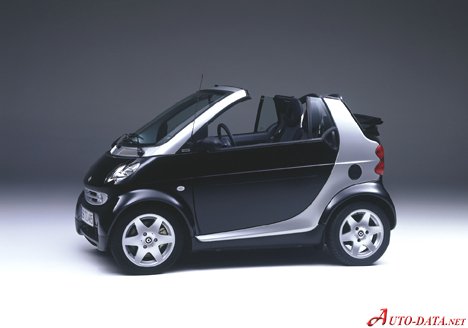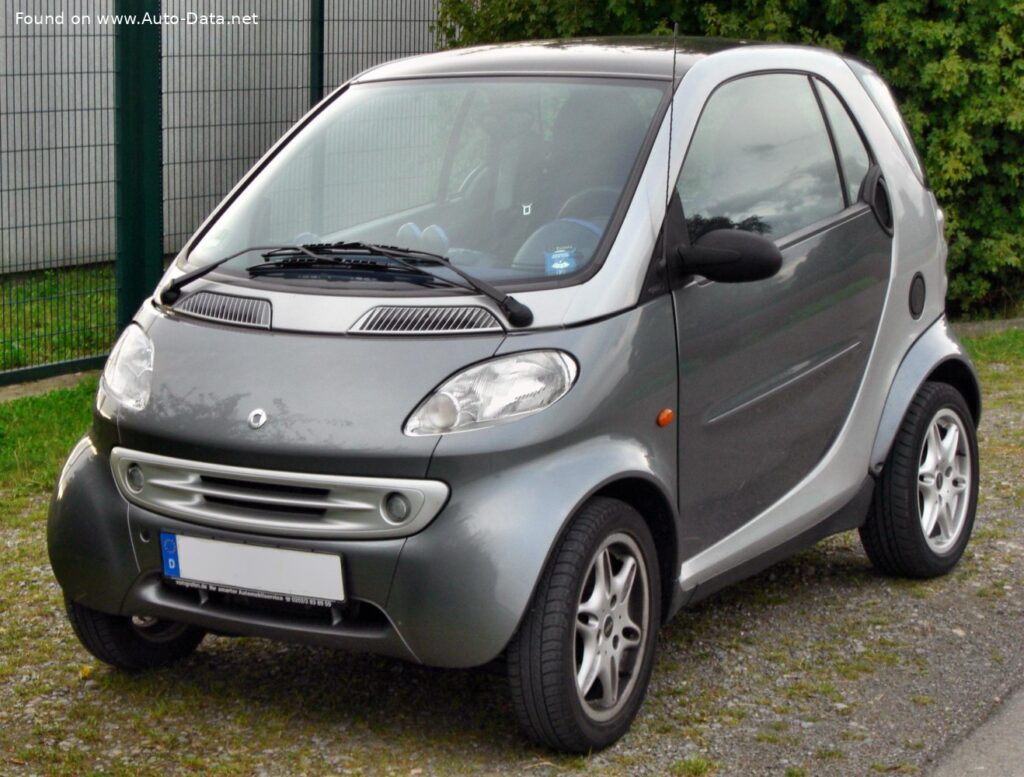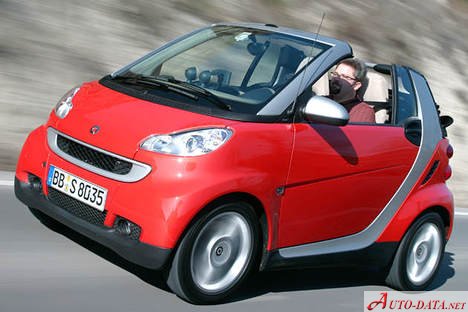
The Smart Fortwo II Cabrio (A451) Brabus 1.0i turbo, produced from 2007 to 2014, represents a unique offering in the microcar segment. While not officially sold in the United States during its production run, the Fortwo gained notoriety for its diminutive size and innovative design, particularly in European urban centers. The Brabus variant, specifically, was the performance-oriented version of the second-generation Fortwo Cabrio, offering increased power and a sportier driving experience compared to the standard models. This vehicle catered to a niche market seeking a highly maneuverable and fuel-efficient city car with a touch of exclusivity.
Smart Fortwo II Cabrio (A451) Brabus: An Overview
The Smart Fortwo II, launched in 2007, was a significant evolution of the original Fortwo City-Coupe. The Cabrio version added open-air driving enjoyment to the package, appealing to drivers who prioritized style and convenience in urban environments. The Brabus-tuned version elevated the Fortwo’s performance credentials, making it a surprisingly capable and engaging vehicle despite its small stature. It was primarily marketed in Europe, where its compact dimensions and low fuel consumption were highly valued. The Fortwo’s unique design and engineering made it a cultural icon, challenging conventional automotive norms.
Engine & Performance
The heart of the Smart Fortwo II Cabrio Brabus is a 999cc, three-cylinder, turbocharged gasoline engine, designated M 132.930. This engine produces 98 horsepower at 5500 rpm and 140 Nm (103.26 lb.-ft.) of torque at 3500 rpm. The turbocharger and intercooler significantly enhance the engine’s output compared to the naturally aspirated versions. Power is delivered to the rear wheels via a five-speed automatic transmission. This rear-wheel-drive configuration, unusual for a vehicle of this size, contributes to a more engaging driving experience. Acceleration from 0 to 100 km/h (0-62 mph) takes 9.9 seconds, while 0 to 60 mph is achieved in a calculated 9.4 seconds. The top speed is electronically limited to 155 km/h (96.31 mph). The engine’s power-to-weight ratio of 8 kg/Hp and torque-to-weight ratio of 5.6 kg/Nm contribute to its surprisingly lively performance.
Design & Features
The Smart Fortwo II Cabrio is instantly recognizable for its incredibly compact dimensions. Measuring 2695 mm (106.1 in) in length and 1559 mm (61.38 in) in width, it’s designed for navigating congested city streets and parking in tight spaces. The Cabrio version features a retractable fabric roof, providing open-air driving pleasure. The Brabus variant distinguishes itself with unique styling cues, including a more aggressive front bumper, side skirts, a rear diffuser, and Brabus-specific alloy wheels (typically 17-inch). Inside, the Brabus model often featured sport seats, a Brabus steering wheel, and aluminum pedal trim. Safety features included ABS (Anti-lock Braking System) as standard. The trunk space, while limited, offers 220-340 liters (7.77-12.01 cu. ft.) of storage depending on the roof position. The vehicle’s small size and light weight contribute to its fuel efficiency, with combined fuel consumption rated at 5.2 l/100 km (45.2 US mpg, 54.3 UK mpg).
Technical Specifications
| Brand | Smart |
| Model | Fortwo |
| Generation | Fortwo II cabrio (A451) |
| Type (Engine) | Brabus 1.0i turbo (98 Hp) |
| Start of production | 2007 |
| End of production | 2014 |
| Powertrain Architecture | Internal Combustion engine |
| Body type | Cabriolet |
| Seats | 2 |
| Doors | 2 |
| Fuel consumption (urban) | 6.5 l/100 km (36.2 US mpg, 43.5 UK mpg) |
| Fuel consumption (extra urban) | 4.4 l/100 km (53.5 US mpg, 64.2 UK mpg) |
| Fuel consumption (combined) | 5.2 l/100 km (45.2 US mpg, 54.3 UK mpg) |
| Fuel Type | Petrol (Gasoline) |
| Acceleration 0 – 100 km/h | 9.9 sec |
| Acceleration 0 – 62 mph | 9.9 sec |
| Acceleration 0 – 60 mph | 9.4 sec |
| Maximum speed | 155 km/h (96.31 mph) |
| Emission standard | Euro 4 |
| Weight-to-power ratio | 8 kg/Hp |
| Weight-to-torque ratio | 5.6 kg/Nm |
| Power | 98 Hp @ 5500 rpm |
| Torque | 140 Nm @ 3500 rpm (103.26 lb.-ft. @ 3500 rpm) |
| Engine layout | Rear, Longitudinal |
| Engine Model/Code | M 132.930 |
| Engine displacement | 999 cm3 (60.96 cu. in.) |
| Number of cylinders | 3 |
| Number of valves per cylinder | 4 |
| Fuel injection system | Multi-port manifold injection |
| Engine aspiration | Turbocharger, Intercooler |
| Engine oil capacity | 3.7 l (3.91 US qt | 3.26 UK qt) |
| Kerb Weight | 780 kg (1719.61 lbs.) |
| Max. weight | 1050 kg (2314.85 lbs.) |
| Max load | 270 kg (595.25 lbs.) |
| Trunk (boot) space – minimum | 220 l (7.77 cu. ft.) |
| Trunk (boot) space – maximum | 340 l (12.01 cu. ft.) |
| Fuel tank capacity | 33 l (8.72 US gal | 7.26 UK gal) |
| Length | 2695 mm (106.1 in.) |
| Width | 1559 mm (61.38 in.) |
| Height | 1542 mm (60.71 in.) |
| Wheelbase | 1867 mm (73.5 in.) |
| Drivetrain Architecture | Rear wheel drive |
| Number of gears and type of gearbox | 5 gears, automatic transmission |
| Front brakes | Disc |
| Rear brakes | Disc |
| Assisting systems | ABS (Anti-lock braking system) |
| Tires size | 175/50R16V; 225/35 R17 |
The Smart Fortwo II Cabrio Brabus 1.0i turbo remains a distinctive and intriguing vehicle. Its unique combination of compact size, rear-wheel drive, and turbocharged performance made it a standout in the microcar segment, particularly in Europe. While never officially available in the US market, it continues to attract attention for its innovative design and unconventional approach to urban mobility.