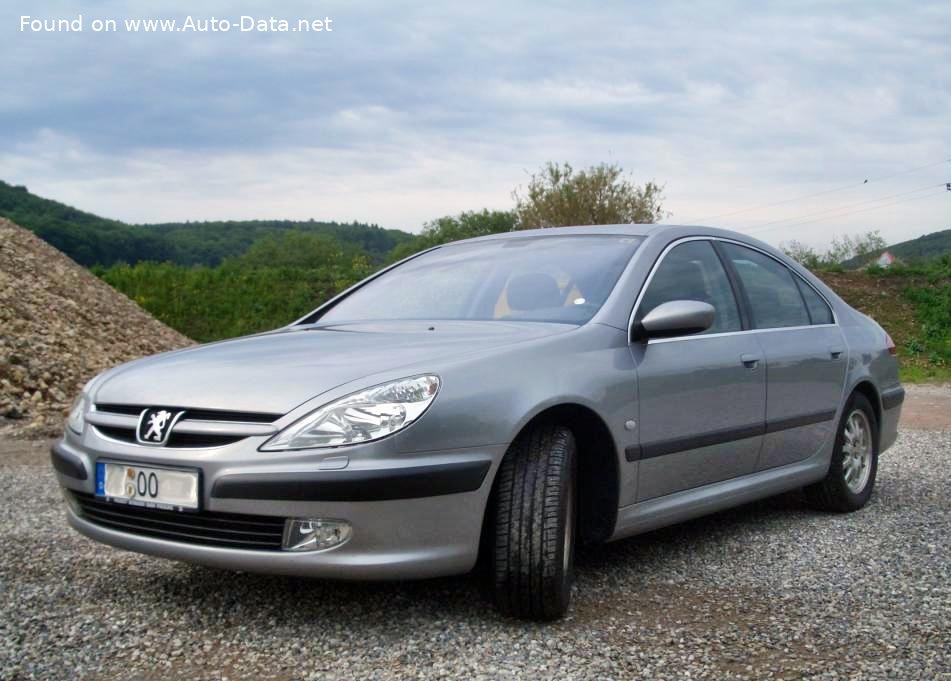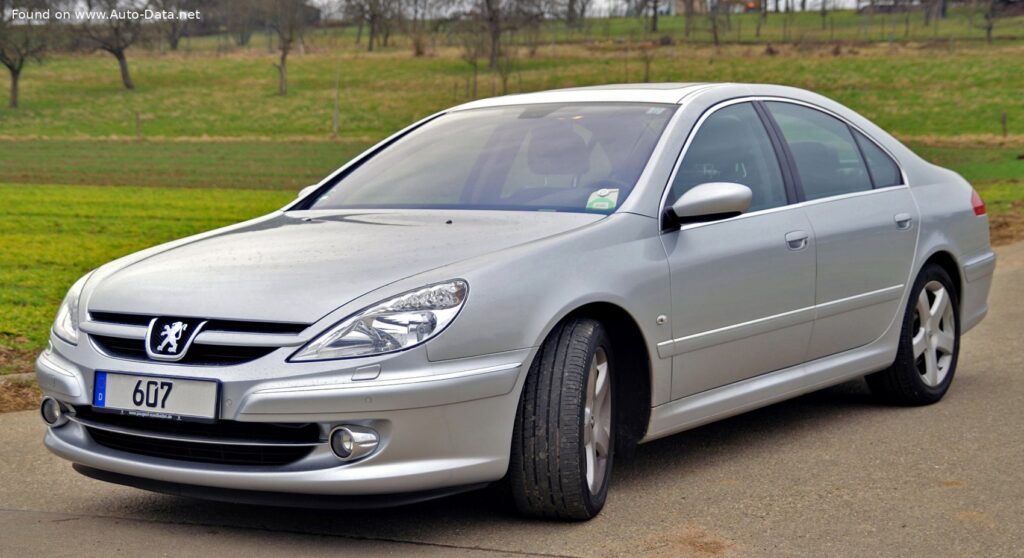
The Peugeot 607, specifically the Phase II model produced from 2004 to 2005, represents the French manufacturer’s entry into the executive car segment. Positioned as a competitor to vehicles like the Ford Mondeo, Opel/Vauxhall Vectra, and Renault Safrane, the 607 aimed to offer a blend of comfort, technology, and distinctive French styling. While never a massive seller in the United States – Peugeot withdrew from the US market in the early 1990s – the 607 was a significant model for Peugeot in Europe, showcasing their engineering capabilities and design flair. This article details the 2.2 HDi variant with the Tiptronic automatic transmission, a popular configuration within the 607 range.
Peugeot 607 (Phase II) 2.2 HDi: An Overview
The Phase II update, introduced in 2004, brought styling revisions, improved interior materials, and enhancements to the engine lineup. The 2.2 HDi model, powered by a turbocharged diesel engine, was a key offering, balancing performance with fuel efficiency. The Tiptronic transmission provided drivers with the convenience of an automatic gearbox alongside the option of manual gear selection for greater control. The 607 was designed to be a comfortable and refined cruiser, prioritizing passenger experience and long-distance capability.
Engine & Performance
The heart of the 607 2.2 HDi is the DW12TED4 2.2-liter inline-four cylinder diesel engine. This engine produces 133 horsepower at 4000 rpm and 314 Nm (231.59 lb.-ft.) of torque at 2000 rpm. The turbocharger and intercooler work in concert to boost power and efficiency. The engine’s common rail direct fuel injection system contributes to smooth operation and reduced emissions. Paired with the four-speed Tiptronic automatic transmission, the 607 2.2 HDi achieves a 0-100 km/h (0-62 mph) acceleration time of 12.6 seconds and a maximum speed of 202 km/h (125.52 mph). Fuel economy is a strong point, with combined cycle consumption rated at 7.2 l/100 km (32.7 US mpg, 39.2 UK mpg), and CO2 emissions of 193 g/km, meeting Euro 3 emission standards. The weight-to-power ratio is 12 kg/Hp, and the weight-to-torque ratio is 5.1 kg/Nm.
Design & Features
The Peugeot 607 Phase II is a four-door sedan with a sleek and aerodynamic profile. The exterior design features a distinctive front grille, elongated headlights, and a sloping roofline. The Phase II revisions included subtle changes to the front and rear fascias, enhancing the car’s overall appearance. Inside, the 607 offers a spacious and comfortable cabin for five passengers. The interior is characterized by its ergonomic design and use of quality materials. Standard features typically included automatic climate control, power windows, power mirrors, and a radio/CD player. Safety features, important for a vehicle in this class, included ABS (Anti-lock Braking System) and front airbags. The trunk offers a minimum capacity of 468 liters (16.53 cu. ft.), providing ample space for luggage. The 607 aimed to provide a premium experience, focusing on comfort and refinement rather than outright sportiness.
Technical Specifications
| Brand | Peugeot |
| Model | 607 |
| Generation | 607 (Phase II, 2004) |
| Type (Engine) | 2.2 HDi (133 Hp) Tiptronic |
| Start of production | November, 2004 |
| End of production | October, 2005 |
| Powertrain Architecture | Internal Combustion engine |
| Body type | Sedan |
| Seats | 5 |
| Doors | 4 |
| Fuel consumption (economy) – urban (NEDC) | 9.8 l/100 km (24 US mpg, 28.8 UK mpg, 10.2 km/l) |
| Fuel consumption (economy) – extra urban (NEDC) | 5.8 l/100 km (40.6 US mpg, 48.7 UK mpg, 17.2 km/l) |
| Fuel consumption (economy) – combined (NEDC) | 7.2 l/100 km (32.7 US mpg, 39.2 UK mpg, 13.9 km/l) |
| CO2 emissions (NEDC) | 193 g/km |
| Fuel Type | Diesel |
| Acceleration 0 – 100 km/h | 12.6 sec |
| Acceleration 0 – 62 mph | 12.6 sec |
| Acceleration 0 – 60 mph | 12 sec |
| Maximum speed | 202 km/h (125.52 mph) |
| Emission standard | Euro 3 |
| Weight-to-power ratio | 12 kg/Hp, 83 Hp/tonne |
| Weight-to-torque ratio | 5.1 kg/Nm, 196 Nm/tonne |
| Power | 133 Hp @ 4000 rpm |
| Power per litre | 61 Hp/l |
| Torque | 314 Nm @ 2000 rpm (231.59 lb.-ft. @ 2000 rpm) |
| Engine layout | Front, Transverse |
| Engine Model/Code | DW12TED4 |
| Engine displacement | 2179 cm3 (132.97 cu. in.) |
| Number of cylinders | 4 |
| Engine configuration | Inline |
| Cylinder Bore | 85 mm (3.35 in.) |
| Piston Stroke | 96 mm (3.78 in.) |
| Number of valves per cylinder | 4 |
| Fuel injection system | Diesel Commonrail |
| Engine aspiration | Turbocharger, Intercooler |
| Valvetrain | DOHC |
| Engine oil capacity | 4.75 l (5.02 US qt | 4.18 UK qt) |
| Coolant | 9.8 l (10.36 US qt | 8.62 UK qt) |
| Kerb Weight | 1602 kg (3531.81 lbs.) |
| Max. weight | 2099 kg (4627.5 lbs.) |
| Max load | 497 kg (1095.7 lbs.) |
| Trunk (boot) space – minimum | 468 l (16.53 cu. ft.) |
| Fuel tank capacity | 80 l (21.13 US gal | 17.6 UK gal) |
| Permitted trailer load with brakes (12%) | 1650 kg (3637.63 lbs.) |
| Permitted trailer load without brakes | 750 kg (1653.47 lbs.) |
| Length | 4902 mm (192.99 in.) |
| Width | 1800 mm (70.87 in.) |
| Width with mirrors folded | 1835 mm (72.24 in.) |
| Height | 1442 mm (56.77 in.) |
| Wheelbase | 2800 mm (110.24 in.) |
| Front track | 1528 mm (60.16 in.) |
| Rear (Back) track | 1529 mm (60.2 in.) |
| Front overhang | 1000 mm (39.37 in.) |
| Rear overhang | 1102 mm (43.39 in.) |
| Ride height (ground clearance) | 140 mm (5.51 in.) |
| Minimum turning circle (turning diameter) | 12 m (39.37 ft.) |
| Drive wheel | Front wheel drive |
| Number of gears and type of gearbox | 4 gears, automatic transmission Tiptronic |
| Front suspension | Independent type McPherson, Transverse stabilizer |
| Rear suspension | Double wishbone, Coil spring |
| Front brakes | Ventilated discs |
| Rear brakes | Disc |
| Assisting systems | ABS (Anti-lock braking system) |
| Steering type | Steering rack and pinion |
| Power steering | Hydraulic Steering |
| Tires size | 225/50 R17 |
| Wheel rims size | 7.5J x 17 |
The Peugeot 607 2.2 HDi (Phase II) offered a compelling package for buyers seeking a comfortable, refined, and fuel-efficient executive sedan. While not a mainstream success in the US market, it remains a respected vehicle within Peugeot’s history and a testament to French automotive engineering.