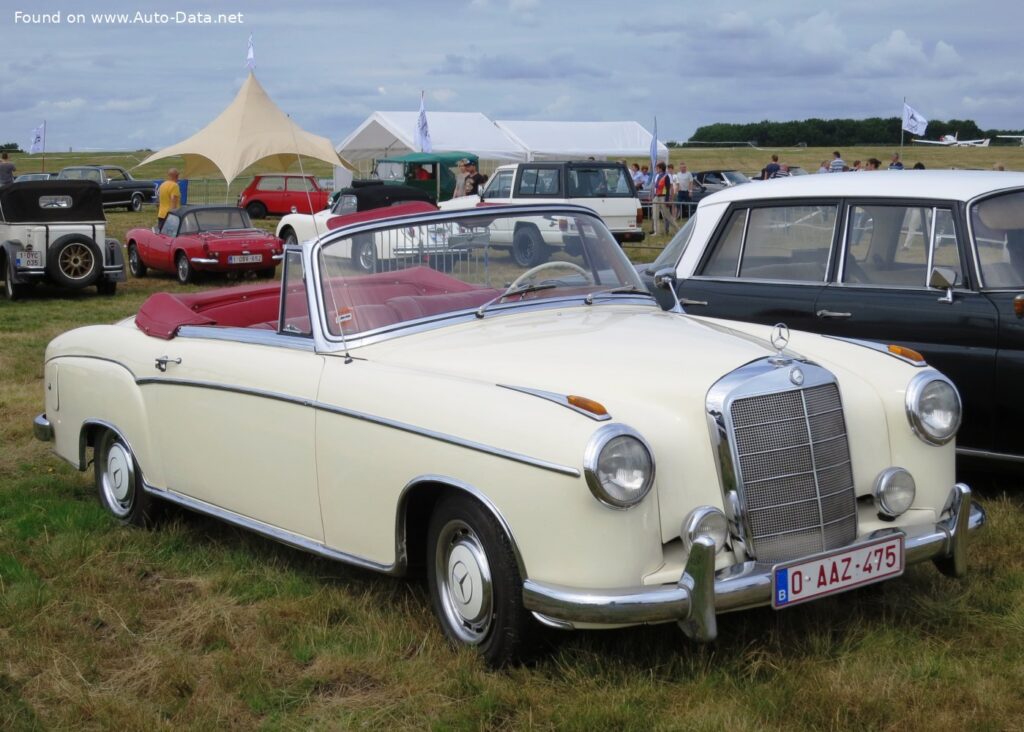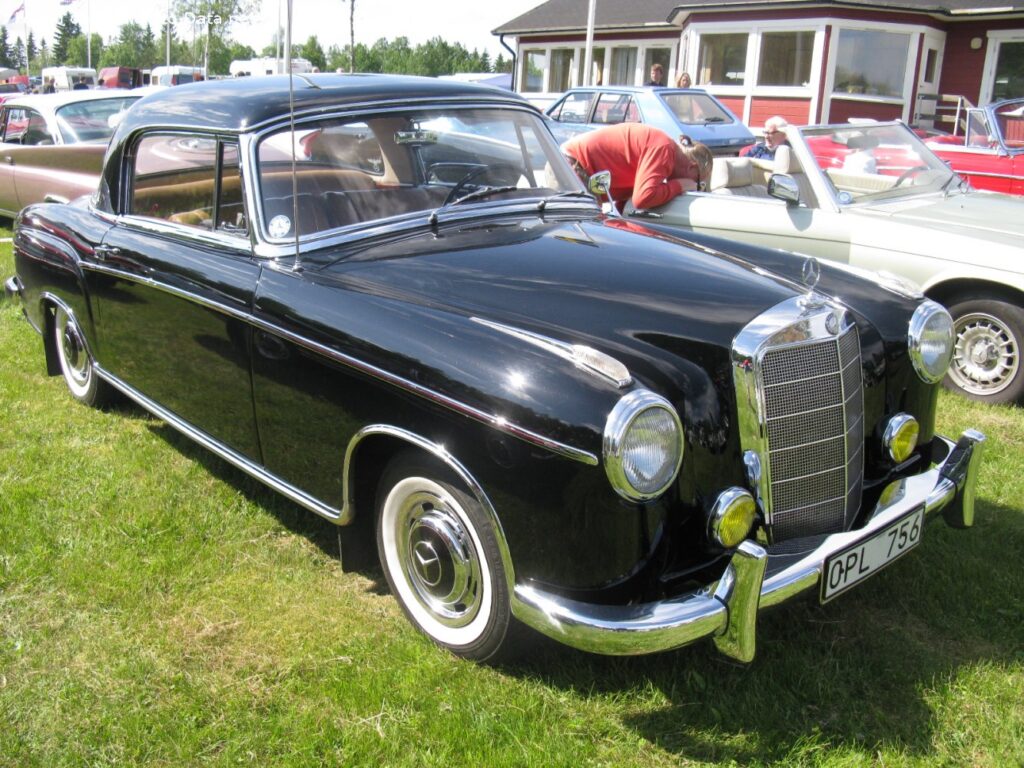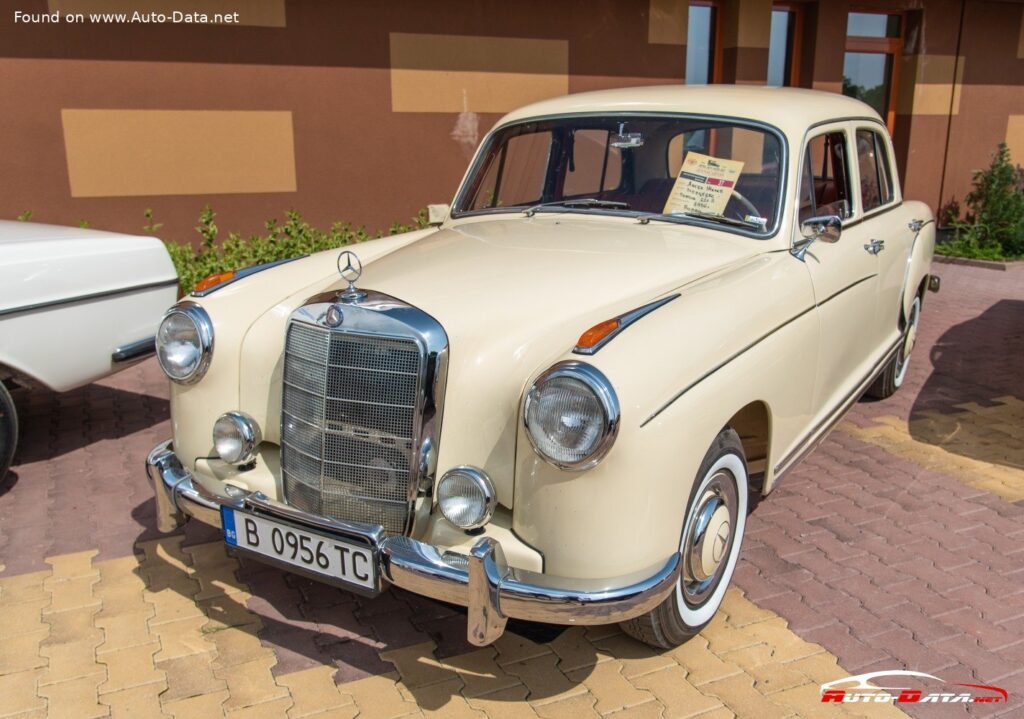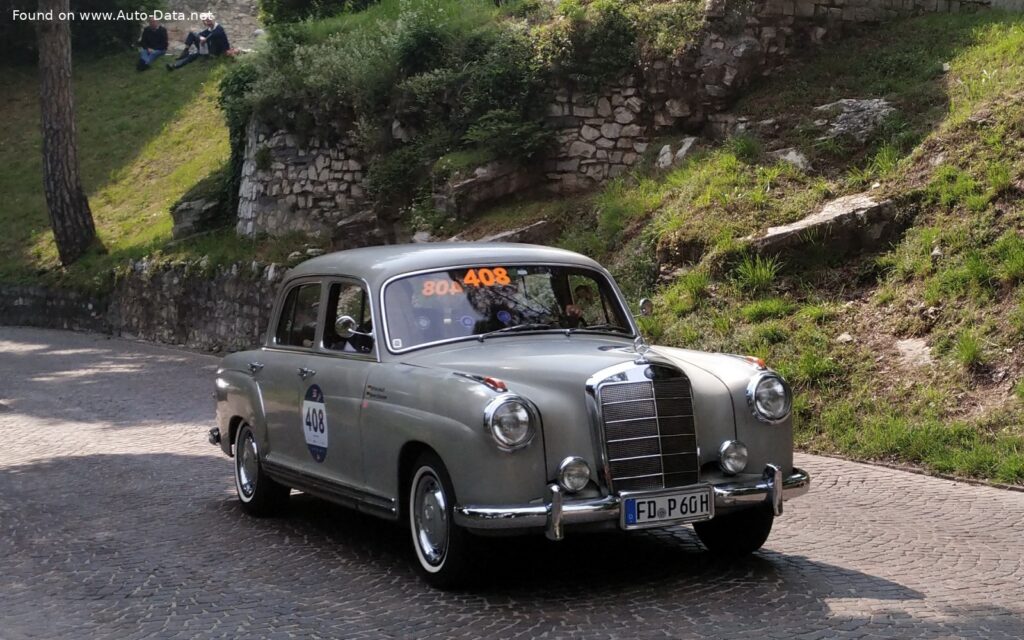
The Mercedes-Benz W180, often referred to as the “Ponton” (meaning “pontoon” in German due to its rounded styling), was a groundbreaking sedan produced from 1954 to 1956. Representing a significant departure from the pre-war Mercedes-Benz designs, the W180 was the first all-new post-war Mercedes-Benz passenger car. It established the styling and engineering principles that would define the brand for decades, and it was crucial in re-establishing Mercedes-Benz in the global automotive market. The 220 a model, powered by a 2.2-liter inline-six engine producing 85 horsepower, was a key variant within the W180 range.
Mercedes-Benz W180 I Sedan 220 a: A Post-War Revolution
The W180 series marked a pivotal moment for Mercedes-Benz. Prior to its introduction, the company primarily produced larger, more luxurious vehicles catering to a limited clientele. The Ponton was designed to be a more accessible, mass-market automobile, appealing to a broader range of customers. Its unibody construction – a first for Mercedes-Benz – contributed to its lighter weight and improved rigidity compared to traditional body-on-frame designs. This innovative approach, combined with modern styling, helped the W180 compete effectively in the burgeoning post-war automotive landscape.
Engine & Performance
The 220 a variant of the W180 was equipped with the M180 II inline-six cylinder engine, displacing 2195 cm³ (133.95 cubic inches). This naturally aspirated engine produced 85 horsepower at 4800 rpm and 157 Nm (115.8 lb.-ft.) of torque at 2400 rpm. While these figures may seem modest by modern standards, they were competitive for the time. The engine featured a single overhead camshaft (SOHC) valvetrain and utilized a carburetor for fuel delivery. Power was delivered to the rear wheels through a four-speed manual transmission.
Performance figures reflected the car’s focus on comfortable touring rather than outright speed. Acceleration from 0 to 100 km/h (0-62 mph) took approximately 19 seconds, and 0 to 60 mph was achieved in around 18.1 seconds. The top speed was rated at 150 km/h (93.21 mph). Fuel consumption was approximately 9.8 liters per 100 kilometers (24 US mpg), which was typical for a vehicle of its size and era. The weight-to-power ratio of 15.1 kg/Hp and weight-to-torque ratio of 8.2 kg/Nm further illustrate the car’s character.
Design & Features
The W180’s design was a radical departure from the pre-war Mercedes-Benz aesthetic. The “Ponton” name derived from the car’s rounded, pontoon-like body shape, which contrasted sharply with the more angular designs of the past. The integrated fenders and flowing lines gave the car a modern and streamlined appearance. The four-door sedan body style provided practical access for passengers, and the vehicle could comfortably accommodate five occupants.
Inside, the 220 a offered a relatively spacious and well-appointed cabin for its time. While not lavishly equipped by today’s standards, the interior featured comfortable seating and a functional dashboard layout. Safety features were limited by the standards of the 1950s, but the W180’s robust construction and relatively good visibility contributed to its overall safety profile. The car’s suspension, featuring double wishbones at the front and a trailing arm setup at the rear, provided a comfortable ride quality. Steering was accomplished via a cone worm and recirculation balls system.
Technical Specifications
| Brand | Mercedes-Benz |
| Model | Ponton |
| Generation | W180 I Sedan |
| Type (Engine) | 220 a (85 Hp) |
| Start of production | March, 1954 |
| End of production | April, 1956 |
| Powertrain Architecture | Internal Combustion engine |
| Body type | Sedan |
| Seats | 5 |
| Doors | 4 |
| Fuel consumption (combined) | 9.8 l/100 km (24 US mpg, 28.8 UK mpg, 10.2 km/l) |
| Fuel Type | Petrol (Gasoline) |
| Acceleration 0 – 100 km/h | 19 sec |
| Acceleration 0 – 62 mph | 19 sec |
| Acceleration 0 – 60 mph | 18.1 sec |
| Maximum speed | 150 km/h (93.21 mph) |
| Weight-to-power ratio | 15.1 kg/Hp |
| Weight-to-torque ratio | 8.2 kg/Nm |
| Power | 85 Hp @ 4800 rpm |
| Power per litre | 38.7 Hp/l |
| Torque | 157 Nm @ 2400 rpm (115.8 lb.-ft. @ 2400 rpm) |
| Engine layout | Front, Longitudinal |
| Engine Model/Code | M 180 II / 180.921 |
| Engine displacement | 2195 cm3 (133.95 cu. in.) |
| Number of cylinders | 6 |
| Engine configuration | Inline |
| Cylinder Bore | 80 mm (3.15 in.) |
| Piston Stroke | 72.8 mm (2.87 in.) |
| Compression ratio | 7.6:1 |
| Number of valves per cylinder | 2 |
| Fuel injection system | Carburettor |
| Engine aspiration | Naturally aspirated engine |
| Valvetrain | SOHC |
| Kerb Weight | 1280 kg (2821.92 lbs.) |
| Max. weight | 1730 kg (3814 lbs.) |
| Max load | 450 kg (992.08 lbs.) |
| Fuel tank capacity | 64 l (16.91 US gal | 14.08 UK gal) |
| Length | 4715 mm (185.63 in.) |
| Width | 1740 mm (68.5 in.) |
| Height | 1560 mm (61.42 in.) |
| Wheelbase | 2820 mm (111.02 in.) |
| Front track | 1430 mm (56.3 in.) |
| Rear track | 1470 mm (57.87 in.) |
| Drivetrain Architecture | Rear wheel drive |
| Number of gears and type of gearbox | 4 gears, manual transmission |
| Front suspension | Double wishbone, Transverse stabilizer |
| Rear suspension | Trailing arm |
| Front brakes | Drum |
| Rear brakes | Drum |
| Steering type | Cone worm with recirculation balls |
The Mercedes-Benz W180 220 a played a vital role in the company’s post-war recovery and established the foundation for its future success. Its innovative design, robust engineering, and relatively accessible price point made it a popular choice among discerning buyers, and it remains a highly sought-after classic car today.