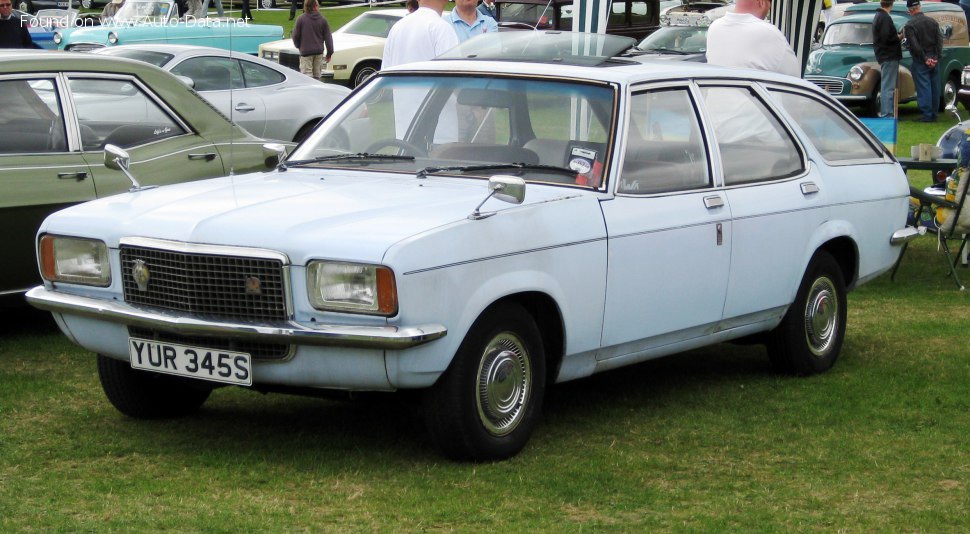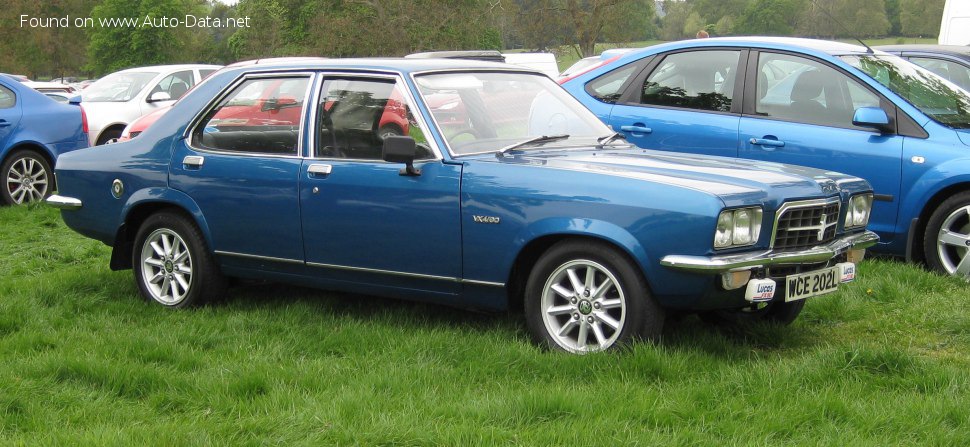
The Vauxhall VX 2000 4/90, produced between 1969 and 1971, represents a significant, though often overlooked, chapter in British automotive history. Positioned as a mid-size family sedan, the VX 2000 aimed to offer a blend of performance and practicality, appealing to buyers seeking a step up from more basic transportation. While the Vauxhall brand wasn’t directly sold in the United States, understanding the VX 2000 provides insight into the engineering and design philosophies prevalent in the European automotive market during the late 1960s and early 1970s. It served as a competitor to models like the Ford Cortina and Austin/Morris 1800, offering a more refined driving experience and a focus on comfortable cruising.
The Vauxhall VX 2000 4/90: A Detailed Overview
The VX designation within the Vauxhall lineup signified a focus on more upscale features and a slightly sportier character compared to the more utilitarian offerings. The “4/90” suffix refers to the four-cylinder engine and its approximate power output in horsepower. The VX 2000 was a product of its time, reflecting the design trends of the era – a relatively boxy silhouette, chrome accents, and a focus on interior space. It was a car designed for the open road, offering a comfortable ride and respectable performance for its class.
Engine & Performance
At the heart of the Vauxhall VX 2000 4/90 lies a 1,975 cc (120.52 cu. in.) inline four-cylinder petrol engine. This naturally aspirated engine produced 106 horsepower at 5,400 rpm, delivering a power-to-weight ratio of 97.6 Hp/tonne. While not a high-performance machine by modern standards, the engine provided adequate power for comfortable cruising and overtaking. The engine’s power per litre was 53.7 Hp/l, a respectable figure for the period. Fuel was delivered via a carburetor, a common technology at the time. The engine featured an overhead camshaft (OHC) valvetrain, contributing to its relatively smooth operation. Power was transmitted to the rear wheels through a four-speed manual transmission, offering the driver a direct connection to the drivetrain. The rear-wheel-drive configuration was typical for sedans of this era, providing balanced handling characteristics. The weight-to-power ratio of 10.2 kg/Hp indicates a reasonably efficient powertrain for its time.
Design & Features
The Vauxhall VX 2000 4/90 was a four-door sedan with a spacious interior capable of comfortably seating five passengers. Its body style was characteristic of late 1960s British design – a relatively upright stance, a prominent grille, and generous use of chrome trim. The car’s dimensions – 4,488 mm (176.69 in.) in length, 1,699 mm (66.89 in.) in width, and 1,313 mm (51.69 in.) in height – positioned it squarely within the mid-size segment. The wheelbase measured 2,591 mm (102.01 in.), contributing to a stable ride. Interior features, while not luxurious by today’s standards, were focused on comfort and practicality. The VX 2000 offered a generous 730-liter (25.78 cu. ft.) trunk space, making it suitable for family trips. Safety features were limited by the standards of the time, with basic seatbelts being the primary safety equipment. The car’s appeal rested more on its comfortable ride, spacious interior, and relatively stylish design than on cutting-edge technology.
Technical Specifications
| Brand | Vauxhall |
| Model | VX |
| Generation | VX |
| Type (Engine) | 2000 4/90 (106 Hp) |
| Start of production | 1969 |
| End of production | 1971 |
| Powertrain Architecture | Internal Combustion engine |
| Body type | Sedan |
| Seats | 5 |
| Doors | 4 |
| Fuel Type | Petrol (Gasoline) |
| Weight-to-power ratio | 10.2 kg/Hp |
| Power | 106 Hp @ 5400 rpm |
| Power per litre | 53.7 Hp/l |
| Engine displacement | 1975 cm3 / 120.52 cu. in. |
| Number of cylinders | 4 |
| Engine configuration | Inline |
| Cylinder Bore | 95.25 mm / 3.75 in. |
| Piston Stroke | 69.24 mm / 2.73 in. |
| Compression ratio | 8.5:1 |
| Fuel injection system | Carburettor |
| Engine aspiration | Naturally aspirated engine |
| Valvetrain | OHC |
| Engine oil capacity | 4.6 l / 4.86 US qt | 4.05 UK qt |
| Coolant | 7.4 l / 7.82 US qt | 6.51 UK qt |
| Kerb Weight | 1086 kg / 2394.22 lbs |
| Trunk (boot) space – maximum | 730 l / 25.78 cu. ft |
| Fuel tank capacity | 54 l / 14.27 US gal | 11.88 UK gal |
| Length | 4488 mm / 176.69 in |
| Width | 1699 mm / 66.89 in |
| Height | 1313 mm / 51.69 in |
| Wheelbase | 2591 mm / 102.01 in |
| Front track | 1386 mm / 54.57 in |
| Rear (Back) track | 1372 mm / 54.02 in |
| Minimum turning circle (turning diameter) | 10.2 m / 33.46 ft |
| Drivetrain Architecture | Rear wheel drive |
| Drive wheel | Rear wheel drive |
| Number of gears and type of gearbox | 4 gears, manual transmission |
| Steering type | Steering rack and pinion |
The Vauxhall VX 2000 4/90, while not a groundbreaking vehicle, represents a significant example of British automotive engineering from a bygone era. It offered a comfortable and practical transportation solution for families, and its design reflects the aesthetic sensibilities of the late 1960s. Though largely forgotten today, the VX 2000 remains a testament to Vauxhall’s commitment to providing well-rounded vehicles for the British market.