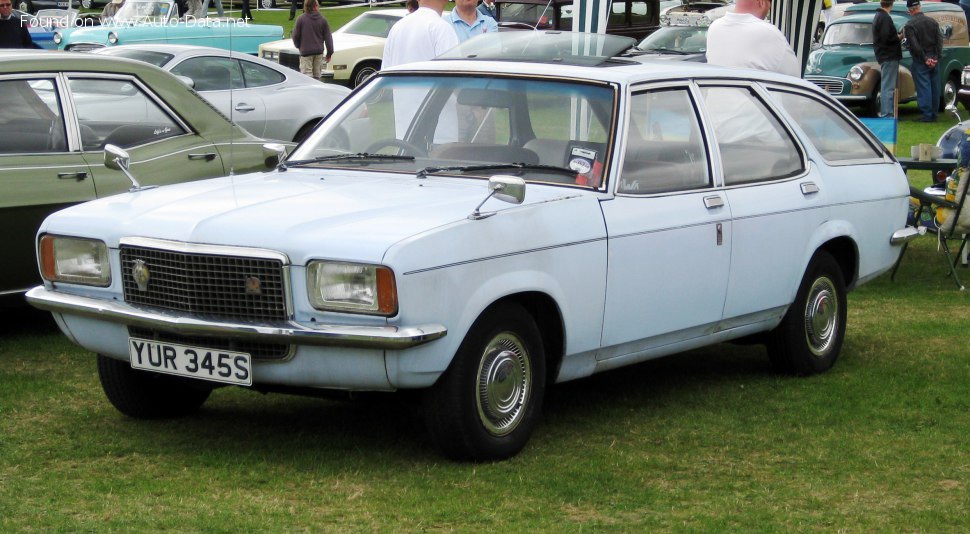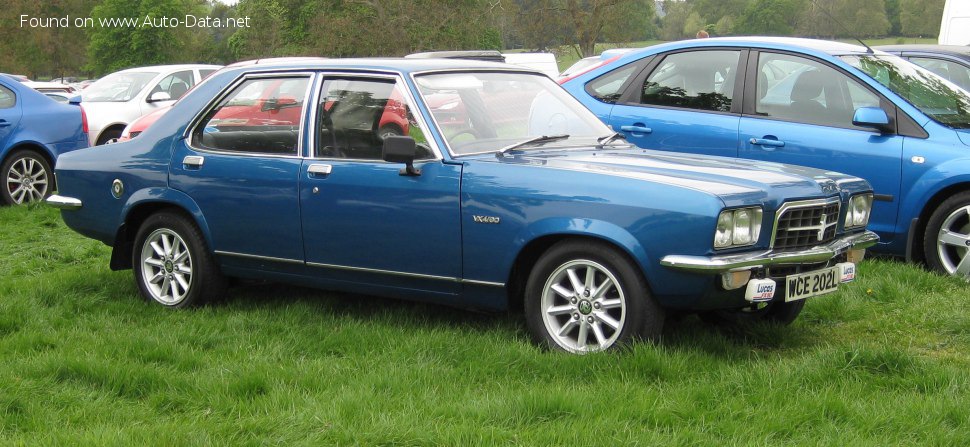
The Vauxhall VX 2300 4/90, produced between 1972 and 1978, represents a significant offering from Vauxhall within the British automotive landscape of the early to late 1970s. Positioned as a mid-size family sedan, the VX 2300 aimed to provide a blend of performance and practicality, appealing to buyers seeking a step up from more basic transportation. While not widely exported to the United States, understanding its specifications and place in the market provides insight into the engineering and design trends of the era. This article details the technical aspects of the VX 2300 4/90, focusing on its engine, design, and specifications.
The Vauxhall VX 2300 4/90: A British Sedan
The VX series, including the 2300 4/90, was Vauxhall’s attempt to create a modern, stylish, and capable sedan. It occupied a niche between the smaller Viva and the larger, more luxurious Cresta models. The “4/90” designation refers to the four-cylinder engine and its approximate tax horsepower rating, a common metric in the UK at the time. The VX series was intended to compete with offerings from Ford, such as the Cortina, and other European manufacturers. Vauxhall, at the time, was a prominent British manufacturer, later becoming part of the General Motors empire, and the VX series reflected a blend of British design sensibilities and GM engineering practices.
Engine & Performance
The heart of the VX 2300 4/90 is its 2.3-liter (2279 cm3 or 139.07 cu. in.) inline-four cylinder engine. This naturally aspirated engine produced 118 horsepower (Hp) at 5000 rpm, and 196 Newton-meters (Nm) of torque – equivalent to 144.56 lb.-ft. – at 3000 rpm. While these figures may seem modest by modern standards, they provided respectable performance for a family sedan of the period. The engine featured an overhead camshaft (OHC) valvetrain, a relatively advanced design for the time, contributing to its efficiency and power output. The power-to-weight ratio was approximately 99.9 Hp per tonne, and the torque-to-weight ratio was 166 Nm per tonne, or 6 kg/Nm. Power per litre was 51.8 Hp/l. The engine required 4.6 liters (4.86 US qt | 4.05 UK qt) of engine oil and 7.4 liters (7.82 US qt | 6.51 UK qt) of coolant for optimal operation.
Power was delivered to the rear wheels via a four-speed manual transmission. This configuration was typical for the era and provided a direct driving experience. The VX 2300’s rear-wheel-drive layout contributed to its handling characteristics, offering a balance between stability and responsiveness. The vehicle’s kerb weight of 1181 kg (2603.66 lbs) played a crucial role in its overall performance, allowing it to achieve a reasonable level of acceleration and handling.
Design & Features
The Vauxhall VX 2300 4/90 was a four-door sedan with a classic 1970s design. Its body measured 4546 mm (178.98 in.) in length, 1699 mm (66.89 in.) in width, and 1371 mm (53.98 in.) in height. The wheelbase was 2667 mm (105 in.). The exterior styling featured clean lines, a relatively low-slung profile, and a prominent front grille. The interior offered seating for four passengers and was designed with practicality in mind.
Safety features, while limited by the standards of the time, included basic seatbelts and a robust chassis construction. The focus of design was more on aesthetics and providing a comfortable driving experience. The VX 2300’s fuel tank capacity was 54 liters (14.27 US gal | 11.88 UK gal), providing a reasonable driving range. The minimum turning circle was 10.7 meters (35.1 ft.). The maximum load capacity was 479 kg (1056.01 lbs), with a maximum gross vehicle weight of 1660 kg (3659.67 lbs).
Technical Specifications
| Brand | Vauxhall |
| Model | VX |
| Generation | VX |
| Type (Engine) | 2300 4/90 (118 Hp) |
| Start of production | 1972 |
| End of production | 1978 |
| Powertrain Architecture | Internal Combustion engine |
| Body type | Sedan |
| Seats | 4 |
| Doors | 4 |
| Fuel Type | Petrol (Gasoline) |
| Weight-to-power ratio | 10 kg/Hp |
| Hp/tonne | 99.9 |
| Weight-to-torque ratio | 6 kg/Nm |
| Nm/tonne | 166 |
| Power | 118 Hp @ 5000 rpm |
| Power per litre | 51.8 Hp/l |
| Torque | 196 Nm @ 3000 rpm / 144.56 lb.-ft. @ 3000 rpm |
| Engine displacement | 2279 cm3 / 139.07 cu. in. |
| Number of cylinders | 4 |
| Cylinder Bore | 97.54 mm / 3.84 in. |
| Piston Stroke | 76.2 mm / 3 in. |
| Engine aspiration | Naturally aspirated engine |
| Valvetrain | OHC |
| Engine oil capacity | 4.6 l / 4.86 US qt | 4.05 UK qt |
| Coolant | 7.4 l / 7.82 US qt | 6.51 UK qt |
| Kerb Weight | 1181 kg / 2603.66 lbs |
| Max. weight | 1660 kg / 3659.67 lbs |
| Max load | 479 kg / 1056.01 lbs |
| Fuel tank capacity | 54 l / 14.27 US gal | 11.88 UK gal |
| Length | 4546 mm / 178.98 in. |
| Width | 1699 mm / 66.89 in. |
| Height | 1371 mm / 53.98 in. |
| Wheelbase | 2667 mm / 105 in. |
| Minimum turning circle | 10.7 m / 35.1 ft. |
| Drivetrain Architecture | Rear wheel drive |
| Number of gears | 4 gears, manual transmission |
| Front suspension | Independent coil spring |
| Steering type | Steering rack and pinion |
In conclusion, the Vauxhall VX 2300 4/90 was a competent and well-regarded family sedan in its time. While it may not have achieved widespread recognition outside of the UK, it represents a significant chapter in Vauxhall’s history and provides a valuable glimpse into the automotive engineering and design of the 1970s.