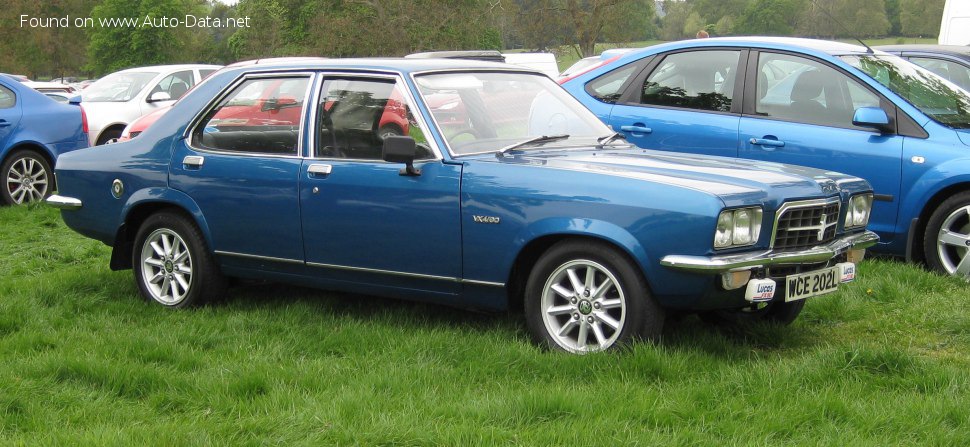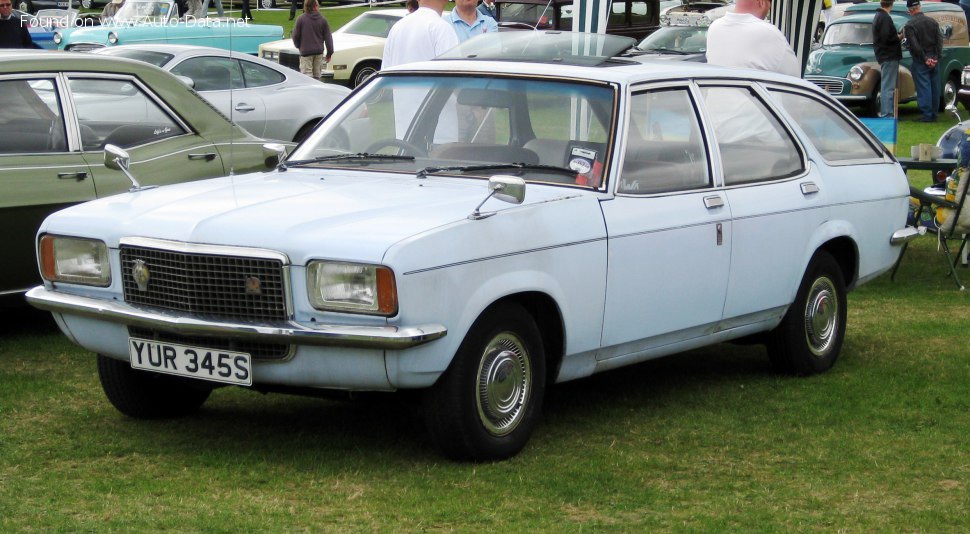
The Vauxhall VX Estate 2300, produced between 1976 and 1978, represents a significant offering from Vauxhall within the British market, a brand then under General Motors ownership. This station wagon, or ‘estate’ as it was commonly known in the UK and Europe, was based on the Vauxhall Victor FE series and aimed to provide a practical and spacious vehicle for families and those requiring substantial cargo capacity. While not officially sold in the United States, understanding the VX Estate provides insight into the automotive landscape of the era and Vauxhall’s position as a mainstream manufacturer in Europe. The VX Estate 2300 was positioned as a competitor to other European estates like the Ford Cortina Estate and the Hillman Avenger Estate, offering a blend of affordability, practicality, and reasonable performance.
Vauxhall VX Estate 2300: A Detailed Overview
The VX Estate 2300 was part of a broader VX lineup that included saloons and coupés, all sharing a common platform and mechanical components. The ‘VX’ designation signified a higher trim level, typically featuring more equipment and a more refined interior compared to the base Victor models. The Estate version, however, distinguished itself with its extended roofline and larger rear cargo area, making it a popular choice for those needing a versatile vehicle. The car’s design reflected the styling trends of the mid-1970s, characterized by boxy shapes and relatively simple lines. It was a vehicle built for function as much as form, prioritizing practicality and durability.
Engine & Performance
The heart of the VX Estate 2300 was a 2.3-liter (2279 cc) inline-four cylinder petrol engine. This engine produced 110 horsepower at 5000 rpm and 187 Newton-meters (137.92 lb-ft) of torque at 3000 rpm. While not a particularly powerful engine by modern standards, it provided adequate performance for the time, allowing for comfortable cruising and reasonable acceleration. The engine featured an overhead camshaft (OHC) valvetrain and was naturally aspirated. The weight-to-power ratio of 11.1 kg/Hp (90.2 Hp/tonne) and weight-to-torque ratio of 6.5 kg/Nm (153.3 Nm/tonne) indicate a vehicle that wasn’t focused on outright speed but rather on providing a usable and efficient driving experience. Power per litre was rated at 48.3 Hp/l. The engine was paired with a four-speed manual transmission, which drove the rear wheels. This rear-wheel-drive configuration was typical for vehicles of this era and contributed to the car’s handling characteristics.
Design & Features
The Vauxhall VX Estate 2300 was a five-door, five-seater station wagon. Its body style was defined by the extended roofline that maximized interior space and cargo capacity. The car’s exterior design was relatively conservative, reflecting the styling norms of the 1970s. Chrome trim was used sparingly, and the overall aesthetic was one of understated practicality. Inside, the VX Estate offered a functional and reasonably comfortable cabin. The seats were upholstered in durable cloth, and the dashboard featured a simple layout with essential gauges and controls. Safety features were limited by the standards of the time, but typically included seat belts and a steering column-mounted gear shift. The large cargo area was a key selling point, offering ample space for luggage, groceries, or other items. The rear seats could be folded down to further increase cargo capacity. The vehicle’s dimensions – 4546 mm (178.98 in) in length, 1699 mm (66.89 in) in width, and 1371 mm (53.98 in) in height – positioned it as a mid-sized estate car.
Technical Specifications
| Brand | Vauxhall |
| Model | VX |
| Generation | VX Estate |
| Type (Engine) | 2300 (110 Hp) |
| Start of production | 1976 |
| End of production | 1978 |
| Powertrain Architecture | Internal Combustion engine |
| Body type | Station wagon (estate) |
| Seats | 5 |
| Doors | 5 |
| Fuel Type | Petrol (Gasoline) |
| Weight-to-power ratio | 11.1 kg/Hp |
| Hp/tonne | 90.2 Hp/tonne |
| Weight-to-torque ratio | 6.5 kg/Nm |
| Nm/tonne | 153.3 Nm/tonne |
| Power | 110 Hp @ 5000 rpm |
| Power per litre | 48.3 Hp/l |
| Torque | 187 Nm @ 3000 rpm / 137.92 lb.-ft. @ 3000 rpm |
| Engine displacement | 2279 cm3 / 139.07 cu. in. |
| Number of cylinders | 4 |
| Engine configuration | Inline |
| Cylinder Bore | 97.54 mm / 3.84 in. |
| Piston Stroke | 76.2 mm / 3 in. |
| Engine aspiration | Naturally aspirated engine |
| Valvetrain | OHC |
| Engine oil capacity | 4.6 l / 4.86 US qt | 4.05 UK qt |
| Coolant | 7.4 l / 7.82 US qt | 6.51 UK qt |
| Kerb Weight | 1220 kg / 2689.64 lbs. |
| Max. weight | 1700 kg / 3747.86 lbs. |
| Max load | 480 kg / 1058.22 lbs. |
| Fuel tank capacity | 54 l / 14.27 US gal | 11.88 UK gal |
| Length | 4546 mm / 178.98 in. |
| Width | 1699 mm / 66.89 in. |
| Height | 1371 mm / 53.98 in. |
| Wheelbase | 2667 mm / 105 in. |
| Minimum turning circle | 10.7 m / 35.1 ft. |
| Drivetrain Architecture | Rear wheel drive |
| Drive wheel | Rear wheel drive |
| Number of gears | 4 gears, manual transmission |
| Front suspension | Independent coil spring |
| Steering type | Steering rack and pinion |
The Vauxhall VX Estate 2300, while a product of its time, offered a practical and reliable solution for families and individuals needing a versatile vehicle. Its blend of affordability, spaciousness, and reasonable performance made it a popular choice in the British market during its brief production run. Though largely unknown in the United States, it represents a significant chapter in Vauxhall’s history and the evolution of the European station wagon.