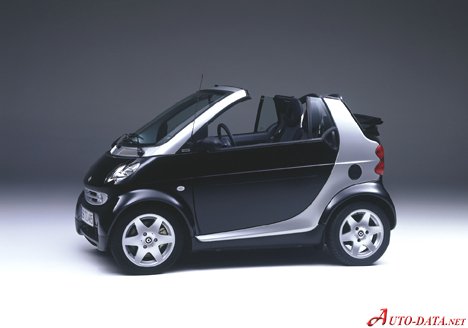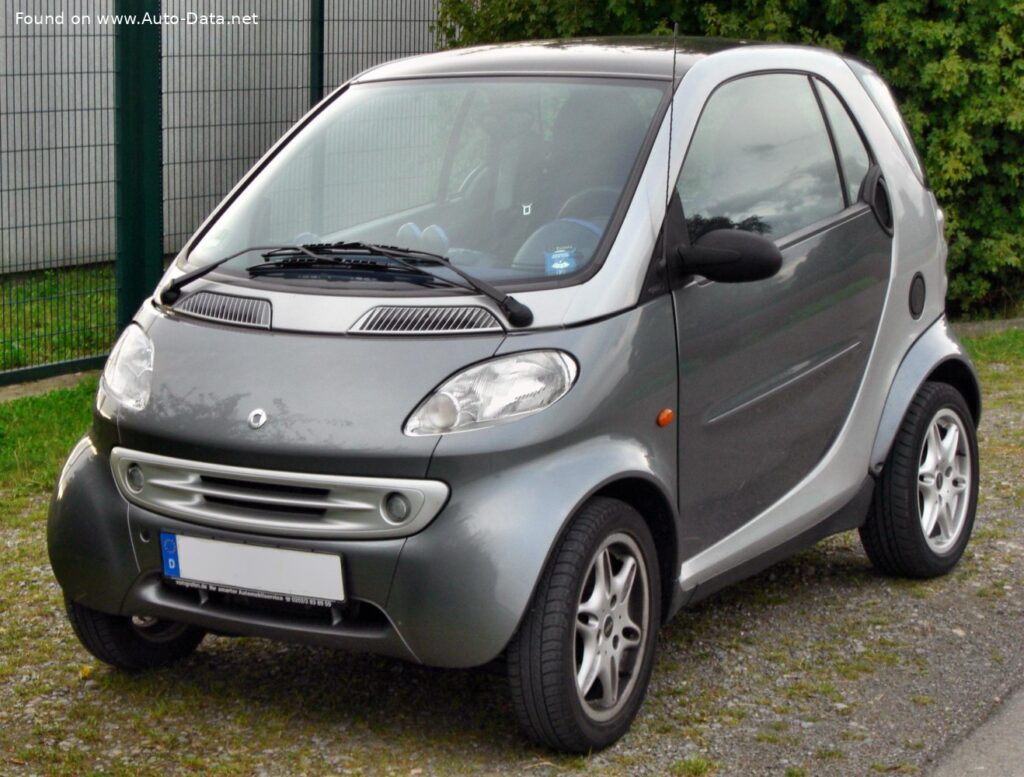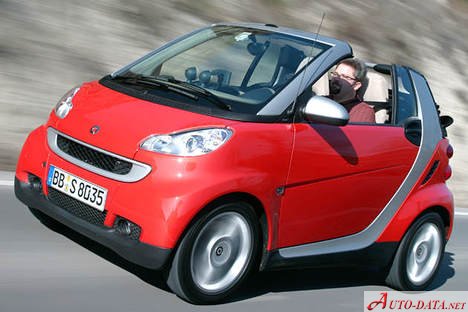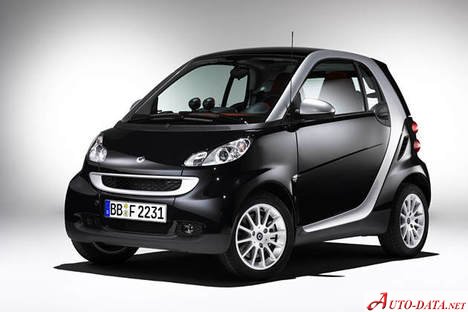
The Smart Fortwo II coupe (C451) Brabus 17.6 kWh represents a significant step in the evolution of the Smart Fortwo, specifically as the brand ventured into electric vehicle technology. Produced between 2012 and 2015, this variant was primarily aimed at the European market, where Smart enjoyed considerable success as a provider of compact, urban-focused transportation. While not officially sold in the United States during this generation, the C451 Brabus electric drive is notable for its early adoption of battery-electric vehicle (BEV) technology within the microcar segment. It offered a unique solution for city dwellers seeking efficient and environmentally friendly mobility.
Smart Fortwo II Coupe (C451) Brabus: An Overview
The C451 generation of the Smart Fortwo, launched in 2007, marked a substantial redesign from its predecessor. The Brabus variant, particularly the electric drive version, was positioned as the performance and technology flagship of the range. The focus was on providing a nimble, efficient, and surprisingly capable electric vehicle within a very small footprint. The car’s diminutive size and rear-wheel-drive layout contributed to its unique driving characteristics, making it a popular choice in congested urban environments.
Engine & Performance
The Smart Fortwo II coupe (C451) Brabus 17.6 kWh is powered by a single electric motor, producing 82 horsepower (Hp) and 135 Nm (99.57 lb.-ft.) of torque. This power is delivered to the rear wheels via a single-speed automatic transmission. Acceleration from 0 to 100 km/h (0-62 mph) takes 10.2 seconds, while 0-60 mph is achieved in a calculated 9.7 seconds. The top speed is electronically limited to 130 km/h (80.78 mph). The powertrain architecture is a pure BEV, utilizing a 17.6 kWh gross battery capacity, with a usable capacity of 16.7 kWh. This provides an all-electric range of 145 km (90.1 mi). Energy consumption is rated at 16.3 kWh per 100 km (26.23 kWh per 100 miles), equating to 128 MPGe and an efficiency of 6.1 km/kWh (3.8 mi/kWh). The weight-to-power ratio is 11.3 kg/Hp, and the weight-to-torque ratio is 6.9 kg/Nm.
Design & Features
The Smart Fortwo II coupe (C451) maintains the iconic two-seat, two-door coupe body style that defines the Smart brand. The Brabus variant features distinctive styling cues, including a more aggressive front fascia, side skirts, and a rear diffuser. The compact dimensions – a length of 2727 mm (107.36 in.), a width of 1559 mm (61.38 in.), and a height of 1565 mm (61.61 in.) – make it exceptionally maneuverable in tight spaces. The wheelbase measures 1867 mm (73.5 in.). Safety features, while limited by the vehicle’s size, include ABS (Anti-lock braking system). Interior space is optimized for two occupants, with a trunk offering between 220 and 340 liters (7.77 to 12.01 cu. ft.) of storage depending on the rear seat configuration. The battery pack is located under the floor, contributing to a low center of gravity and enhancing stability.
Technical Specifications
| General Information | |
| Brand | Smart |
| Model | Fortwo |
| Generation | Fortwo II coupe (C451) |
| Type (Engine) | Brabus 17.6 kWh (82 Hp) electric drive |
| Start of production | September, 2012 |
| End of production | August, 2015 |
| Powertrain Architecture | BEV (Electric Vehicle) |
| Body type | Coupe |
| Seats | 2 |
| Doors | 2 |
| Performance Specs | |
| Fuel Type | Electricity |
| Acceleration 0 – 100 km/h | 10.2 sec |
| Acceleration 0 – 62 mph | 10.2 sec |
| Acceleration 0 – 60 mph | 9.7 sec |
| Maximum speed | 130 km/h (80.78 mph) |
| Weight-to-power ratio | 11.3 kg/Hp |
| Weight-to-torque ratio | 6.9 kg/Nm |
| Electric Car Specs | |
| Gross battery capacity | 17.6 kWh |
| Net (usable) battery capacity | 16.7 kWh |
| Battery technology | Lithium-ion (Li-Ion) |
| Battery location | Below the floor |
| All-electric range | 145 km (90.1 mi) |
| Average Energy consumption | 16.3 kWh/100 km (26.23 kWh/100 mi) |
| Powertrain | |
| Electric motor | 1 |
| Electric motor power | 82 Hp |
| Electric motor Torque | 135 Nm (99.57 lb.-ft.) |
| Electric motor model/code | EM0003 |
| Electric motor location | Rear axle, Transverse |
| System power | 82 Hp |
| System torque | 135 Nm (99.57 lb.-ft.) |
| Dimensions & Weights | |
| Kerb Weight | 925 kg (2039.28 lbs.) |
| Max. weight | 1150 kg (2535.32 lbs.) |
| Max load | 225 kg (496.04 lbs.) |
| Trunk (boot) space – minimum | 220 l (7.77 cu. ft.) |
| Trunk (boot) space – maximum | 340 l (12.01 cu. ft.) |
| Length | 2727 mm (107.36 in.) |
| Width | 1559 mm (61.38 in.) |
| Height | 1565 mm (61.61 in.) |
| Wheelbase | 1867 mm (73.5 in.) |
| Front track | 1270 mm (50 in.) |
| Rear (Back) track | 1363 mm (53.66 in.) |
| Minimum turning circle | 8.75 m (28.71 ft.) |
| Drivetrain & Suspension | |
| Drivetrain Architecture | One electric motor drives the rear wheels. |
| Drive wheel | Rear wheel drive |
| Number of gears | 1, automatic transmission |
| Front suspension | Independent type McPherson |
| Rear suspension | Suspension De-Dion |
| Front brakes | Ventilated discs |
| Rear brakes | Drum |
| Steering type | Steering rack and pinion |
| Power steering | Electric Steering |
| Tires size | Front: 175/55 R16, Rear: 225/35 R17 |
The Smart Fortwo II coupe (C451) Brabus 17.6 kWh electric drive represents an important milestone in the development of urban electric mobility. While its limited range and compact size may not suit all drivers, it offered a compelling solution for those seeking a zero-emission vehicle for city commuting. Its unique design and rear-wheel-drive configuration contributed to a distinctive driving experience, solidifying its place as a niche but influential vehicle in the early stages of the electric vehicle revolution.