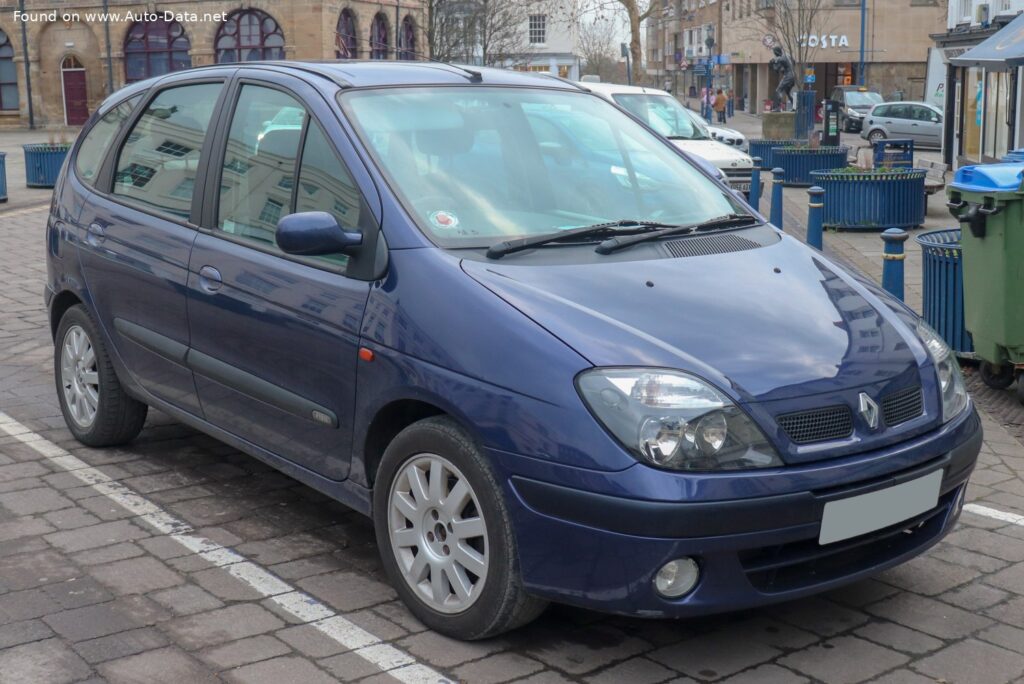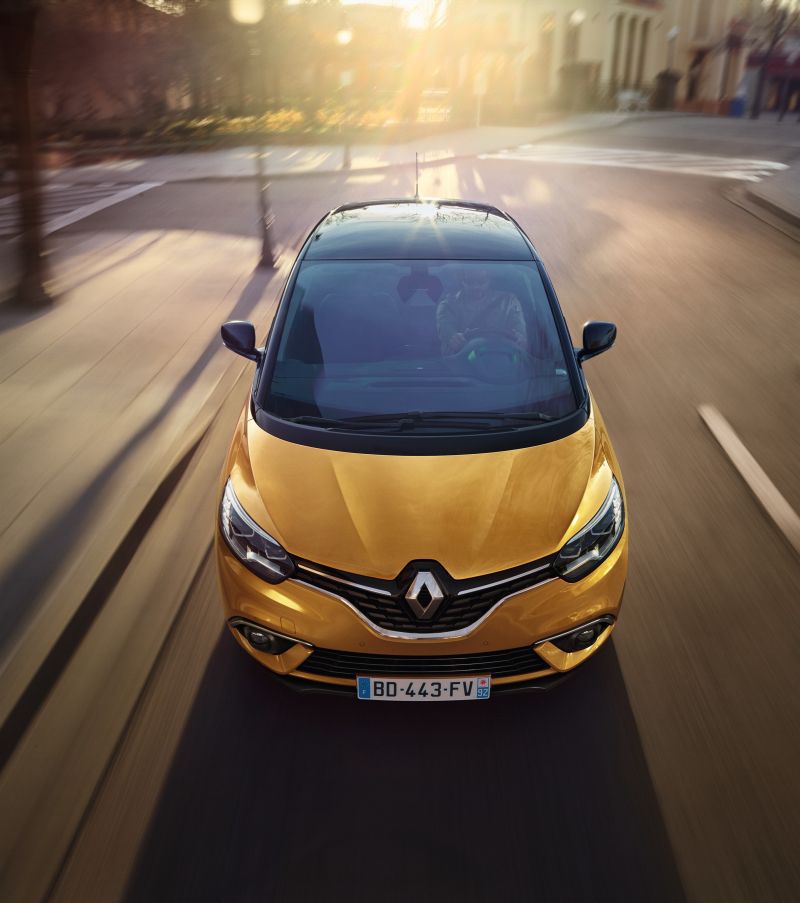
The Renault Scenic IV, produced from 2018 to 2020, represents the fourth generation of Renault’s popular compact minivan. Positioned as a family-oriented vehicle, the Scenic IV aimed to blend practicality with modern technology and styling. This generation marked a significant departure from its predecessors, adopting a more crossover-inspired design and focusing on interior space and modularity. The 1.3 TCe (160 Hp) FAP variant, detailed here, was a key offering in many European markets, providing a balance of performance and fuel efficiency. While not officially sold in the United States, the Scenic has been a significant player in the European MPV (Multi-Purpose Vehicle) segment for decades, competing with models like the Citroën C4 Picasso and Volkswagen Touran.
Renault Scenic IV (Phase I) 1.3 TCe: An Overview
The Scenic IV Phase I, introduced in September 2018, brought a refreshed aesthetic and a host of new features to the Scenic lineup. The 1.3 TCe engine, equipped with a particulate filter (FAP) to meet stringent Euro 6 emissions standards, became a popular choice for buyers seeking a responsive and relatively economical powertrain. This model year focused on refining the existing platform and enhancing the overall driving experience. The Scenic IV aimed to appeal to families needing a versatile and comfortable vehicle for everyday use and longer journeys.
Engine & Performance
The heart of the Scenic IV 1.3 TCe is a 1.3-liter, inline-four cylinder gasoline engine, designated H5H by Renault. This engine produces 160 horsepower at 5500 rpm and 260 Nm (191.77 lb.-ft.) of torque at 1750 rpm. The engine utilizes direct fuel injection and is coupled with a turbocharger and intercooler to enhance performance and efficiency. Power delivery is characterized by a relatively flat torque curve, providing good responsiveness in everyday driving situations. Acceleration from 0 to 100 km/h (0-62 mph) takes approximately 10 seconds, while the 0-60 mph sprint is achieved in around 9.5 seconds. The vehicle boasts a maximum speed of 210 km/h (130.49 mph). The engine’s specific output is 120.1 horsepower per liter, demonstrating a good level of efficiency. The engine is transversely mounted at the front of the vehicle, driving the front wheels through a six-speed manual transmission.
Design & Features
The Renault Scenic IV Phase I features a distinctive minivan body style with five doors and seating for five passengers. Its design incorporates a more sculpted and dynamic appearance compared to earlier Scenic models, reflecting a shift towards a more crossover-like aesthetic. Key features include a spacious and modular interior, designed to accommodate various family needs. The rear seats can be folded down or removed entirely, creating a large cargo area. The trunk offers a minimum capacity of 572 liters (20.2 cubic feet) with the rear seats in place. Safety features are prominent, including ABS (Anti-lock Braking System) and a comprehensive airbag system. The vehicle’s dimensions are 4406 mm (173.46 in) in length, 1866 mm (73.46 in) in width, and 1653 mm (65.08 in) in height. The wheelbase measures 2734 mm (107.64 in), contributing to a stable and comfortable ride. The Scenic IV prioritizes practicality and comfort, offering a well-equipped and versatile package for families.
Technical Specifications
| Brand | Renault |
| Model | Scenic |
| Generation | Scenic IV (Phase I) |
| Type (Engine) | 1.3 TCe (160 Hp) FAP |
| Start of production | September, 2018 |
| End of production | October, 2020 |
| Powertrain Architecture | Internal Combustion engine |
| Body type | Minivan |
| Seats | 5 |
| Doors | 5 |
| Fuel consumption (urban) | 7.6 l/100 km (30.9 US mpg, 37.2 UK mpg, 13.2 km/l) |
| Fuel consumption (combined) | 6 l/100 km (39.2 US mpg, 47.1 UK mpg, 16.7 km/l) |
| CO2 emissions | 136 g/km |
| Fuel Type | Petrol (Gasoline) |
| Acceleration 0 – 100 km/h | 10 sec |
| Acceleration 0 – 62 mph | 10 sec |
| Acceleration 0 – 60 mph | 9.5 sec |
| Maximum speed | 210 km/h (130.49 mph) |
| Emission standard | Euro 6 |
| Weight-to-power ratio | 9.6 kg/Hp, 104.4 Hp/tonne |
| Weight-to-torque ratio | 5.9 kg/Nm, 169.6 Nm/tonne |
| Power | 160 Hp @ 5500 rpm |
| Power per litre | 120.1 Hp/l |
| Torque | 260 Nm @ 1750 rpm (191.77 lb.-ft. @ 1750 rpm) |
| Engine layout | Front, Transverse |
| Engine Model/Code | H5H |
| Engine displacement | 1332 cm3 (81.28 cu. in.) |
| Number of cylinders | 4 |
| Engine configuration | Inline |
| Number of valves per cylinder | 4 |
| Fuel injection system | Direct injection |
| Engine aspiration | Turbocharger, Intercooler |
| Engine oil capacity | 5.5 l (5.81 US qt | 4.84 UK qt) |
| Coolant | 6.5 l (6.87 US qt | 5.72 UK qt) |
| Kerb Weight | 1533 kg (3379.69 lbs.) |
| Max. weight | 2023 kg (4459.95 lbs.) |
| Max load | 490 kg (1080.27 lbs.) |
| Trunk (boot) space – minimum | 572 l (20.2 cu. ft.) |
| Fuel tank capacity | 52 l (13.74 US gal | 11.44 UK gal) |
| Max. roof load | 80 kg (176.37 lbs.) |
| Permitted trailer load with brakes (12%) | 1800 kg (3968.32 lbs.) |
| Permitted trailer load without brakes | 750 kg (1653.47 lbs.) |
| Length | 4406 mm (173.46 in.) |
| Width | 1866 mm (73.46 in.) |
| Width including mirrors | 2128 mm (83.78 in.) |
| Height | 1653 mm (65.08 in.) |
| Wheelbase | 2734 mm (107.64 in.) |
| Front track | 1602 mm (63.07 in.) |
| Rear (Back) track | 1596 mm (62.83 in.) |
| Front overhang | 931 mm (36.65 in.) |
| Rear overhang | 741 mm (29.17 in.) |
| Ride height (ground clearance) | 170 mm (6.69 in.) |
| Minimum turning circle (turning diameter) | 11.18 m (36.68 ft.) |
| Drivetrain Architecture | Front wheel drive |
| Number of gears and type of gearbox | 6 gears, manual transmission |
| Front brakes | Ventilated discs |
| Rear brakes | Disc |
| Assisting systems | ABS (Anti-lock braking system) |
| Steering type | Steering rack and pinion |
| Power steering | Electric Steering |
| Tires size | 195/55 R20 |
| Wheel rims size | 20 |