
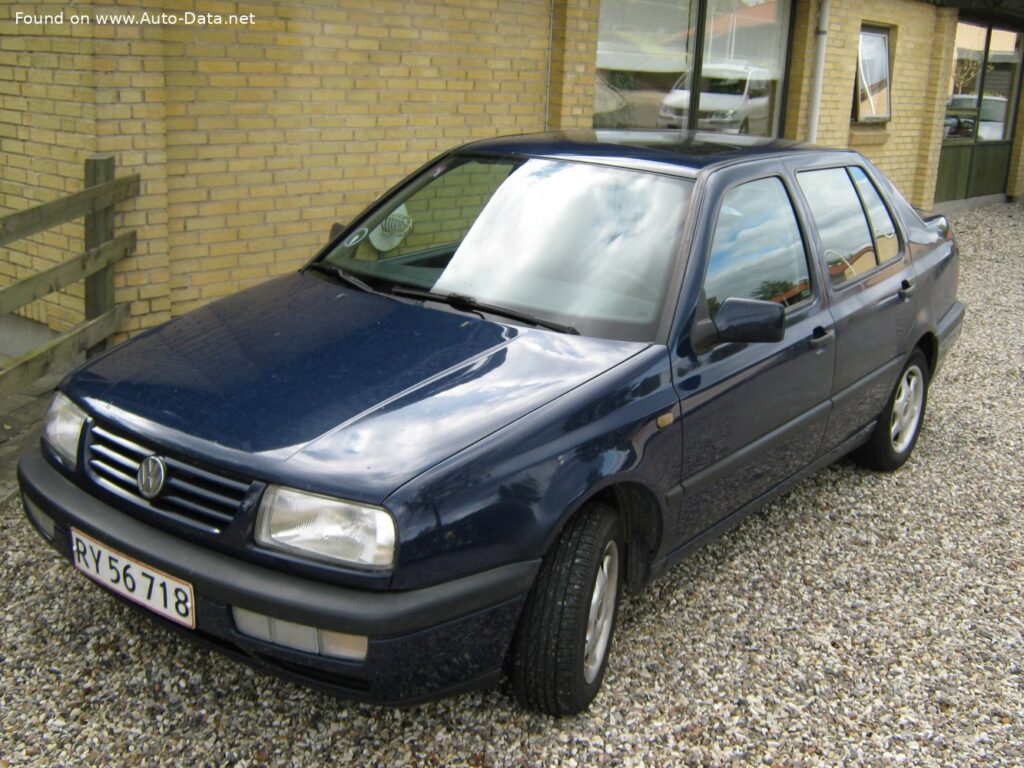
The Volkswagen Vento (1HX0) 1.8, produced between 1992 and 1998, represents Volkswagen’s entry into the compact sedan market, primarily aimed at European consumers. Positioned as a successor to the Volkswagen Jetta II, the Vento offered a more modern design and improved features compared to its predecessor. While not officially sold in the United States, understanding the Vento provides insight into Volkswagen’s global strategy during the early 1990s and its commitment to providing practical, reliable transportation. The 1.8-liter engine variant, producing 90 horsepower, was a popular choice, balancing affordability with reasonable performance.
Volkswagen Vento (1HX0) 1.8: A Detailed Overview
The Vento was conceived as a more contemporary alternative to the aging Jetta II, addressing criticisms regarding its dated styling and interior. It shared its platform with the Golf Mk3, benefiting from advancements in chassis technology and engine development. The name “Vento” (meaning “wind” in Italian) was chosen to evoke a sense of dynamism and modernity. In some markets, including the UK, it continued to be sold as the Jetta.
Engine & Performance
The 1.8-liter inline four-cylinder engine powering the Vento 1.8 (designated ABS and ADZ engine codes) was a key component of its appeal. This naturally aspirated engine, equipped with single-point fuel injection, produced 90 horsepower at 5500 rpm and 145 Nm (106.95 lb.-ft.) of torque at 2500 rpm. While not a performance powerhouse, this engine provided adequate power for everyday driving. Acceleration from 0 to 100 km/h (0-62 mph) took approximately 12.5 seconds, and the vehicle had a maximum speed of 180 km/h (111.85 mph). The engine’s power-to-weight ratio was 13.1 kg/Hp, and its torque-to-weight ratio was 8.1 kg/Nm. Fuel economy was a strong point, with combined cycle consumption rated at 7.8 l/100 km (30.2 US mpg, 36.2 UK mpg, 12.8 km/l). The engine’s 10:1 compression ratio and overhead camshaft (OHC) valvetrain contributed to its efficiency.
Design & Features
The Vento’s design represented a significant departure from the boxy aesthetics of the Jetta II. It featured a more streamlined, aerodynamic profile with rounded edges and a sloping rear deck. The sedan body style offered practical space for passengers and cargo. Inside, the Vento provided a comfortable cabin with seating for five occupants. Standard features included hydraulic power steering and a five-speed manual transmission. Safety features, while limited by the standards of the time, included an Anti-lock Braking System (ABS) as an option. The trunk offered a generous 500 liters (17.66 cu. ft.) of space, expandable to 885 liters (31.25 cu. ft.) with the rear seats folded down. The Vento’s relatively compact dimensions – 4380 mm (172.44 in.) in length, 1695 mm (66.73 in.) in width, and 1425 mm (56.1 in.) in height – made it easy to maneuver in urban environments.
Technical Specifications
| Brand | Volkswagen |
| Model | Vento |
| Generation | Vento (1HX0) |
| Type (Engine) | 1.8 (90 Hp) |
| Start of production | January, 1992 |
| End of production | 1998 |
| Powertrain Architecture | Internal Combustion engine |
| Body type | Sedan |
| Seats | 5 |
| Doors | 4 |
| Fuel consumption (urban) | 9.9 l/100 km (23.8 US mpg, 28.5 UK mpg, 10.1 km/l) |
| Fuel consumption (extra urban) | 6 l/100 km (39.2 US mpg, 47.1 UK mpg, 16.7 km/l) |
| Fuel consumption (combined) | 7.8 l/100 km (30.2 US mpg, 36.2 UK mpg, 12.8 km/l) |
| Fuel Type | Petrol (Gasoline) |
| Acceleration 0 – 100 km/h | 12.5 sec |
| Acceleration 0 – 62 mph | 12.5 sec |
| Acceleration 0 – 60 mph | 11.9 sec |
| Maximum speed | 180 km/h (111.85 mph) |
| Weight-to-power ratio | 13.1 kg/Hp |
| Weight-to-torque ratio | 8.1 kg/Nm |
| Power | 90 Hp @ 5500 rpm |
| Torque | 145 Nm @ 2500 rpm (106.95 lb.-ft. @ 2500 rpm) |
| Engine layout | Front, Transverse |
| Engine Model/Code | ABS, ADZ |
| Engine displacement | 1781 cm3 (108.68 cu. in.) |
| Number of cylinders | 4 |
| Engine configuration | Inline |
| Cylinder Bore | 81 mm (3.19 in.) |
| Piston Stroke | 86.4 mm (3.4 in.) |
| Compression ratio | 10:1 |
| Number of valves per cylinder | 2 |
| Fuel injection system | Single-point injection |
| Engine aspiration | Naturally aspirated |
| Valvetrain | OHC |
| Engine oil capacity | 3.8 l (4.02 US qt | 3.34 UK qt) |
| Kerb Weight | 1180 kg (2601.45 lbs.) |
| Max. weight | 1590 kg (3505.35 lbs.) |
| Max load | 410 kg (903.9 lbs.) |
| Trunk (boot) space – minimum | 500 l (17.66 cu. ft.) |
| Trunk (boot) space – maximum | 885 l (31.25 cu. ft.) |
| Fuel tank capacity | 55 l (14.53 US gal | 12.1 UK gal) |
| Length | 4380 mm (172.44 in.) |
| Width | 1695 mm (66.73 in.) |
| Height | 1425 mm (56.1 in.) |
| Wheelbase | 2475 mm (97.44 in.) |
| Front track | 1464 mm (57.64 in.) |
| Rear track | 1448 mm (57.01 in.) |
| Drivetrain Architecture | ICE, Front wheel drive |
| Drive wheel | Front wheel drive |
| Number of gears | 5 gears, manual transmission |
| Front suspension | Wishbone |
| Rear suspension | Suspension with traction connecting levers |
| Front brakes | Disc |
| Rear brakes | Drum |
| Assisting systems | ABS (Anti-lock braking system) |
| Steering type | Steering rack and pinion |
| Power steering | Hydraulic |
| Tires size | 185/60 R14 |
| Wheel rims size | 6J x 14 |
The Volkswagen Vento 1.8, while not a groundbreaking vehicle, represented a solid and reliable option in the compact sedan segment. Its blend of practicality, fuel efficiency, and reasonable performance made it a popular choice for European drivers seeking a dependable family car. It served as a bridge between the older Jetta II and the later, more sophisticated models, contributing to Volkswagen’s continued success in the global automotive market.
