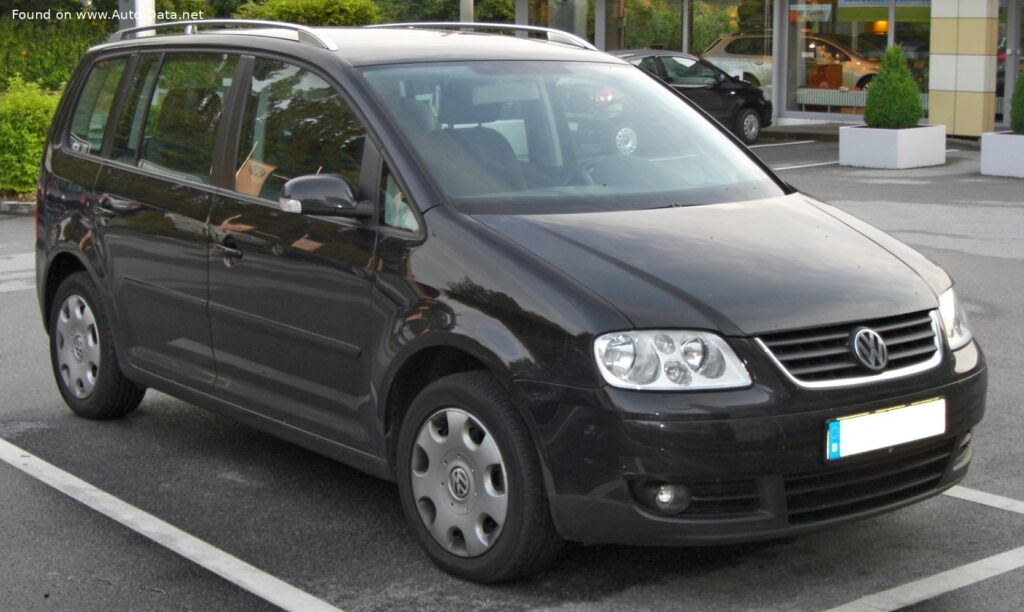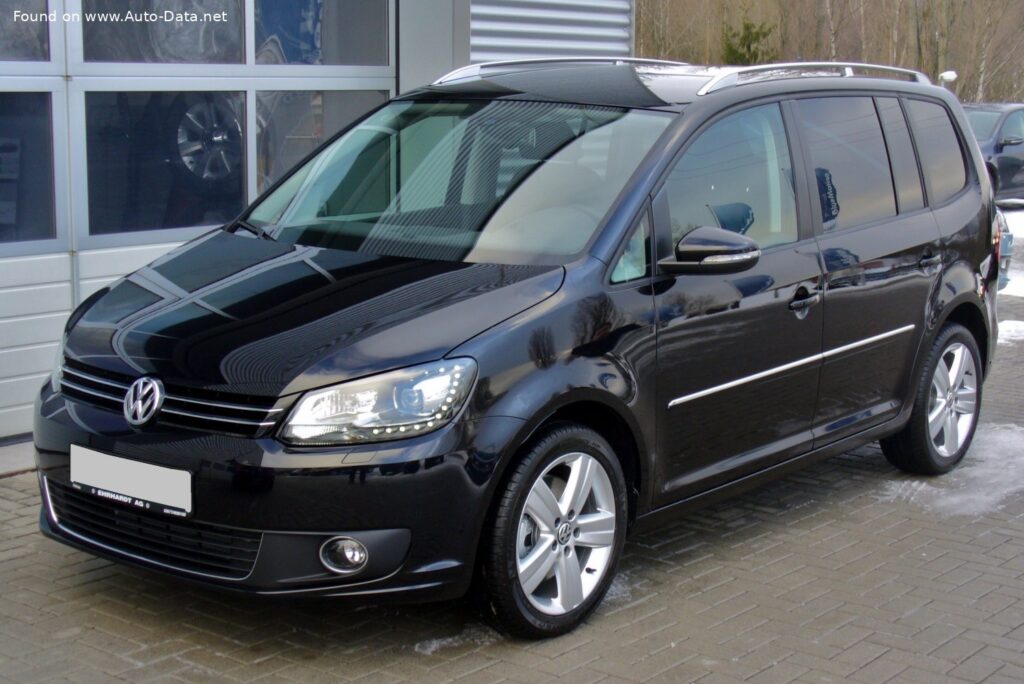
The Volkswagen Touran I (facelift 2010) 2.0 TDI with the DSG (Direct-Shift Gearbox) transmission represents a significant iteration of Volkswagen’s compact minivan, aimed at providing a practical and efficient family vehicle. Introduced as a facelift to the original Touran launched in 2003, this version, produced from 2010 to 2013, focused on refining the design, improving fuel economy, and enhancing the overall driving experience. The Touran occupies a crucial space in the European market, competing with vehicles like the Renault Scenic and Citroën C4 Picasso, offering a versatile alternative to traditional station wagons and larger MPVs. While not officially sold in the United States, understanding its specifications provides insight into the engineering priorities of European automakers during this period.
Volkswagen Touran I (Facelift 2010) 2.0 TDI: An Overview
The Touran, derived from the German word for “touring,” was conceived as a more compact and affordable alternative to the larger Volkswagen Sharan and Seat Alhambra. The facelifted model of 2010 brought updated styling, improved interior materials, and crucially, more efficient engine options. The 2.0 TDI variant, equipped with a 170 horsepower engine and the DSG gearbox, was a popular choice for buyers seeking a balance between performance and fuel economy. This model catered to families and individuals needing a flexible and spacious vehicle for everyday use and longer journeys.
Engine & Performance
At the heart of the Touran I (facelift 2010) 2.0 TDI lies a 1968 cc (120.09 cu. in.) inline four-cylinder diesel engine. This engine, designated CFJA, produces 170 horsepower at 4200 rpm and a substantial 350 Nm (258.15 lb.-ft.) of torque between 1750 and 2500 rpm. The turbocharger and intercooler work in tandem to optimize power delivery and efficiency. The engine’s power-to-liter ratio is 86.4 hp/l, indicating a relatively efficient design. Paired with the six-speed DSG automatic transmission, the Touran achieves a 0 to 100 km/h (0 to 62 mph) acceleration time of 8.9 seconds, and a calculated 0-60 mph time of 8.5 seconds. Its maximum speed is electronically limited to 213 km/h (132.35 mph). Fuel economy is a strong point, with combined cycle consumption rated at 5.7 l/100 km (41.3 US mpg, 49.6 UK mpg, 17.5 km/l), making it an economical choice for long-distance travel. The engine meets Euro 5 emission standards, reflecting Volkswagen’s commitment to reducing environmental impact.
Design & Features
The Touran I (facelift 2010) is a five-door minivan designed to maximize interior space and practicality. It comfortably seats five passengers, with a flexible seating arrangement that allows for increased cargo capacity. The exterior design features a relatively conservative aesthetic, typical of Volkswagen’s design philosophy at the time. The facelift brought subtle changes to the front and rear fascias, including revised headlights and taillights, and a redesigned grille. The interior is characterized by its functional layout and durable materials. Key features include a spacious trunk with a minimum capacity of 695 liters (24.54 cu. ft.) expanding to 1989 liters (70.24 cu. ft.) with the rear seats folded down. Safety features, standard for the period, include ABS (Anti-lock Braking System) and a robust body structure designed to protect occupants in the event of a collision. The electric power steering provides a responsive and comfortable driving experience. The vehicle’s dimensions – 4397 mm (173.11 in.) in length, 1794 mm (70.63 in.) in width, and 1674 mm (65.91 in.) in height – position it squarely within the compact minivan segment.
Technical Specifications
| Brand | Volkswagen |
| Model | Touran |
| Generation | Touran I (facelift 2010) |
| Type (Engine) | 2.0 TDI (170 Hp) DSG |
| Start of production | 2010 |
| End of production | 2013 |
| Powertrain Architecture | Internal Combustion engine |
| Body type | Minivan |
| Seats | 5 |
| Doors | 5 |
| Fuel consumption (urban) | 7 l/100 km (33.6 US mpg, 40.4 UK mpg, 14.3 km/l) |
| Fuel consumption (extra urban) | 5 l/100 km (47 US mpg, 56.5 UK mpg, 20 km/l) |
| Fuel consumption (combined) | 5.7 l/100 km (41.3 US mpg, 49.6 UK mpg, 17.5 km/l) |
| Fuel Type | Diesel |
| Acceleration 0 – 100 km/h | 8.9 sec |
| Acceleration 0 – 62 mph | 8.9 sec |
| Acceleration 0 – 60 mph | 8.5 sec |
| Maximum speed | 213 km/h (132.35 mph) |
| Emission standard | Euro 5 |
| Weight-to-power ratio | 9.5 kg/Hp, 105.4 Hp/tonne |
| Weight-to-torque ratio | 4.6 kg/Nm, 217 Nm/tonne |
| Power | 170 Hp @ 4200 rpm |
| Power per litre | 86.4 Hp/l |
| Torque | 350 Nm @ 1750-2500 rpm (258.15 lb.-ft. @ 1750-2500 rpm) |
| Engine layout | Front, Transverse |
| Engine Model/Code | CFJA |
| Engine displacement | 1968 cm3 (120.09 cu. in.) |
| Number of cylinders | 4 |
| Engine configuration | Inline |
| Number of valves per cylinder | 4 |
| Fuel injection system | Diesel Commonrail |
| Engine aspiration | Turbocharger, Intercooler |
| Engine oil capacity | 4.3 l (4.54 US qt | 3.78 UK qt) |
| Kerb Weight | 1613 kg (3556.06 lbs.) |
| Max. weight | 2220 kg (4894.26 lbs.) |
| Max load | 607 kg (1338.21 lbs.) |
| Trunk (boot) space – minimum | 695 l (24.54 cu. ft.) |
| Trunk (boot) space – maximum | 1989 l (70.24 cu. ft.) |
| Fuel tank capacity | 60 l (15.85 US gal | 13.2 UK gal) |
| Length | 4397 mm (173.11 in.) |
| Width | 1794 mm (70.63 in.) |
| Height | 1674 mm (65.91 in.) |
| Wheelbase | 2678 mm (105.43 in.) |
| Front track | 1541 mm (60.67 in.) |
| Rear (Back) track | 1514 mm (59.61 in.) |
| Minimum turning circle | 11.2 m (36.75 ft.) |
| Drivetrain Architecture | ICE drives front wheels |
| Drive wheel | Front wheel drive |
| Number of gears | 6 gears, automatic transmission DSG |
| Front brakes | Ventilated discs |
| Rear brakes | Disc |
| Assisting systems | ABS |
| Steering type | Steering rack and pinion |
| Power steering | Electric |
The Volkswagen Touran I (facelift 2010) 2.0 TDI DSG offered a compelling package for European families seeking a practical, efficient, and well-engineered minivan. Its combination of a torquey diesel engine, smooth-shifting DSG transmission, and spacious interior made it a popular choice in a competitive segment.