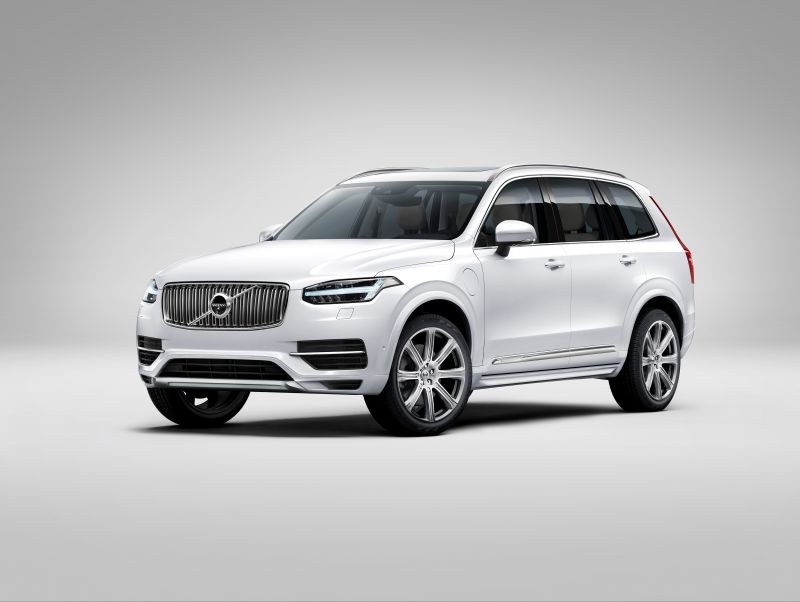
The Volvo XC90 II 2.0 T5 AWD Automatic represents the second generation of Volvo’s flagship sport utility vehicle (SUV). Introduced for the 2017 model year and continuing through 2018, this iteration of the XC90 marked a significant departure from its predecessor, emphasizing Scandinavian design, advanced technology, and a focus on passenger safety. Positioned in the premium mid-size SUV segment, the XC90 II aimed to compete with established rivals such as the Audi Q7, BMW X5, and Mercedes-Benz GLE.
Development & History
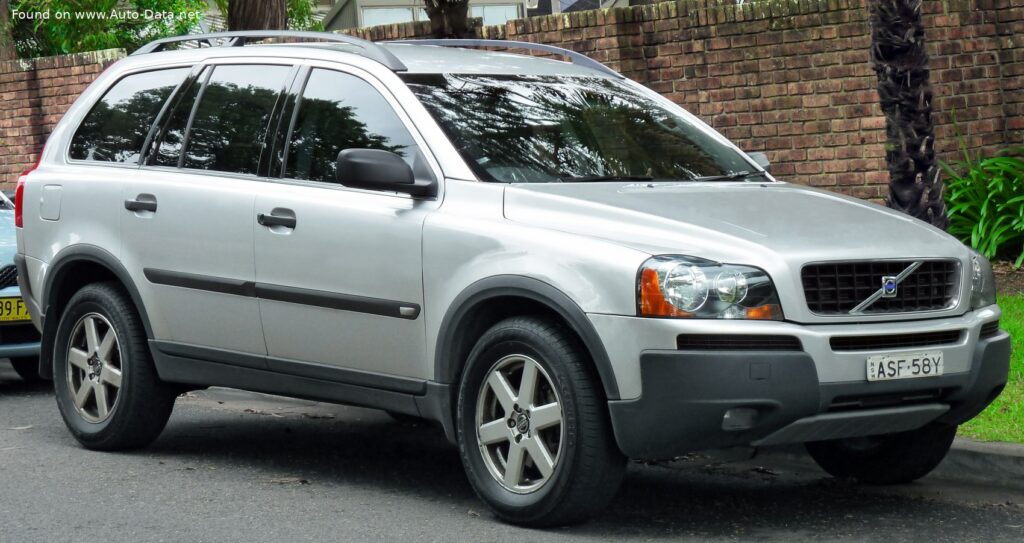
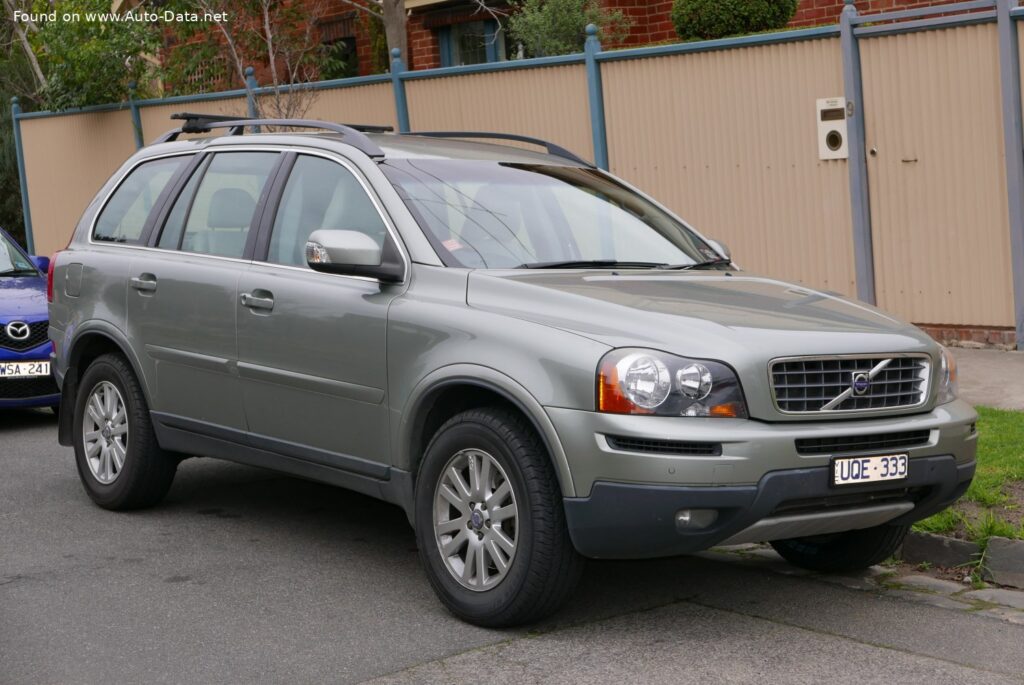
The XC90 II was the first Volvo to be built on the Scalable Product Architecture (SPA) platform, a modular chassis developed in-house by Volvo. This platform allowed for greater flexibility in design and engineering, enabling the creation of a wider range of vehicle sizes and configurations. The first-generation XC90, launched in 2002, had enjoyed considerable success for Volvo, establishing a foothold in the growing luxury SUV market. The second generation was intended to build upon that foundation, offering a more refined and technologically advanced experience. The SPA platform would later underpin other Volvo models, including the S90 sedan and V90 wagon.
Powertrain & Performance
The 2.0 T5 variant of the XC90 II was powered by a 2.0-liter turbocharged inline-four cylinder gasoline engine. Despite its relatively small displacement, the engine produced 250 horsepower at 5500 rpm and 350 Nm (258.15 lb-ft) of torque between 1800 and 4800 rpm. This output was achieved through a combination of turbocharging and direct fuel injection. The engine featured a compression ratio of 10.8:1 and a maximum engine speed of 6000 rpm. Power was delivered to all four wheels via an eight-speed automatic transmission and Volvo’s all-wheel-drive system. Acceleration from 0 to 100 km/h (0-62 mph) was achieved in 7.9 seconds, while the 0-60 mph sprint took a calculated 7.5 seconds. The vehicle had a maximum speed of 215 km/h (133.59 mph).
Chassis & Handling
The XC90 II employed a double-wishbone front suspension with a transverse stabilizer, and a torsion beam rear suspension, also incorporating a transverse stabilizer. This setup aimed to balance ride comfort with handling stability. The steering system was an electric power steering rack and pinion. Braking duties were handled by ventilated discs on all four wheels, with front discs measuring 345 mm and rear discs measuring 320 mm. The vehicle was equipped with an Anti-lock Braking System (ABS) as standard. The XC90 II offered a comfortable and composed ride, prioritizing passenger comfort over sporty handling characteristics. The all-wheel-drive system provided enhanced traction in various weather conditions.
Design & Interior
The XC90 II showcased a significant evolution in Volvo’s design language, embracing a minimalist and Scandinavian aesthetic. The exterior featured clean lines, a prominent grille with the Volvo iron mark, and distinctive “Thor’s Hammer” LED daytime running lights. The vehicle’s profile was characterized by a long wheelbase and a sloping roofline. Inside, the XC90 II offered a spacious and luxurious cabin. High-quality materials, including wood trim and leather upholstery, were used throughout. The interior design emphasized simplicity and functionality, with a large, vertically oriented touchscreen dominating the center console. This touchscreen controlled most of the vehicle’s functions, including infotainment, climate control, and vehicle settings. The XC90 II could accommodate five to seven passengers, depending on the configuration. Standard safety features included a suite of driver-assistance systems, reflecting Volvo’s commitment to safety.
Variants & Special Editions
The XC90 II was offered in several trim levels, including Momentum, Inscription, and R-Design. The Momentum trim represented the base model, offering a comprehensive set of standard features. The Inscription trim added more luxurious appointments, such as upgraded leather upholstery and wood trim. The R-Design trim featured a sportier appearance, with unique exterior styling cues and interior trim. While the 2.0 T5 was a prominent engine option, Volvo also offered the XC90 II with a more powerful 2.0-liter supercharged and turbocharged engine (T6) and a plug-in hybrid powertrain (T8 Twin Engine). These higher-performance variants offered increased power and efficiency.
Technical Specifications
| Data Type | Value |
| Engine Type | Petrol (Gasoline) |
| Engine Displacement | 1969 cm3 (120.16 cu. in.) |
| Number of Cylinders | 4 |
| Engine Configuration | Inline |
| Engine Model/Code | B4204T26 |
| Power | 250 Hp @ 5500 rpm |
| Torque | 350 Nm (258.15 lb.-ft.) @ 1800-4800 rpm |
| Compression Ratio | 10.8:1 |
| Fuel Injection | Direct injection |
| Engine Aspiration | Turbocharger, Intercooler |
| Transmission | 8-speed automatic |
| Drivetrain | All-wheel drive (4×4) |
| Fuel Consumption (Urban) | 9.7 l/100 km (24.2 US mpg) |
| Fuel Consumption (Extra Urban) | 6.7 l/100 km (35.1 US mpg) |
| Fuel Consumption (Combined) | 7.8 l/100 km (30.2 US mpg) |
| CO2 Emissions | 178 g/km |
| Fuel Tank Capacity | 71 l (18.76 US gal) |
| Length | 4950 mm (194.88 in.) |
| Width | 1923 mm (75.71 in.) |
| Height | 1776 mm (69.92 in.) |
| Wheelbase | 2984 mm (117.48 in.) |
| Trunk Space (Minimum) | 314 l (11.09 cu. ft.) |
| Trunk Space (Maximum) | 1886 l (66.6 cu. ft.) |
| Permitted Trailer Load (Brakes) | 2400 kg (5291.09 lbs.) |
| Permitted Trailer Load (No Brakes) | 750 kg (1653.47 lbs.) |
| Drag Coefficient (Cd) | 0.33 |
Legacy & Reception
The Volvo XC90 II 2.0 T5 AWD Automatic was widely praised for its elegant design, comfortable interior, and advanced safety features. Critics lauded the vehicle’s Scandinavian aesthetic and its user-friendly infotainment system. The SPA platform proved to be a successful foundation for Volvo’s future models. The XC90 II helped to revitalize the Volvo brand, establishing it as a serious contender in the premium SUV segment. While some reviewers noted that the 2.0-liter engine could feel slightly underpowered when fully loaded, the XC90 II generally received positive reviews for its overall driving experience and refinement. The vehicle’s emphasis on safety and its luxurious interior contributed to its strong reputation among consumers and automotive journalists alike. The XC90 II represented a significant step forward for Volvo, showcasing the company’s commitment to innovation and design.