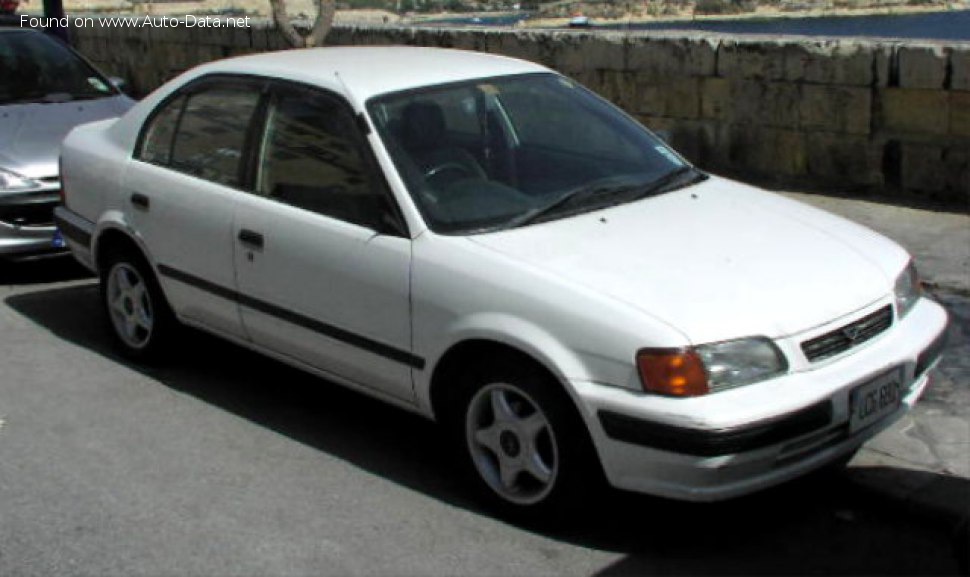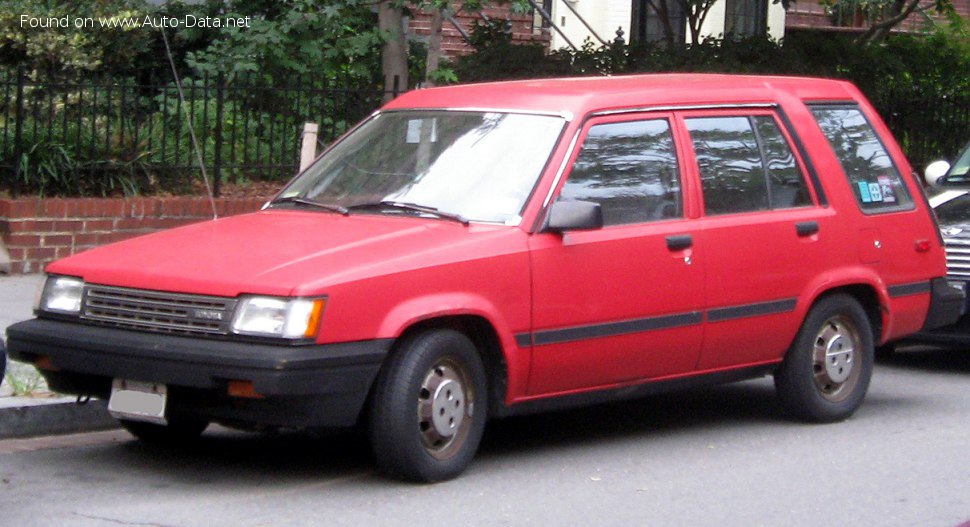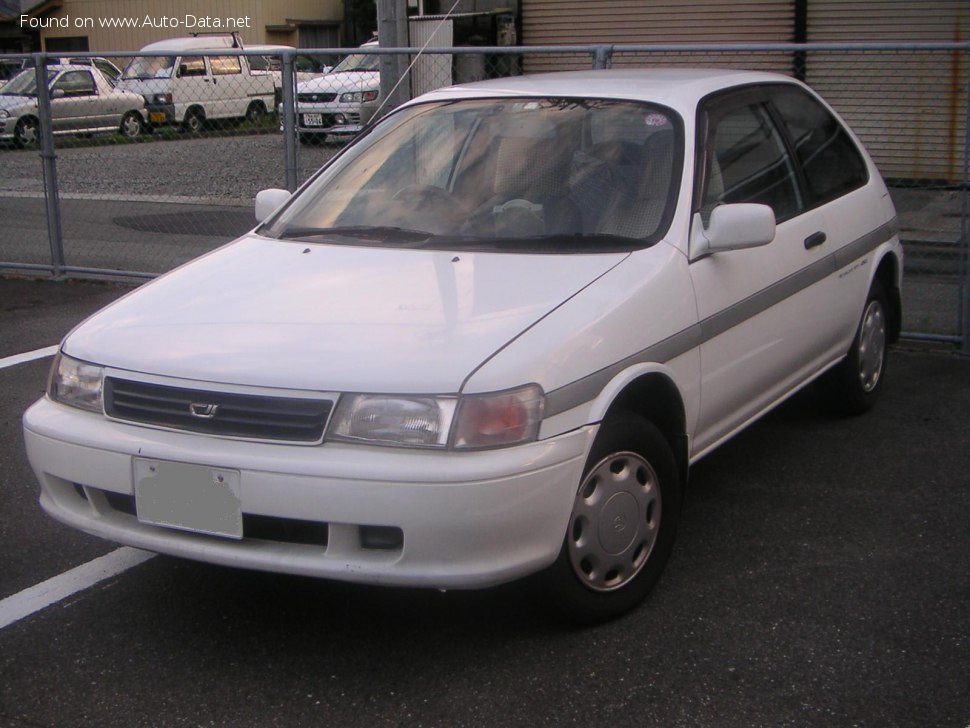
The Toyota Tercel (EL41) 1.3i 16V, produced between 1990 and 1993, represents the third generation of Toyota’s compact hatchback. Positioned as an economy car, the EL41 Tercel was primarily marketed towards buyers seeking affordable, reliable transportation. This generation of the Tercel was sold globally, with variations tailored to specific regional markets. In the United States, it served as a subcompact offering, competing with vehicles like the Honda Civic and Nissan Sentra. The EL41 Tercel aimed to provide practical features and fuel efficiency in a small, easily maneuverable package.
Development & History
The EL41 Tercel built upon the success of its predecessors, continuing Toyota’s commitment to building durable and economical vehicles. It was based on a front-wheel-drive platform, a configuration that became increasingly common in the subcompact segment during the early 1990s. The EL41 represented a significant redesign compared to the second-generation model (XL20), featuring a more rounded exterior and an updated interior. While not sharing a specific platform name like modern Toyota models (e.g., TNGA or GA-C), the EL41 utilized Toyota’s established engineering principles for compact vehicle construction. The fourth generation, introduced in 1994 (EL51/EL52/EL55), superseded the EL41, offering further refinements in design and technology.
Powertrain & Performance
The EL41 Tercel 1.3i 16V was equipped with a 1.3-liter inline four-cylinder gasoline engine. This engine produced 97 horsepower at 6,400 rpm and 83.34 lb-ft of torque at 5,200 rpm. The engine featured multi-port fuel injection and a double overhead camshaft (DOHC) valvetrain, contributing to its relatively efficient operation. Power was delivered to the front wheels through a four-speed manual transmission. The combination of a lightweight chassis and a modestly powered engine resulted in a weight-to-power ratio of 8.5 kg/Hp. Fuel economy was a prominent feature, with combined fuel consumption rated at 4.5 liters per 100 kilometers (52.3 US mpg). The engine’s naturally aspirated design and relatively small displacement prioritized fuel efficiency over outright performance.
Chassis & Handling
The EL41 Tercel employed a relatively simple chassis design focused on affordability and practicality. The front suspension utilized a wishbone configuration, while the rear suspension featured a coil spring setup. Braking duties were handled by disc brakes at the front and drum brakes at the rear. An Anti-lock Braking System (ABS) was available as an option, enhancing safety by preventing wheel lockup during hard braking. The steering system was a rack and pinion type, providing reasonably precise steering feel. The vehicle’s relatively short wheelbase (2,380 mm / 93.7 in) contributed to its maneuverability in urban environments. The tires were typically sized 145/80 R13, mounted on 13-inch wheel rims.
Design & Interior
The exterior design of the EL41 Tercel was characterized by its rounded lines and compact dimensions. The three-door hatchback body style offered a practical balance between cargo space and ease of parking. The interior was designed with functionality in mind, prioritizing space utilization and ease of use. Materials were generally durable and cost-effective, reflecting the vehicle’s economy car status. The interior accommodated five passengers, although rear seat space was limited. Safety features for the era included seatbelts and, on some models, the optional ABS. The dashboard layout was straightforward, with clearly labeled controls. Infotainment systems were limited by the technology of the time, typically consisting of an AM/FM radio.
Variants & Special Editions
The Tercel EL41 was offered in various trim levels, typically differentiated by features such as power windows, upgraded audio systems, and exterior trim details. While not known for extensive special editions, some regional markets received limited-production models with unique color schemes or equipment packages. The base model provided essential transportation, while higher trim levels offered increased comfort and convenience. Performance-oriented variants were not a focus for the Tercel; its appeal lay in its practicality and affordability. The availability of trim levels varied depending on the specific market.
Technical Specifications
| Data Type | Value |
| Brand | Toyota |
| Model | Tercel |
| Generation | Tercel (EL41) |
| Type (Engine) | 1.3i 16V (97 Hp) |
| Start of production | September, 1990 |
| End of production | 1993 |
| Body type | Hatchback |
| Seats | 5 |
| Doors | 3 |
| Fuel consumption (combined) | 4.5 l/100 km |
| Fuel consumption (US mpg) | 52.3 US mpg |
| Fuel consumption (UK mpg) | 62.8 UK mpg |
| Fuel Type | Petrol (Gasoline) |
| Weight-to-power ratio | 8.5 kg/Hp |
| Power | 97 Hp @ 6400 rpm |
| Torque | 113 Nm @ 5200 rpm |
| Torque (lb-ft) | 83.34 lb.-ft. @ 5200 rpm |
| Engine layout | Front, Transverse |
| Engine displacement | 1331 cm3 |
| Engine displacement (cu. in.) | 81.22 cu. in. |
| Number of cylinders | 4 |
| Engine configuration | Inline |
| Cylinder Bore | 74 mm |
| Cylinder Bore (in.) | 2.91 in. |
| Piston Stroke | 77.4 mm |
| Piston Stroke (in.) | 3.05 in. |
| Compression ratio | 9.6:1 |
| Number of valves per cylinder | 4 |
| Fuel injection system | Multi-port manifold injection |
| Engine aspiration | Naturally aspirated engine |
| Valvetrain | DOHC |
| Kerb Weight | 820 kg |
| Kerb Weight (lbs.) | 1807.79 lbs. |
| Max. weight | 1095 kg |
| Max. weight (lbs.) | 2414.06 lbs. |
| Max load | 275 kg |
| Max load (lbs.) | 606.27 lbs. |
| Fuel tank capacity | 45 l |
| Fuel tank capacity (US gal) | 11.89 US gal |
| Fuel tank capacity (UK gal) | 9.9 UK gal |
| Length | 3930 mm |
| Length (in.) | 154.72 in. |
| Width | 1645 mm |
| Width (in.) | 64.76 in. |
| Height | 1365 mm |
| Height (in.) | 53.74 in. |
| Wheelbase | 2380 mm |
| Wheelbase (in.) | 93.7 in. |
| Front track | 1400 mm |
| Front track (in.) | 55.12 in. |
| Rear track | 1430 mm |
| Rear track (in.) | 56.3 in. |
| Minimum turning circle | 9 m |
| Minimum turning circle (ft.) | 29.53 ft. |
| Drivetrain | Front wheel drive |
| Number of gears | 4 |
| Gearbox type | Manual transmission |
Legacy & Reception
The Toyota Tercel EL41 earned a reputation for reliability and affordability, characteristics that were central to Toyota’s brand image during the early 1990s. While not a performance car, it provided dependable transportation for a wide range of buyers. Critics generally praised its fuel efficiency and ease of maintenance. The Tercel’s simple design contributed to its longevity, with many examples remaining on the road decades after their initial production. It did not achieve the same level of enthusiast following as some of its competitors, such as the Honda Civic, but it served as a practical and economical choice for those prioritizing value and dependability. The EL41 Tercel remains a notable example of Toyota’s commitment to producing accessible and durable vehicles.