
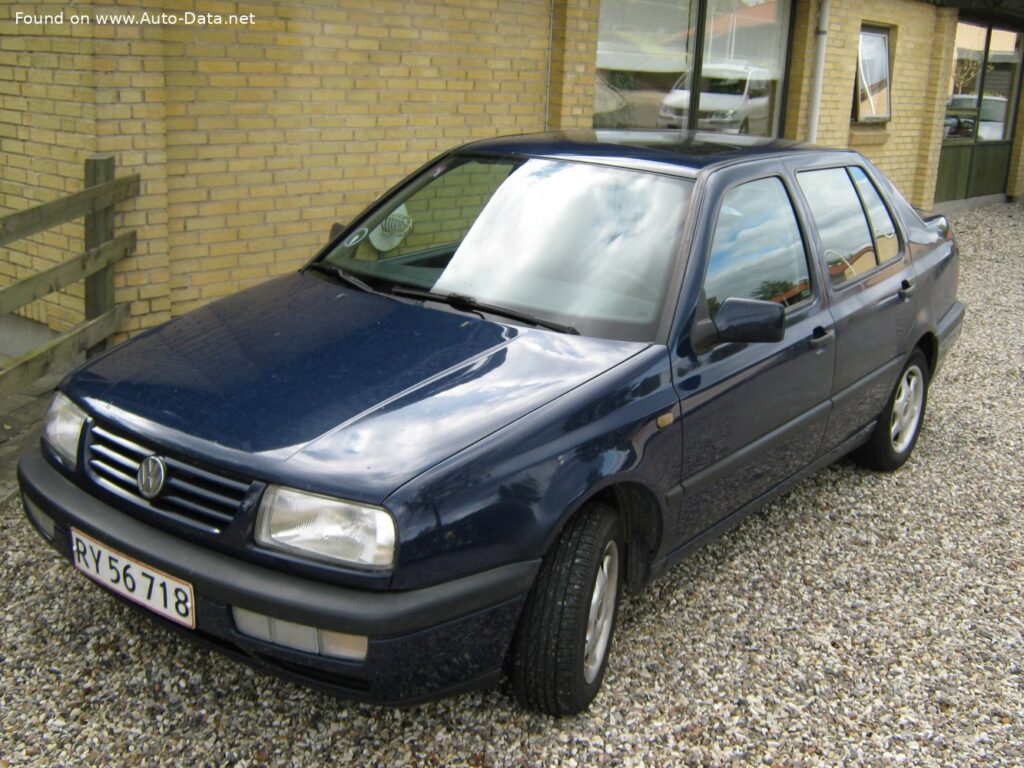
The Volkswagen Vento (1HX0) 1.9 D, produced between January 1991 and 1997, represented an entry-level offering within the broader Vento lineup, which itself was the successor to the popular Volkswagen Jetta (A2). Built on the A2 platform, the Vento aimed to provide a practical and economical sedan option for the mass market. The 1.9 D variant, equipped with a naturally aspirated diesel engine, was specifically targeted at buyers prioritizing fuel efficiency and low running costs over outright performance. It occupied the lowest rung of the Vento ladder, sitting below the more powerful gasoline engines like the 1.8 and 2.0 liter options, and the later 1.9 TDI turbocharged diesel.
Powertrain & Engine Architecture
The heart of the Vento 1.9 D is the 1Y engine, a 1.9-liter inline four-cylinder diesel engine. This engine is characterized by its indirect injection system, utilizing precombustion chambers to facilitate a more complete and efficient burn of the diesel fuel. This design, common in Volkswagen diesels of the era, contributed to reduced engine noise and emissions compared to direct injection systems. The engine displaces 1896 cc (115.7 cubic inches) and features a bore of 79.5 mm (3.13 inches) and a stroke of 95.5 mm (3.76 inches). It operates with a compression ratio of 22.5:1 and utilizes a single overhead camshaft (OHC) valvetrain with two valves per cylinder.
While a five-speed manual transmission was standard, the focus of this article is the automatic transmission variant. The automatic transmission used in the Vento 1.9 D was typically a four-speed unit, designed to provide smooth and convenient shifting. It was not a particularly advanced transmission by modern standards, but it was robust and reliable. The gear ratios were optimized for fuel economy and drivability, prioritizing low-end torque delivery over rapid acceleration. The transmission’s shift points were calibrated to keep the engine operating within its optimal torque band, maximizing efficiency.
Fuel Injection and Characteristics
The precombustion chamber injection system employed in the 1Y engine is a key element of its design. Fuel is injected into a small precombustion chamber connected to the main combustion chamber. The heat generated in the precombustion chamber ignites the fuel, and the resulting flame propagates to the main chamber, initiating combustion. This system allows for more controlled combustion, reducing engine knock and improving efficiency. The engine produces 64 horsepower (hp) at 4400 rpm and 124 Newton-meters (91.46 lb-ft) of torque at 2000 rpm. The relatively low power output is a direct consequence of the indirect injection system and the engine’s focus on fuel economy.
Driving Characteristics
The Vento 1.9 D with the automatic transmission offered a decidedly unhurried driving experience. Acceleration from 0 to 100 km/h (0 to 62 mph) took approximately 18.3 seconds, and reaching 0 to 60 mph required around 17.4 seconds. The top speed was limited to 156 km/h (96.93 mph). Compared to the more powerful 1.8 and 2.0 liter gasoline versions, the 1.9 D automatic felt significantly slower, particularly when accelerating for overtaking maneuvers. However, the engine’s ample low-end torque made it reasonably tractable in everyday driving conditions. The automatic transmission, while smooth, lacked the responsiveness of a manual gearbox, and the limited number of gears meant that the engine often operated at higher rpm during highway cruising.
The gear ratios in the four-speed automatic were spaced to maximize fuel efficiency. First gear provided adequate acceleration from a standstill, while second and third gears were geared for comfortable cruising around town. Fourth gear was intended for highway driving, but the engine could feel strained when climbing hills or maintaining high speeds. Overall, the driving experience was best described as practical and economical, rather than sporty or engaging.
Equipment & Trim Levels
The Vento 1.9 D automatic typically came with a relatively basic level of equipment, reflecting its position as the entry-level model. Standard features generally included power steering, central locking, and cloth upholstery. The dashboard layout was functional and straightforward, with clearly labeled controls. Air conditioning was often an optional extra, as were power windows and upgraded audio systems. The interior trim was typically dark in color, with durable materials designed to withstand everyday use. Safety features were limited by the standards of the time, typically consisting of seatbelts and a basic anti-theft system.
Optional extras could significantly enhance the comfort and convenience of the Vento 1.9 D. These included alloy wheels, a sunroof, and upgraded interior trim. Buyers could also specify a more sophisticated audio system with a cassette player or radio/cassette combination. The availability of optional equipment varied depending on the market and the year of manufacture.
Chassis & Braking
The Vento 1.9 D utilized a front-wheel-drive layout with a relatively simple suspension system. The front suspension consisted of wishbones, providing a comfortable ride and predictable handling. The rear suspension employed a torsion beam with traction connecting levers, which helped to maintain stability and control. The braking system featured disc brakes on the front wheels and drum brakes on the rear wheels. Hydraulic power steering was standard, making it easier to maneuver the car in tight spaces. Tire size was typically 185/60 R14, mounted on 6J x 14 inch steel or alloy wheels.
The suspension setup was tuned for comfort rather than sporty handling. The torsion beam rear suspension limited the car’s cornering ability, and the drum brakes on the rear wheels provided less stopping power than disc brakes. However, the braking system was adequate for everyday driving conditions.
Market Reception & Comparison
The Vento 1.9 D automatic was generally well-received by critics as a practical and economical family car. Its fuel efficiency was a major selling point, particularly in Europe where diesel fuel was relatively inexpensive. However, its lack of performance was often criticized, especially compared to the more powerful gasoline versions. The automatic transmission was praised for its smoothness, but some reviewers noted its lack of responsiveness. Compared to other cars in its class, such as the Ford Escort and Opel Astra, the Vento 1.9 D offered a good balance of fuel economy, practicality, and reliability.
In terms of fuel economy, the Vento 1.9 D achieved approximately 7 l/100 km (33.6 US mpg) in urban driving, 5.6 l/100 km (42 US mpg) on the extra-urban cycle, and 6.5 l/100 km (36.2 US mpg) combined. Reliability was generally good, although the indirect injection system could be prone to issues with the precombustion chambers over time. Maintenance costs were relatively low, thanks to the engine’s simple design and robust construction.
Technical Specifications
| Brand | Volkswagen |
| Model | Vento |
| Generation | Vento (1HX0) |
| Type (Engine) | 1.9 D (64 Hp) |
| Start of production | January, 1991 |
| End of production | 1997 |
| Powertrain Architecture | Internal Combustion engine |
| Body type | Sedan |
| Seats | 5 |
| Doors | 4 |
| Fuel consumption (urban) | 7 l/100 km (33.6 US mpg) |
| Fuel consumption (extra urban) | 5.6 l/100 km (42 US mpg) |
| Fuel consumption (combined) | 6.5 l/100 km (36.2 US mpg) |
| Fuel Type | Diesel |
| Acceleration 0 – 100 km/h | 18.3 sec |
| Acceleration 0 – 62 mph | 18.3 sec |
| Acceleration 0 – 60 mph | 17.4 sec |
| Maximum speed | 156 km/h (96.93 mph) |
| Weight-to-power ratio | 19.1 kg/Hp |
| Weight-to-torque ratio | 9.9 kg/Nm |
| Power | 64 Hp @ 4400 rpm |
| Torque | 124 Nm @ 2000 rpm (91.46 lb.-ft. @ 2000 rpm) |
| Engine layout | Front, Transverse |
| Engine Model/Code | 1Y |
| Engine displacement | 1896 cm3 (115.7 cu. in.) |
| Number of cylinders | 4 |
| Engine configuration | Inline |
| Cylinder Bore | 79.5 mm (3.13 in.) |
| Piston Stroke | 95.5 mm (3.76 in.) |
| Compression ratio | 22.5:1 |
| Number of valves per cylinder | 2 |
| Fuel injection system | Precombustion chamber injection |
| Engine aspiration | Naturally aspirated |
| Valvetrain | OHC |
| Engine oil capacity | 4.3 l (4.54 US qt | 3.78 UK qt) |
| Kerb Weight | 1225 kg (2700.66 lbs.) |
| Max. weight | 1630 kg (3593.53 lbs.) |
| Trunk (boot) space – minimum | 500 l (17.66 cu. ft.) |
| Trunk (boot) space – maximum | 885 l (31.25 cu. ft.) |
| Fuel tank capacity | 55 l (14.53 US gal | 12.1 UK gal) |
| Length | 4380 mm (172.44 in.) |
| Width | 1695 mm (66.73 in.) |
| Height | 1425 mm (56.1 in.) |
| Wheelbase | 2475 mm (97.44 in.) |
| Number of gears and type of gearbox | 5 gears, manual transmission |
Legacy
The Vento 1.9 D, particularly the automatic transmission variant, has proven to be a relatively durable and reliable car. While the indirect injection system can require maintenance over time, the engine itself is generally robust. Today, these cars are increasingly sought after by enthusiasts and collectors, particularly those looking for a classic Volkswagen with low running costs. The 1.9 D engine is known for its longevity and simplicity, making it a popular choice for those who want a car that is easy to maintain and repair. However, finding well-maintained examples can be challenging, as many cars have suffered from neglect or have been modified over the years. The Vento 1.9 D remains a testament to Volkswagen’s commitment to building practical and economical cars that stand the test of time.
