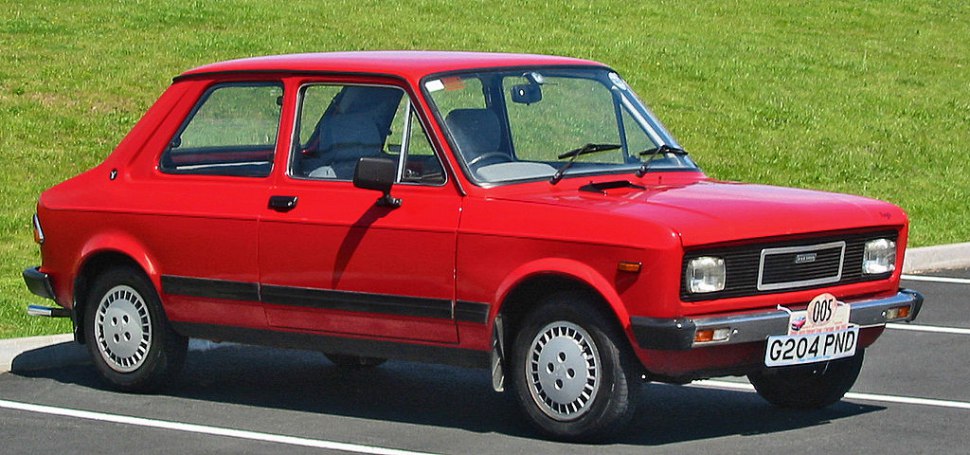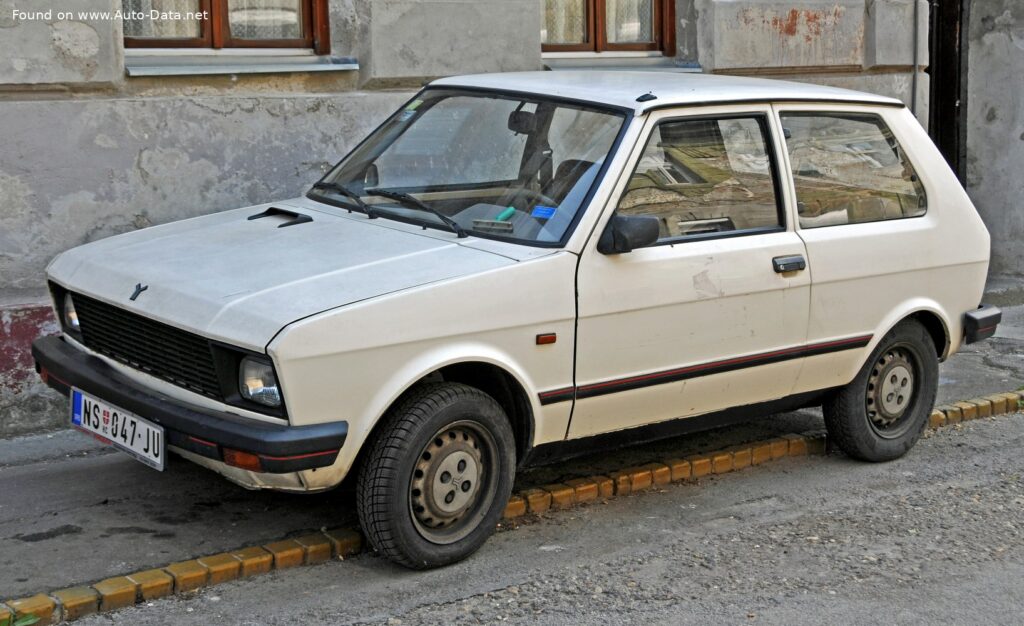
The Zastava Yugo Florida 1.3 (103 A), producing 68 horsepower, was a mainstay of the Yugo Florida lineup from its introduction in 1991 until production ceased in 2000. Positioned as the entry-level model, it represented the most affordable way to enter the Yugo Florida range, a hatchback designed to offer basic transportation to a wider market. The Florida itself was a significant update to the original Yugo, featuring a more modern design and improved interior. It was built upon the Yugo platform, a license-built version of the Fiat 127, and aimed to provide a cost-effective vehicle for both domestic Yugoslavian consumers and export markets, particularly in Western Europe and, briefly, North America.
Zastava Yugo Florida 1.3 (103 A): Powertrain & Engine Architecture
The heart of the Yugo Florida 1.3 was the 103 A engine, a 1.3-liter inline-four cylinder gasoline engine. This engine, derived from Fiat designs, featured a relatively simple architecture. It displaced 1290 cm³ (78.72 cubic inches) and utilized a single-point fuel injection system. This system, while less sophisticated than multi-point injection, helped to improve fuel efficiency and reduce emissions compared to earlier carburetor-equipped Yugo models. The engine employed a two-valve per cylinder valvetrain and a compression ratio of 9.2:1. The engine’s bore and stroke measured 86 mm (3.39 inches) and 55.5 mm (2.19 inches) respectively. The 103 A engine produced 68 hp at 5500 rpm and 100 Nm (73.76 lb-ft) of torque at 3700 rpm. The engine was transversely mounted in the front of the vehicle, driving the front wheels.
Transmission
The Yugo Florida 1.3 (103 A) was exclusively offered with a five-speed manual transmission. An automatic transmission was not available for this specific engine and trim level. The gearbox was a standard manual unit, designed for durability and ease of maintenance. The gear ratios were optimized for fuel economy and acceptable acceleration, though performance was modest given the engine’s output.
Driving Characteristics
The driving experience in the Yugo Florida 1.3 (103 A) was characterized by its lightweight construction and modest power output. Acceleration from 0 to 100 km/h (0-62 mph) took approximately 15 seconds, while 0-60 mph was achieved in around 14.3 seconds. The top speed was rated at 157 km/h (97.56 mph). The car felt nimble in city driving, thanks to its small size and responsive steering. However, on highways or when fully loaded, the lack of power became more apparent. The five-speed manual transmission allowed drivers to keep the engine in its optimal power band, but frequent downshifting was often necessary for overtaking or climbing hills. Compared to potential higher-spec Yugo Florida models (which were not widely available in many markets), the 1.3 offered a more economical but less exhilarating driving experience. The weight-to-power ratio of 13.4 kg/Hp and weight-to-torque ratio of 9.1 kg/Nm reflected the car’s modest performance capabilities.
Equipment & Trim Levels
The Yugo Florida 1.3 (103 A) was typically equipped with basic features, reflecting its position as the entry-level model. Standard equipment generally included cloth upholstery, a basic instrument cluster, and manual windows and door locks. Air conditioning, power steering, and upgraded audio systems were typically offered as optional extras, but were not commonly fitted to the base model. Interior trim was functional and durable, prioritizing practicality over luxury. The dashboard layout was simple and straightforward, with easy-to-read gauges. The rear seats could be folded down to increase cargo space, providing some flexibility for carrying larger items. The trunk offered a minimum capacity of 410 liters (14.48 cubic feet), expanding to 1180 liters (41.67 cubic feet) with the rear seats folded.
Chassis & Braking
The Yugo Florida 1.3 (103 A) featured a relatively simple chassis design. The front suspension utilized coil springs, while the rear suspension also employed coil springs. The front brakes were disc brakes, providing adequate stopping power for the car’s weight and performance. However, the rear brakes were drum brakes, which offered less stopping power and were more prone to fading under heavy use. The steering system was a rack and pinion setup, providing reasonably precise steering feel. The car rode on 165/70 R13 tires. Anti-lock braking system (ABS) was available as an option on some models, but was not standard equipment on the base 1.3 trim.
Market Reception & Comparison
The Yugo Florida 1.3 (103 A) received mixed reviews. Critics generally praised its affordability and fuel efficiency, but criticized its lack of power, basic interior, and perceived build quality. It was often compared to other small, economy cars of the era, such as the Fiat Uno and the Renault 5. In terms of fuel economy, the Yugo Florida 1.3 offered competitive figures, but its reliability was often questioned. Compared to higher-spec Yugo Florida models (if available), the 1.3 offered a more economical option, but at the expense of performance and features. The car’s low price point was its primary selling point, making it attractive to budget-conscious buyers. However, its limited availability and negative publicity in some markets (particularly North America) hampered its overall success.
Technical Specifications
| Brand | Zastava |
| Model | Yugo Florida |
| Generation | Yugo Florida |
| Type (Engine) | 1.3 (103 A) (68 Hp) |
| Start of production | 1991 |
| End of production | 2000 |
| Powertrain Architecture | Internal Combustion engine |
| Body type | Hatchback |
| Seats | 5 |
| Doors | 5 |
| Fuel Type | Petrol (Gasoline) |
| Acceleration 0 – 100 km/h | 15 sec |
| Acceleration 0 – 62 mph | 15 sec |
| Acceleration 0 – 60 mph | 14.3 sec |
| Maximum speed | 157 km/h (97.56 mph) |
| Weight-to-power ratio | 13.4 kg/Hp |
| Weight-to-torque ratio | 9.1 kg/Nm |
| Power | 68 Hp @ 5500 rpm |
| Power per litre | 52.7 Hp/l |
| Torque | 100 Nm @ 3700 rpm (73.76 lb.-ft. @ 3700 rpm) |
| Engine layout | Front, Transverse |
| Engine displacement | 1290 cm3 (78.72 cu. in.) |
| Number of cylinders | 4 |
| Engine configuration | Inline |
| Cylinder Bore | 86 mm (3.39 in.) |
| Piston Stroke | 55.5 mm (2.19 in.) |
| Compression ratio | 9.2:1 |
| Number of valves per cylinder | 2 |
| Fuel injection system | Single-point injection |
| Engine aspiration | Naturally aspirated engine |
| Kerb Weight | 910 kg (2006.21 lbs.) |
| Max. weight | 1420 kg (3130.56 lbs.) |
| Max load | 510 kg (1124.36 lbs.) |
| Trunk (boot) space – minimum | 410 l (14.48 cu. ft.) |
| Trunk (boot) space – maximum | 1180 l (41.67 cu. ft.) |
| Fuel tank capacity | 48 l (12.68 US gal | 10.56 UK gal) |
| Length | 3930 mm (154.72 in.) |
| Width | 1660 mm (65.35 in.) |
| Height | 1410 mm (55.51 in.) |
| Wheelbase | 2500 mm (98.43 in.) |
| Front track | 1400 mm (55.12 in.) |
| Rear (Back) track | 1395 mm (54.92 in.) |
| Drivetrain Architecture | Front wheel drive |
| Number of gears and type of gearbox | 5 gears, manual transmission |
| Front suspension | Coil spring |
| Rear suspension | Coil spring |
| Front brakes | Disc |
| Rear brakes | Drum |
| Assisting systems | ABS (Optional) |
| Steering type | Steering rack and pinion |
| Tires size | 165/70 R13 |
Legacy
The Zastava Yugo Florida 1.3 (103 A) powertrain, while simple, proved to be relatively durable and reliable, particularly when properly maintained. The engine’s straightforward design made it relatively easy to repair, and spare parts were generally affordable. In the used car market today, these vehicles are often sought after by enthusiasts and collectors, particularly those interested in affordable classic cars. However, finding well-maintained examples can be challenging, and potential buyers should be aware of the car’s age and potential maintenance needs. The 1.3 engine, while not powerful, is considered the most reliable of the Yugo Florida engine options. The Yugo Florida, and the 1.3 variant specifically, remains a notable example of affordable motoring from the late 20th century, and a reminder of a unique period in automotive history.