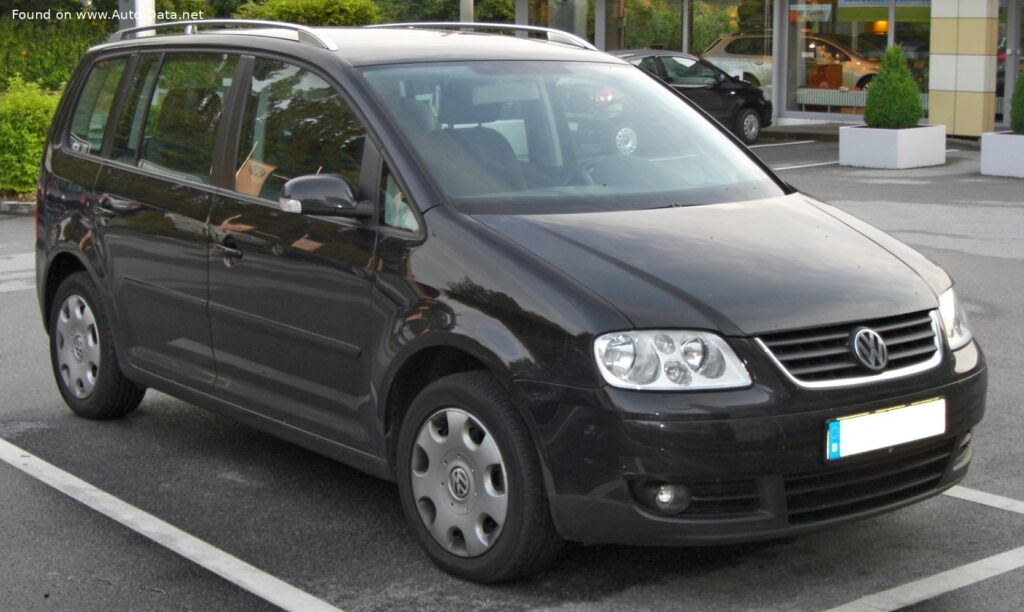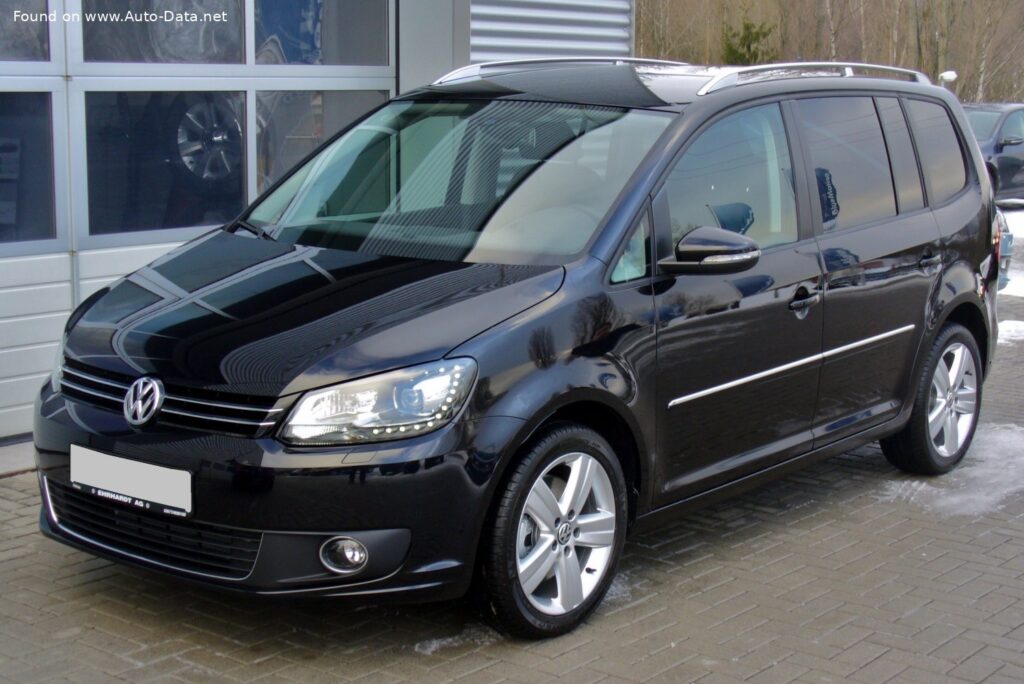
The Volkswagen Touran I (facelift, introduced in 2010) TGI 1.4 TSI (150 hp) DSG BlueMotion represents a specific configuration within the first generation of the Touran compact minivan, produced from 2010 to 2015. This variant combined a turbocharged and supercharged 1.4-liter gasoline engine with a seven-speed dual-clutch gearbox (DSG) and the flexibility of running on both gasoline and Compressed Natural Gas (CNG). Positioned as a mid-range offering, it aimed to balance fuel efficiency, practicality, and a reasonable level of performance for family transport. The Touran I itself was based on the Volkswagen Group’s A3/1HX0 platform, shared with models like the Volkswagen Golf, Audi A3, and SEAT León.
Powertrain & Engine Architecture
The heart of the Touran I TGI 1.4 TSI is the CDGA engine code, a 1.4-liter inline-four cylinder gasoline engine. What sets this engine apart is its unique combination of turbocharging and supercharging. The supercharger provides immediate boost at low engine speeds, eliminating turbo lag and improving responsiveness during initial acceleration. As engine speed increases, the turbocharger takes over, delivering higher peak power. This dual-charging system, coupled with direct fuel injection, results in a broad torque curve and improved fuel efficiency. The engine produces 150 horsepower at 5500 rpm and 220 Nm (162.26 lb-ft) of torque available from 1500 to 4500 rpm.
The direct injection system utilizes high-pressure fuel injectors positioned directly into the combustion chamber, allowing for precise fuel metering and improved combustion efficiency. The engine also features an intercooler to cool the compressed air from the turbocharger, further enhancing performance. The seven-speed DSG (Direct-Shift Gearbox) is a dual-clutch transmission that offers both automatic and manual shifting modes. It provides quick and smooth gear changes, contributing to a more engaging driving experience compared to a traditional automatic transmission. The DSG’s gear ratios are optimized for both fuel economy and performance, with a relatively short final drive to maximize acceleration.
TGI and BlueMotion Technology
The “TGI” designation indicates the engine’s capability to run on Compressed Natural Gas (CNG). The vehicle features a bi-fuel system, allowing it to seamlessly switch between gasoline and CNG. CNG offers lower emissions and can be a more cost-effective fuel source in regions where it is readily available. The “BlueMotion” label signifies Volkswagen’s efforts to improve fuel efficiency and reduce emissions through various technologies, including optimized aerodynamics, low rolling resistance tires, and engine management adjustments.
Driving Characteristics
The 150 hp 1.4 TSI engine paired with the seven-speed DSG provides adequate performance for everyday driving. Acceleration from 0 to 100 km/h (0-62 mph) takes approximately 10.2 seconds, while 0-60 mph is achieved in around 9.7 seconds. While not a particularly sporty vehicle, the Touran TGI offers sufficient power for overtaking maneuvers and maintaining comfortable cruising speeds on the highway. The DSG transmission contributes to a responsive feel, and the dual-charging system ensures minimal turbo lag.
Compared to the higher-output 1.8 TSI or 2.0 TDI versions of the Touran, the 1.4 TSI feels less powerful, especially when fully loaded with passengers and luggage. However, it offers a more refined and fuel-efficient driving experience. The manual transmission variants of the 1.4 TSI generally offer slightly quicker acceleration due to the reduced weight and drivetrain losses. The 1.4 TSI is geared towards drivers prioritizing fuel economy and practicality over outright performance.
Equipment & Trim Levels
The Touran I (facelift) TGI 1.4 TSI DSG BlueMotion typically came equipped with a reasonable level of standard features. These included air conditioning, power windows, power mirrors, a CD/MP3 stereo system, and ABS brakes. Safety features such as front and side airbags were also standard. Interior upholstery was typically cloth, with options for upgraded materials available. The dashboard layout was functional and straightforward, with a focus on ergonomics.
Optional extras included features like alloy wheels, a sunroof, parking sensors, a navigation system, and upgraded audio systems. Higher trim levels offered additional features such as automatic climate control, leather upholstery, and heated seats. The TGI variant often included specific instrumentation to monitor CNG fuel levels and switching between fuel sources.
Chassis & Braking
The Touran I utilizes a MacPherson strut front suspension and a multi-link rear suspension. This setup provides a comfortable ride quality and decent handling characteristics. The suspension is tuned for comfort rather than sporty handling, prioritizing ride smoothness over sharp cornering. The front brakes are ventilated discs, while the rear brakes are typically solid discs on higher trim levels, but drums on base models. ABS (Anti-lock Braking System) is standard, providing enhanced braking performance and stability. Stabilizer bars are fitted to both the front and rear axles to reduce body roll during cornering. Tire sizes typically ranged from 195/65 R15 to 205/55 R16, depending on the trim level.
Market Reception & Comparison
The Touran I TGI 1.4 TSI DSG BlueMotion was generally well-received by critics as a practical and fuel-efficient family vehicle. Its bi-fuel capability was seen as a significant advantage in regions with established CNG infrastructure. Fuel economy figures of around 7 l/100 km (33.6 US mpg) combined were competitive for its class. However, some critics noted that the 1.4 TSI engine could feel underpowered when the vehicle was fully loaded.
Compared to the 1.8 TSI and 2.0 TDI variants, the 1.4 TSI offered lower running costs but less performance. The 1.8 TSI provided a more engaging driving experience, while the 2.0 TDI offered superior fuel economy and torque. Reliability was generally good, although some owners reported issues with the DSG transmission, a common concern across the Volkswagen Group during this period. The TGI variant’s CNG system required periodic maintenance to ensure optimal performance and safety.
Technical Specifications
| Engine Model/Code | CDGA |
| Engine Displacement | 1390 cm3 (84.82 cu. in.) |
| Number of Cylinders | 4, Inline |
| Fuel Injection System | Direct Injection |
| Engine Aspiration | Turbocharging and Supercharger, Intercooler |
| Maximum Power | 150 hp @ 5500 rpm |
| Maximum Torque | 220 Nm (162.26 lb-ft) @ 1500-4500 rpm |
| Fuel Type | Petrol / CNG |
| Transmission | 7-speed DSG (Dual Clutch) |
| Drive Type | Front Wheel Drive |
| Acceleration 0-100 km/h | 10.2 sec |
| Acceleration 0-62 mph | 10.2 sec |
| Maximum Speed | 204 km/h (126.76 mph) |
| Kerb Weight | 1710 kg (3769.9 lbs) |
| Max. Weight | 2230 kg (4916.31 lbs) |
| Fuel Consumption (Urban) | 9.1 l/100 km (25.8 US mpg) |
| Fuel Consumption (Extra Urban) | 5.8 l/100 km (40.6 US mpg) |
| Fuel Consumption (Combined) | 7 l/100 km (33.6 US mpg) |
| CO2 Emissions | 125 g/km |
| Fuel Tank Capacity | 11 l (2.91 US gal) |
Legacy
The Volkswagen Touran I TGI 1.4 TSI DSG BlueMotion represents an early example of Volkswagen’s efforts to offer alternative fuel vehicles and improve fuel efficiency. While the DSG transmission can require costly repairs if not properly maintained, the 1.4 TSI engine itself is generally considered reliable. On the used car market, these models are often sought after by buyers looking for a practical and fuel-efficient family vehicle, particularly in regions where CNG is readily available. The combination of gasoline and CNG capability provides flexibility and can significantly reduce running costs. However, potential buyers should be aware of the potential maintenance costs associated with the DSG transmission and the CNG system. The Touran I TGI 1.4 TSI remains a viable option for those seeking a well-rounded and economical compact minivan.