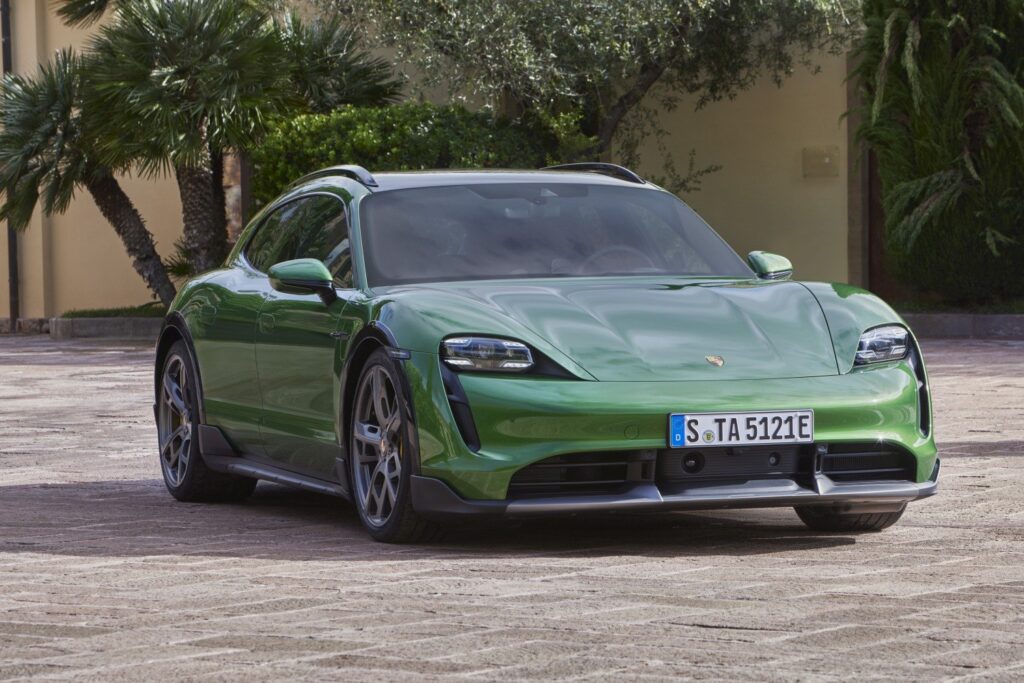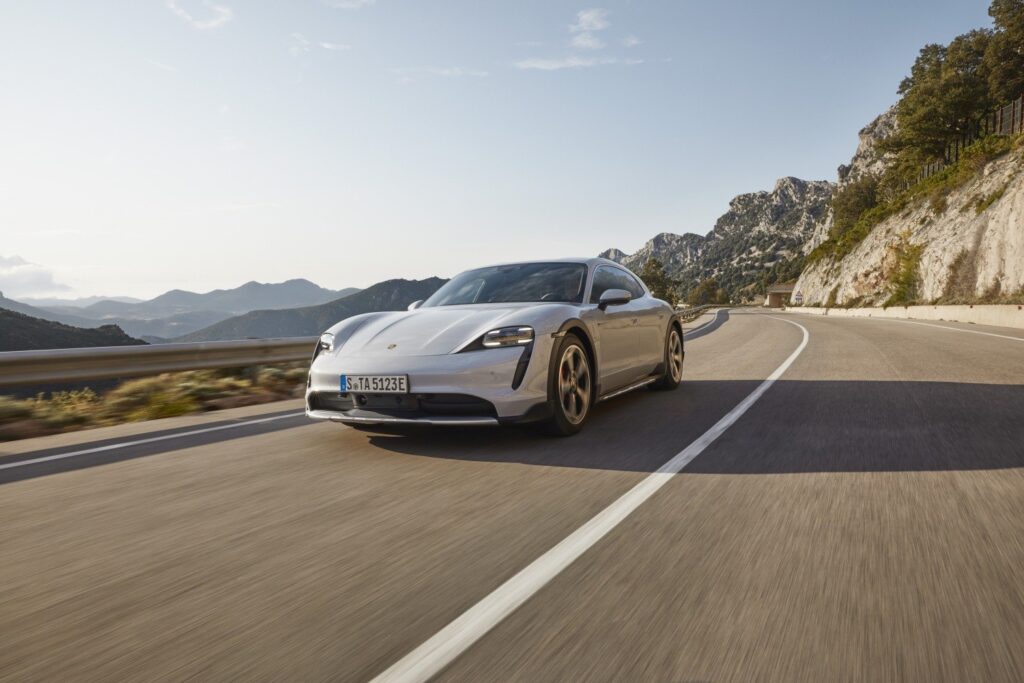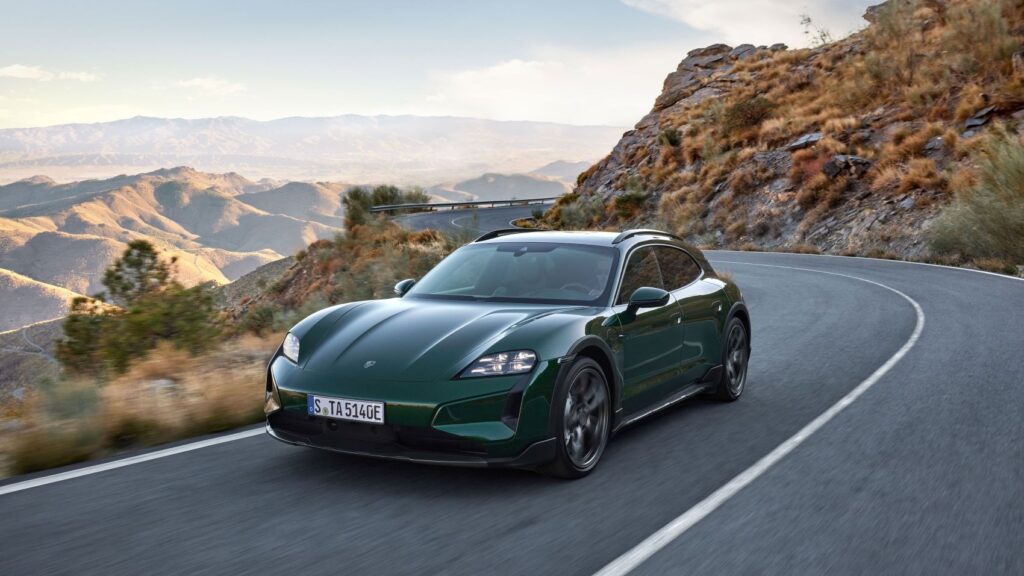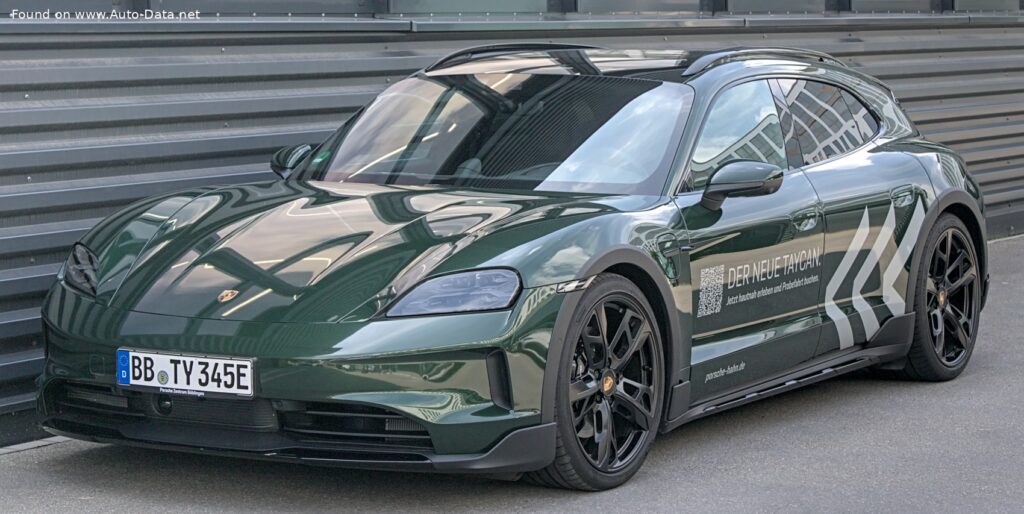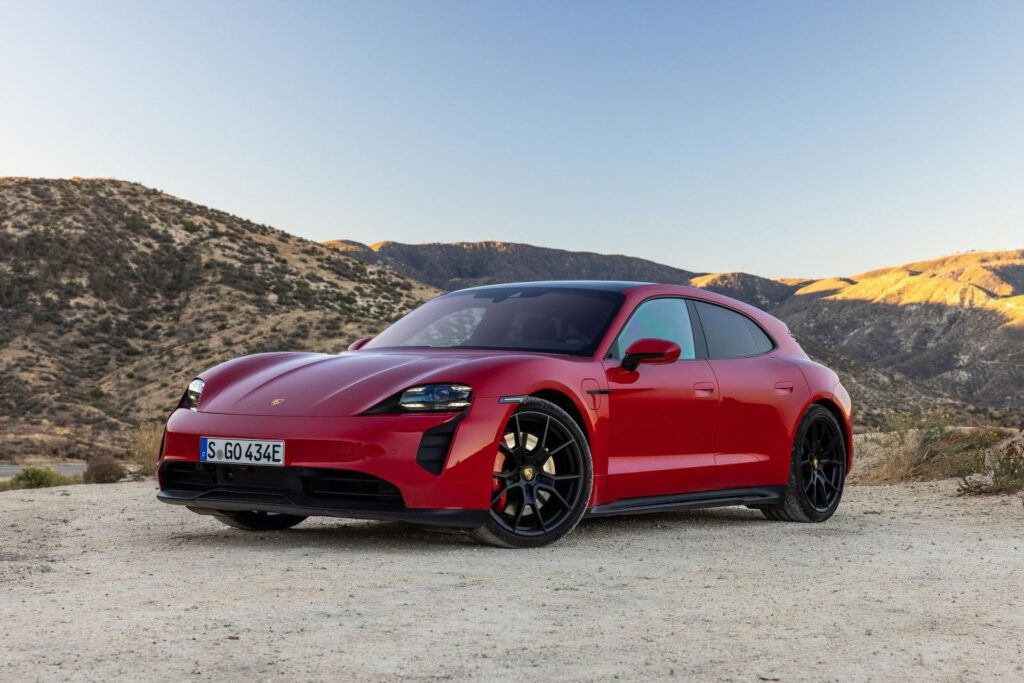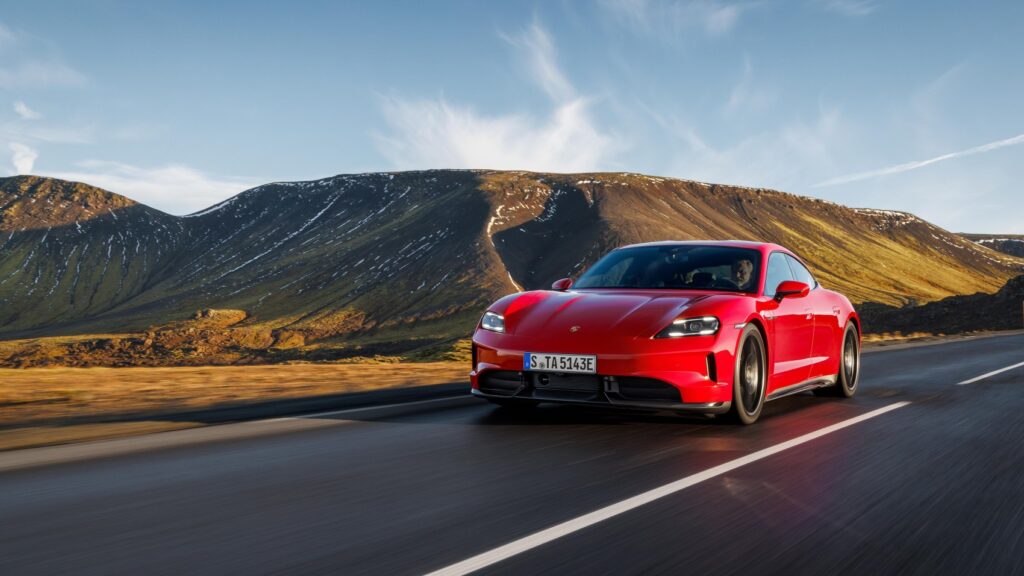
The Porsche Taycan GTS 105 kWh (700 hp) represents a high-performance variant within the first generation (Y1A) of the Taycan, specifically the 2024 facelift model. Introduced in November 2024, it occupies a position as a performance-oriented trim, slotting between the base Taycan models and the more extreme Turbo and Turbo S variants. The Taycan, Porsche’s first all-electric vehicle, was designed to deliver the driving experience expected of the brand while embracing the benefits of battery-electric technology. The GTS trim emphasizes a balance of performance, handling, and everyday usability, appealing to drivers seeking a thrilling yet practical electric vehicle.
Powertrain & Engine Architecture
The Taycan GTS 105 kWh is built around a dual-motor, all-wheel-drive (AWD) powertrain. Unlike traditional internal combustion engine vehicles, the Taycan utilizes two permanently excited synchronous motors – one driving the front axle and one driving the rear. This configuration allows for precise torque vectoring and optimal traction. The system delivers a combined output of 700 horsepower (hp) and 790 Newton-meters (582.67 lb-ft) of torque.
Central to the Taycan’s architecture is its 800-volt electrical system. This high-voltage architecture enables significantly faster charging times compared to the more common 400-volt systems found in many other electric vehicles. The battery pack, utilizing lithium-ion technology, has a gross capacity of 105 kWh, with a usable capacity of 97 kWh. The battery is positioned low in the vehicle floor, contributing to a low center of gravity and enhanced stability. The recuperation system is capable of outputting up to 400 kW, allowing for efficient energy recovery during deceleration and braking.
The Taycan GTS employs a two-speed automatic transmission on both the front and rear axles. The first gear provides strong acceleration from a standstill, while the second gear optimizes efficiency at higher speeds. This transmission design differs from single-speed transmissions used in some other EVs, offering a broader range of performance characteristics.
Driving Characteristics
The Taycan GTS delivers exceptionally quick acceleration, achieving 0-60 mph in 3.1 seconds, 0-62 mph in 3.3 seconds, and 0-100 km/h in 3.3 seconds. Its top speed is electronically limited to 250 km/h (155.34 mph). The dual-motor AWD system provides tenacious grip, allowing for confident handling in various conditions. The low center of gravity, thanks to the battery placement, minimizes body roll and enhances cornering agility.
Compared to lower-powered Taycan variants, the GTS offers a significantly more engaging driving experience. While base models prioritize efficiency, the GTS prioritizes performance. Compared to the higher-output Turbo and Turbo S models, the GTS provides a slightly more balanced feel, with less aggressive power delivery and a greater emphasis on driver involvement. The two-speed transmission contributes to a more dynamic driving experience, providing noticeable shifts during acceleration.
Equipment & Trim Levels
The Taycan GTS comes standard with a comprehensive suite of features designed to enhance both comfort and performance. Standard interior appointments include premium upholstery, typically a combination of leather and Alcantara, and sport seats providing excellent support. The dashboard features a large, curved display incorporating the instrument cluster and infotainment system. Standard technology includes Porsche Communication Management (PCM) with navigation, Apple CarPlay, and Android Auto integration.
Optional extras for the GTS trim are extensive, allowing buyers to personalize their vehicle. These include adaptive air suspension, Porsche Dynamic Chassis Control (PDCC), carbon fiber interior trim, and a premium sound system. Exterior options include various wheel designs, paint colors, and aerodynamic enhancements. The GTS trim often serves as a popular base for customization, with many owners opting for personalized options to tailor the vehicle to their preferences.
Chassis & Braking
The Taycan GTS utilizes a sophisticated chassis design featuring double-wishbone suspension at the front and an independent multi-link suspension at the rear. Adaptive air suspension is standard, allowing the ride height to be adjusted for optimal comfort or performance. The air suspension also contributes to the vehicle’s aerodynamic efficiency by lowering the ride height at higher speeds.
Braking performance is equally impressive, with ventilated discs on all four wheels. The braking system incorporates Porsche Surface Coated Brake (PSCB) technology, which provides improved braking performance and reduced brake dust. Anti-lock braking system (ABS) is standard, along with other advanced driver-assistance systems. The steering system is a rack-and-pinion design with electric power steering, providing precise and responsive steering feel.
Market Reception & Comparison
The Porsche Taycan GTS has been widely praised by automotive critics for its exceptional performance, handling, and overall driving experience. Reviewers consistently highlight the vehicle’s impressive acceleration, precise steering, and comfortable ride. The 800-volt charging system has also been lauded for its ability to significantly reduce charging times.
Compared to other trims in the Taycan lineup, the GTS strikes a compelling balance between performance and practicality. It offers more power and performance than the base models but is less aggressively tuned than the Turbo and Turbo S variants. In terms of fuel economy (electricity consumption), the Taycan GTS achieves an average energy consumption of 18-20.7 kWh/100 km (28.97 – 33.31 kWh/100 mi), translating to a range of 552-630 km (343 – 391.46 mi) on the WLTP cycle. This range is competitive with other high-performance electric vehicles.
Technical Specifications
| Brand | Porsche |
| Model | Taycan |
| Generation | Taycan (Y1A, facelift 2024) |
| Type | GTS 105 kWh (700 Hp) |
| Start of production | November, 2024 |
| Powertrain Architecture | BEV (Electric Vehicle) |
| Body type | Sedan |
| Seats | 4-5 |
| Doors | 4 |
| Fuel Type | Electricity |
| Acceleration 0 – 100 km/h | 3.3 sec |
| Acceleration 0 – 62 mph | 3.3 sec |
| Acceleration 0 – 60 mph | 3.1 sec |
| Acceleration 0 – 200 km/h | 10.4 sec |
| Maximum speed | 250 km/h (155.34 mph) |
| Gross battery capacity | 105 kWh |
| Net (usable) battery capacity | 97 kWh |
| Battery voltage | 800 V |
| Battery technology | Lithium-ion (Li-Ion) |
| System power | 700 Hp |
| System torque | 790 Nm (582.67 lb.-ft.) |
| Kerb Weight | 2285 kg (5037.56 lbs.) |
| Max. weight | 2850 kg (6283.17 lbs.) |
| Trunk (boot) space – minimum | 366 l (12.93 cu. ft.) |
| Length | 4963 mm (195.39 in.) |
| Width | 1966 mm (77.4 in.) |
| Height | 1381 mm (54.37 in.) |
| Wheelbase | 2900 mm (114.17 in.) |
| Number of gears and type of gearbox | 2 gears, automatic transmission |
Legacy
The Taycan GTS 105 kWh, as a relatively recent model, is still establishing its long-term reliability record. However, Porsche’s reputation for engineering excellence and the Taycan’s robust electrical architecture suggest a high level of durability. Early reports indicate that the battery pack is holding up well, with minimal degradation observed in many vehicles. The dual-motor powertrain has also proven to be reliable, with few reported issues.
On the used car market, the Taycan GTS is expected to hold its value well due to its performance credentials and the desirability of the Porsche brand. As more examples become available, the used market will provide a clearer picture of the vehicle’s long-term ownership costs and potential maintenance requirements. The Taycan GTS represents a significant step forward in electric vehicle technology, and its legacy is likely to be one of performance, innovation, and lasting quality.