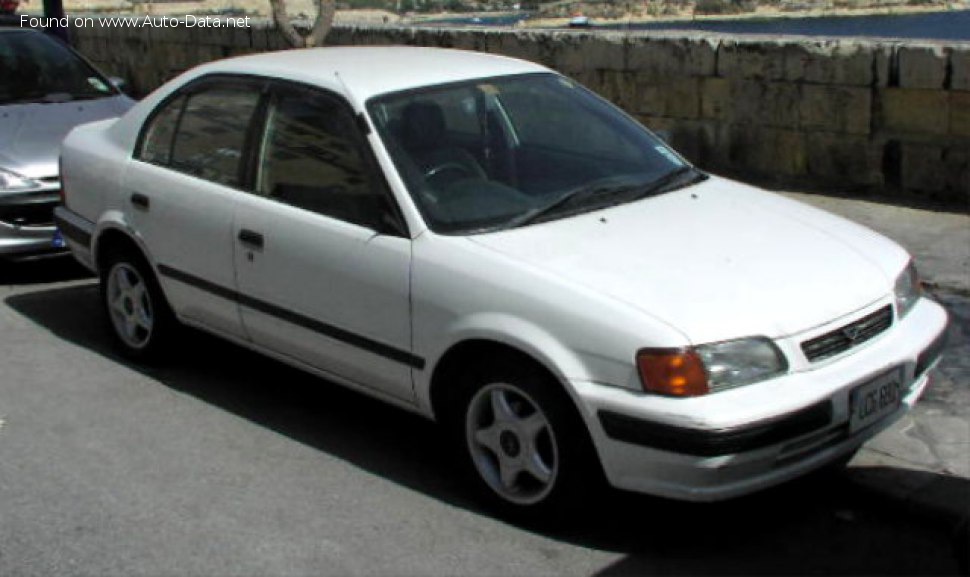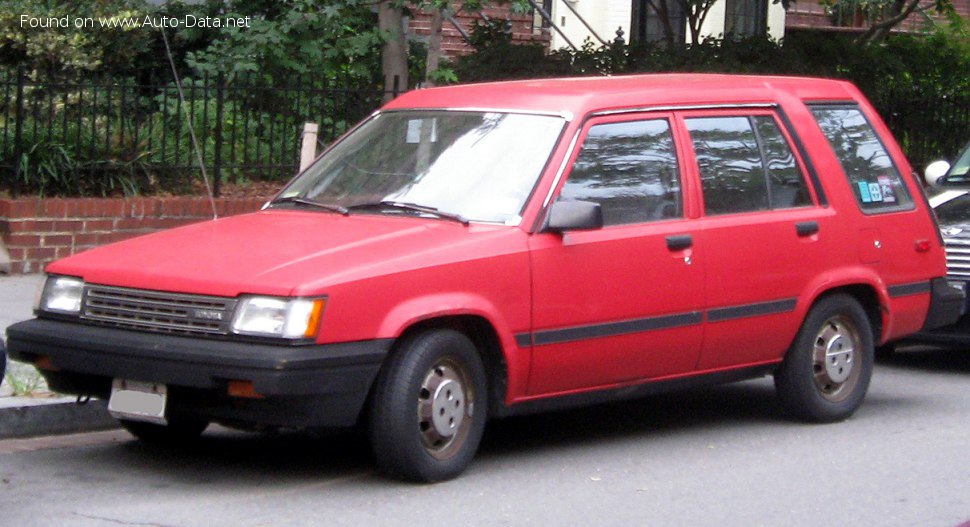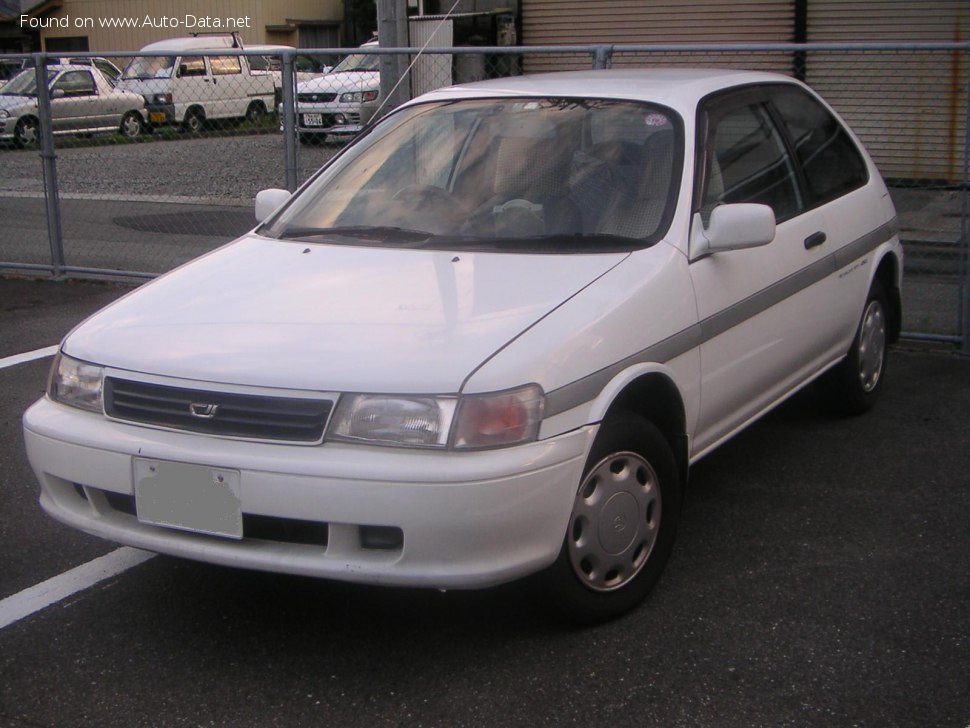
The Toyota Tercel EL41, produced between September 1990 and 1993, represented the third generation of Toyota’s subcompact car. Within this generation, the 1.5i 16V VS trim, boasting 100 horsepower, occupied a position as a relatively well-equipped and sporty offering. It sat above the base models in terms of performance and features, but below any potential limited-edition or higher-specification variants that might have been offered in certain markets. The EL41 Tercel was built on Toyota’s compact platform, designed to provide affordable and reliable transportation, and the 1.5i 16V VS aimed to appeal to buyers seeking a bit more driving enjoyment without sacrificing economy.
1.5i 16V VS Powertrain & Engine Architecture
The heart of the 1.5i 16V VS was the 1497 cc (91.35 cubic inches) inline four-cylinder engine, designated as part of Toyota’s E-series engine family. This engine featured a 74 mm bore and 87 mm stroke, resulting in a compression ratio of 9.4:1. Crucially, the “16V” designation indicates a dual overhead camshaft (DOHC) valvetrain, providing improved breathing and higher-end power compared to engines with simpler overhead valve configurations. The engine utilized a multi-port fuel injection system, delivering fuel directly to each intake valve for precise control and efficient combustion. This engine was naturally aspirated, meaning it did not employ a turbocharger or supercharger. The engine produced 100 horsepower at 6200 rpm and 126 Nm (92.93 lb-ft) of torque at 3000 rpm. Power per liter was a respectable 66.8 hp/l.
While the EL41 Tercel was primarily offered with a five-speed manual transmission, the 1.5i 16V VS was also available with a four-speed automatic transmission. This automatic was a conventional hydraulic control unit, offering smooth but not particularly quick shifts. The gear ratios were tuned for fuel efficiency and everyday drivability rather than outright performance. The automatic transmission contributed to a slightly higher curb weight and reduced fuel economy compared to the manual version.
Engine Codes and Variations
While the core engine architecture remained consistent, slight variations in engine codes may have existed depending on the specific market. These variations typically related to emissions control equipment and minor tuning adjustments. However, the fundamental characteristics of the 1.5-liter 16V engine remained largely unchanged across different regions.
Driving Characteristics
The 1.5i 16V VS offered a noticeable step up in performance compared to the base-model Tercels. The 100 horsepower engine, combined with the relatively lightweight chassis (880 kg or 1940.07 lbs), provided adequate acceleration for everyday driving. However, it wasn’t a particularly fast car. Acceleration from 0 to 60 mph was estimated to be in the 10-11 second range. The DOHC valvetrain allowed the engine to rev freely, and the powerband felt relatively flat, making it easy to maintain speed on the highway. The automatic transmission, while convenient, did detract from the overall driving experience. Upshifts were somewhat slow, and downshifts often required significant throttle input. Compared to the manual transmission version, the automatic felt less responsive and less engaging. The weight-to-power ratio of 8.8 kg/Hp and weight-to-torque ratio of 7 kg/Nm reflected the car’s modest performance capabilities.
Equipment & Trim Levels
The 1.5i 16V VS trim level generally included features such as power steering, upgraded interior trim, and a more comprehensive instrument cluster compared to the base Tercel. Interior upholstery typically consisted of cloth seats, with a relatively simple dashboard layout. Optional extras could include air conditioning, a cassette player, and upgraded sound systems. The VS designation often indicated a focus on value and convenience, offering a good balance of features for the price. The availability of specific options varied depending on the market.
Chassis & Braking
The Tercel EL41 utilized a front-engine, front-wheel-drive layout. The front suspension employed a wishbone configuration, providing a comfortable ride and predictable handling. The rear suspension utilized a coil spring setup. Braking duties were handled by disc brakes at the front and drum brakes at the rear. The inclusion of an Anti-lock Braking System (ABS) was a notable feature for the time, enhancing safety and control during emergency braking situations. Tires were typically 175/70 R13, mounted on 13-inch steel wheels. The steering system was a rack and pinion type, providing precise and responsive steering feel.
Market Reception & Comparison
The Toyota Tercel EL41, and specifically the 1.5i 16V VS, was generally well-received by automotive critics for its reliability, fuel efficiency, and affordability. It was often praised as a practical and sensible choice for budget-conscious buyers. However, it was also criticized for its relatively bland styling and lack of performance compared to some of its competitors. In terms of fuel economy, the 1.5i 16V VS achieved approximately 4.7 l/100 km (50 US mpg, 60.1 UK mpg, 21.3 km/l) in combined driving conditions, making it a very economical vehicle to operate. Compared to other trims in the Tercel lineup, the 1.5i 16V VS offered a noticeable improvement in performance, but at a slightly higher price point. Compared to competitors like the Honda Civic or Nissan Sentra, the Tercel often lagged behind in terms of refinement and driving dynamics, but it typically offered a lower purchase price and a reputation for exceptional reliability.
Technical Specifications
| Brand | Toyota |
| Model | Tercel |
| Generation | Tercel (EL41) |
| Type (Engine) | 1.5i 16V VS (100 Hp) |
| Start of production | September, 1990 |
| End of production | 1993 |
| Powertrain Architecture | Internal Combustion engine |
| Body type | Hatchback |
| Seats | 5 |
| Doors | 3 |
| Fuel consumption (combined) | 4.7 l/100 km |
| Fuel Type | Petrol (Gasoline) |
| Weight-to-power ratio | 8.8 kg/Hp |
| Weight-to-torque ratio | 7 kg/Nm |
| Power | 100 Hp @ 6200 rpm |
| Power per litre | 66.8 Hp/l |
| Torque | 126 Nm @ 3000 rpm (92.93 lb.-ft. @ 3000 rpm) |
| Engine layout | Front, Transverse |
| Engine displacement | 1497 cm3 (91.35 cu. in.) |
| Number of cylinders | 4 |
| Engine configuration | Inline |
| Cylinder Bore | 74 mm (2.91 in.) |
| Piston Stroke | 87 mm (3.43 in.) |
| Compression ratio | 9.4:1 |
| Number of valves per cylinder | 4 |
| Fuel injection system | Multi-port manifold injection |
| Engine aspiration | Naturally aspirated engine |
| Valvetrain | DOHC |
| Kerb Weight | 880 kg (1940.07 lbs.) |
| Max. weight | 1155 kg (2546.34 lbs.) |
| Max load | 275 kg (606.27 lbs.) |
| Fuel tank capacity | 45 l (11.89 US gal | 9.9 UK gal) |
| Length | 3930 mm (154.72 in.) |
| Width | 1645 mm (64.76 in.) |
| Height | 1365 mm (53.74 in.) |
| Wheelbase | 2380 mm (93.7 in.) |
| Front track | 1400 mm (55.12 in.) |
| Rear track | 1395 mm (54.92 in.) |
| Minimum turning circle | 9 m (29.53 ft.) |
| Drivetrain Architecture | Front wheel drive |
| Number of gears and type of gearbox | 5 gears, manual transmission |
| Front suspension | Wishbone |
| Rear suspension | Coil spring |
| Front brakes | Disc |
| Rear brakes | Drum |
| Assisting systems | ABS (Anti-lock braking system) |
| Steering type | Steering rack and pinion |
| Tires size | 175/70 R13 |
| Wheel rims size | 13 |
Legacy
The 1.5i 16V VS powertrain, while not particularly groundbreaking, proved to be exceptionally durable and reliable. Tercels from this era are still occasionally seen on the road today, a testament to Toyota’s engineering and build quality. The engine is known for its longevity and relatively low maintenance requirements. On the used car market, these Tercels are often sought after by buyers looking for an affordable and dependable vehicle. However, age and mileage can take their toll, and potential buyers should be aware of common issues such as oil leaks and worn suspension components. The 1.5i 16V VS represents a solid example of a practical and reliable subcompact car from the early 1990s, offering a good balance of fuel efficiency, affordability, and dependability.