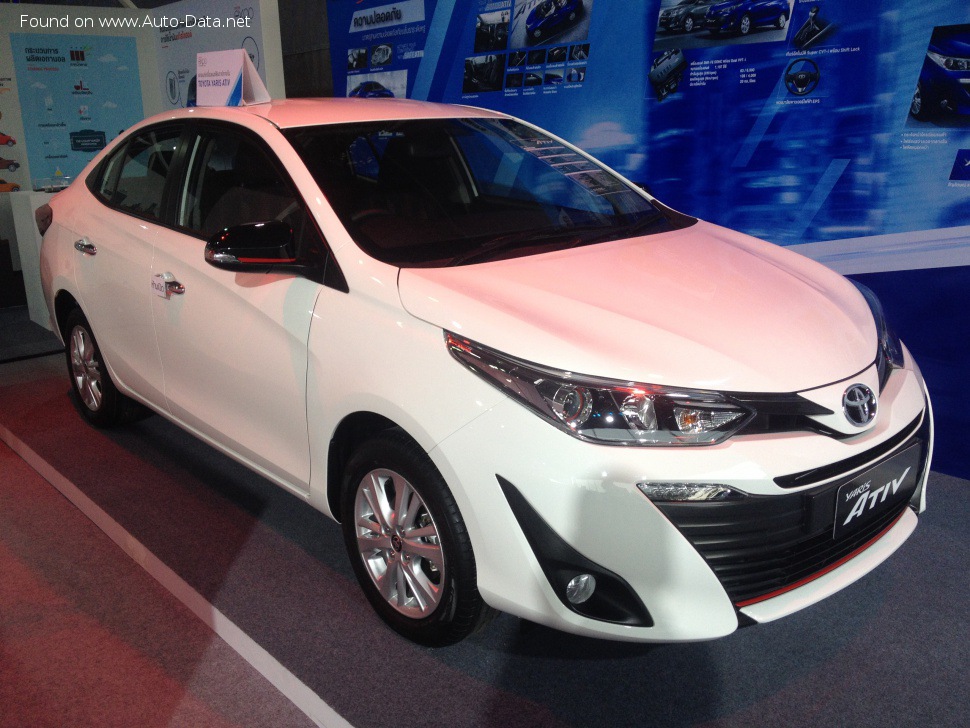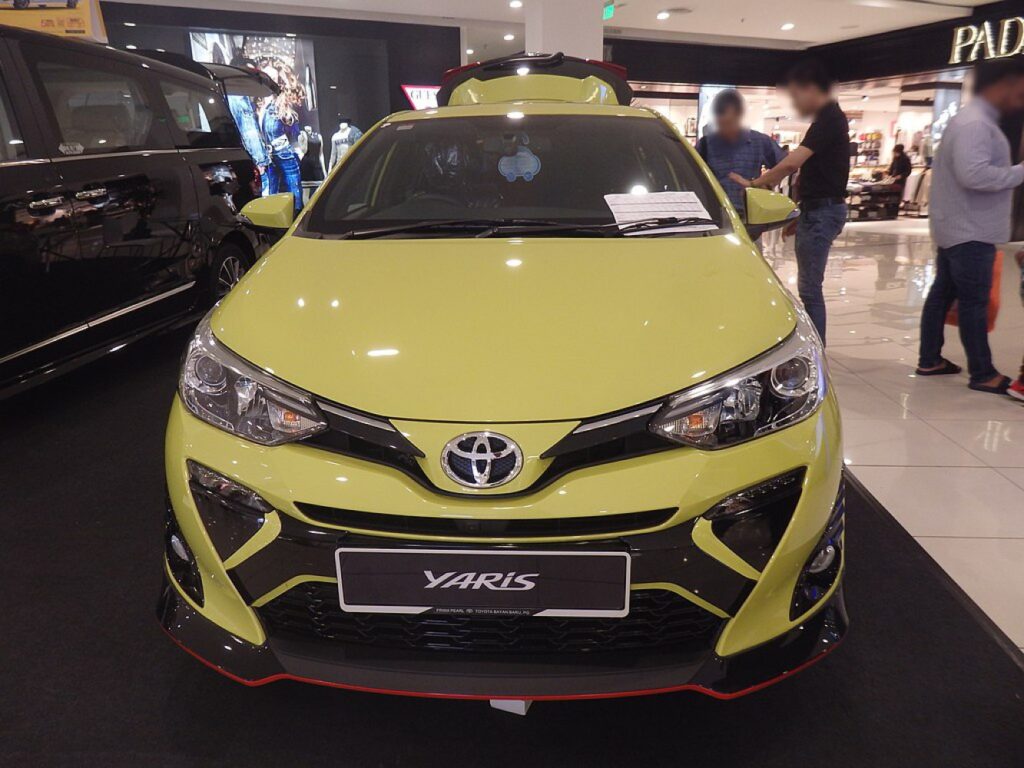
The Toyota Yaris (XP150, facelift 2017) 1.5L Ethanol CVT represents a specific configuration within the third generation of the Toyota Yaris, produced from 2018 to 2020. This variant was positioned as a fuel-efficient and practical option within the Yaris lineup, appealing to buyers seeking a cost-effective and environmentally conscious compact hatchback. The XP150 series Yaris, a subcompact car, was developed as a global model, sold under various names in different markets, but this specific 1.5L Ethanol CVT configuration was primarily targeted towards markets with established ethanol fuel infrastructure, like Brazil and certain European countries.
Powertrain & Engine Architecture
At the heart of the Yaris 1.5L Ethanol CVT lies the 2NR-FBE engine, a 1.496-liter (91.29 cubic inches) inline-four cylinder gasoline engine. This engine is notable for its ability to run on both gasoline and ethanol (E85) fuel, with power output varying depending on the fuel used. When running on gasoline, the 2NR-FBE produces 105 horsepower at 5600 rpm and 140 Nm (103.26 lb-ft) of torque at 4000 rpm. Switching to E85 fuel increases the output to 110 horsepower at the same 5600 rpm, with a slight increase in torque to 146 Nm (approximately 107.7 lb-ft) at 4000 rpm. The engine utilizes a multi-port fuel injection system and benefits from Toyota’s Variable Valve Timing-intelligent (VVT-i) technology, optimizing valve timing for improved fuel efficiency and performance across the rev range.
The engine’s bore and stroke are 72.5 mm (2.85 inches) and 90.6 mm (3.57 inches) respectively, resulting in a compression ratio of 13:1. The engine is transversely mounted in the front of the vehicle. The 2NR-FBE is a naturally aspirated engine, meaning it does not employ forced induction like a turbocharger or supercharger. The engine requires 3.3 liters (3.49 US quarts) of engine oil and 4.9 liters (5.18 US quarts) of coolant for optimal operation. This engine also features a particulate filter to reduce emissions.
Paired with the 2NR-FBE engine is a Continuously Variable Transmission (CVT). This transmission type offers seamless gear changes and contributes to the Yaris’s fuel efficiency. Unlike traditional automatic transmissions with fixed gear ratios, a CVT utilizes a belt and pulley system to provide an infinite number of gear ratios within its operating range. This allows the engine to operate at its most efficient rpm for any given speed and load.
Comparison to Other Yaris Variants
The 1.5L Ethanol CVT Yaris occupied a middle ground within the XP150 lineup. Lower trims typically featured a 1.0-liter three-cylinder engine with significantly less power, targeting the most budget-conscious buyers. Higher-end trims, depending on the market, might have offered a 1.5-liter engine paired with a traditional automatic transmission or even a manual gearbox. The CVT, while prioritizing fuel economy, offered a different driving experience compared to the more engaging feel of a manual transmission. The ethanol compatibility of this variant was a key differentiator, appealing to those seeking to reduce their reliance on fossil fuels and take advantage of potentially lower ethanol fuel costs.
Driving Characteristics
The Yaris 1.5L Ethanol CVT delivers adequate performance for urban driving and everyday commuting. While not a particularly sporty vehicle, the engine provides sufficient power for merging onto highways and overtaking slower traffic. The CVT transmission contributes to smooth acceleration, although it can sometimes feel less responsive than a traditional automatic. The CVT’s programming is tuned for fuel efficiency, meaning it prioritizes keeping the engine in its optimal operating range rather than providing aggressive acceleration. The weight-to-power ratio of 10.8 kg/Hp and 92.5 Hp/tonne reflects the car’s modest performance capabilities. The weight-to-torque ratio of 8.1 kg/Nm and 123.3 Nm/tonne further illustrates the engine’s torque characteristics.
The CVT’s lack of fixed gears can result in a “rubber band” feeling during hard acceleration, where the engine revs up but the vehicle’s speed doesn’t immediately increase. However, this is a common characteristic of CVT transmissions and is generally less noticeable during normal driving conditions. The car’s relatively light weight (1135-1150 kg or 2502.25 – 2535.32 lbs) helps to mitigate the effects of the engine’s modest power output.
Equipment & Trim Levels
The standard equipment level of the Yaris 1.5L Ethanol CVT varied depending on the specific market and year of production. Generally, this trim included features such as air conditioning, power windows, power door locks, and a basic audio system with USB connectivity. Safety features typically included ABS (Anti-lock Braking System), airbags, and stability control. Higher trim levels offered additional features like alloy wheels, a touchscreen infotainment system, rear parking sensors, and automatic climate control. Interior upholstery was typically cloth, with options for upgraded materials in higher trims. The dashboard layout was functional and straightforward, prioritizing ease of use.
Chassis & Braking
The Yaris 1.5L Ethanol CVT utilizes a front-wheel-drive layout. The front suspension consists of an independent McPherson strut setup, providing a comfortable ride and decent handling. The rear suspension employs a torsion beam configuration, which is a cost-effective and space-saving design. The front brakes are ventilated discs, offering good stopping power, while the rear brakes are drums. The steering system is an electric power steering rack and pinion, providing light and responsive steering feel. The vehicle rides on 185/60 R15 tires mounted on 15-inch wheel rims.
Market Reception & Comparison
The Yaris 1.5L Ethanol CVT was generally well-received by critics as a practical and fuel-efficient city car. Its ability to run on ethanol fuel was a significant selling point in markets where ethanol is readily available and competitively priced. Compared to other trims in the Yaris lineup, the 1.5L CVT offered a good balance of performance and fuel economy. While the 1.0-liter engine was more affordable, it lacked the power needed for comfortable highway driving. The higher-powered trims offered more performance but came at a higher price point. Fuel economy figures were competitive within the subcompact segment, and the Yaris generally enjoyed a reputation for reliability.
Technical Specifications
| Brand | Toyota |
| Model | Yaris |
| Generation | Yaris (XP150, facelift 2017) |
| Type (Engine) | 1.5 (105/110 Hp) Ethanol CVT |
| Start of production | 2018 year |
| End of production | 2020 year |
| Powertrain Architecture | Internal Combustion engine |
| Body type | Hatchback |
| Seats | 5 |
| Doors | 5 |
| Fuel Type | Petrol / Ethanol – E85 |
| Weight-to-power ratio | 10.8 kg/Hp, 92.5 Hp/tonne |
| Weight-to-torque ratio | 8.1 kg/Nm, 123.3 Nm/tonne |
| Power | 105 Hp @ 5600 rpm |
| Power per litre | 70.2 Hp/l |
| Power (Ethanol – E85) | 110 Hp @ 5600 rpm |
| Power per litre (Ethanol – E85) | 73.5 Hp/l |
| Torque | 140 Nm @ 4000 rpm, 103.26 lb.-ft. @ 4000 rpm |
| Torque (Ethanol – E85) | 146 Nm @ 4000 rpm |
| Engine layout | Front, Transverse |
| Engine Model/Code | 2NR-FBE |
| Engine displacement | 1496 cm3, 91.29 cu. in. |
| Number of cylinders | 4 |
| Engine configuration | Inline |
| Cylinder Bore | 72.5 mm, 2.85 in. |
| Piston Stroke | 90.6 mm, 3.57 in. |
| Compression ratio | 13:1 |
| Number of valves per cylinder | 4 |
| Fuel injection system | Multi-port manifold injection |
| Engine aspiration | Naturally aspirated engine |
| Valvetrain | VVT-i |
| Engine oil capacity | 3.3 l, 3.49 US qt | 2.9 UK qt |
| Coolant | 4.9 l, 5.18 US qt | 4.31 UK qt |
| Kerb Weight | 1135-1150 kg, 2502.25 – 2535.32 lbs. |
| Max. weight | 1550 kg, 3417.17 lbs. |
| Max load | 400-415 kg, 881.85 – 914.92 lbs. |
| Trunk (boot) space – minimum | 310 l, 10.95 cu. ft. |
| Fuel tank capacity | 45 l, 11.89 US gal | 9.9 UK gal |
| Length | 4145 mm, 163.19 in. |
| Width | 1730 mm, 68.11 in. |
| Height | 1490 mm, 58.66 in. |
| Wheelbase | 2550 mm, 100.39 in. |
| Ride height (ground clearance) | 150 mm, 5.91 in. |
| Drivetrain Architecture | The Internal combustion engine (ICE) drives the front wheels of the vehicle. |
| Drive wheel | Front wheel drive |
| Number of gears and type of gearbox | automatic transmission CVT |
| Front suspension | Independent type McPherson |
| Rear suspension | Torsion |
| Front brakes | Ventilated discs |
| Rear brakes | Drum |
Legacy
The Toyota Yaris 1.5L Ethanol CVT, while not a high-performance variant, has proven to be a reliable and economical choice for many owners. The 2NR-FBE engine is known for its durability and relatively low maintenance costs. In the used car market, these models are often sought after for their fuel efficiency and practicality. The CVT transmission, while sometimes criticized for its driving feel, has generally proven to be reliable when properly maintained. As a whole, the XP150 Yaris, and specifically this 1.5L Ethanol CVT configuration, represents a solid and dependable option in the subcompact hatchback segment.