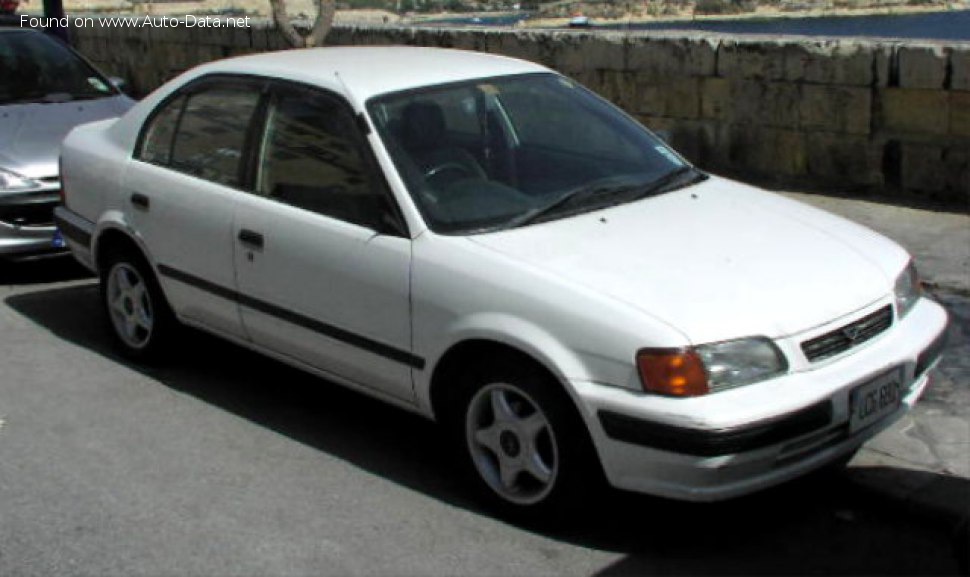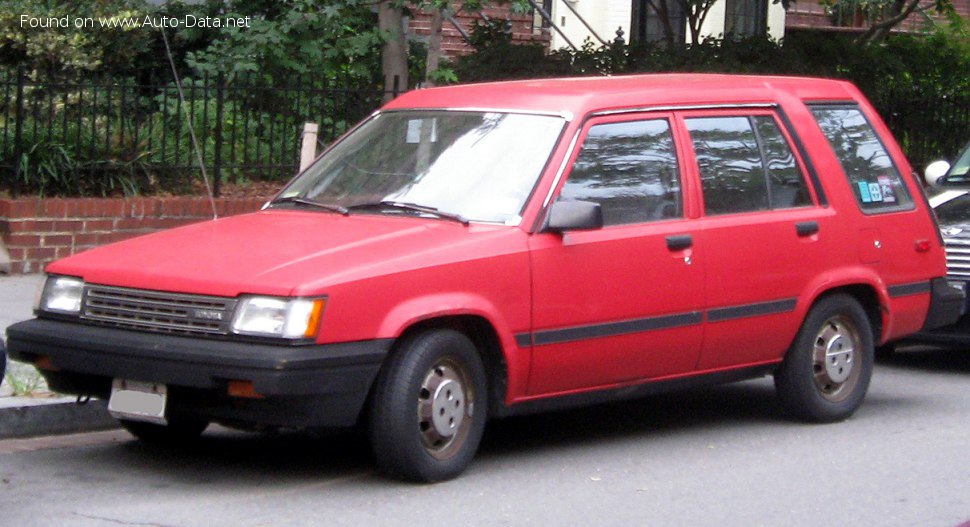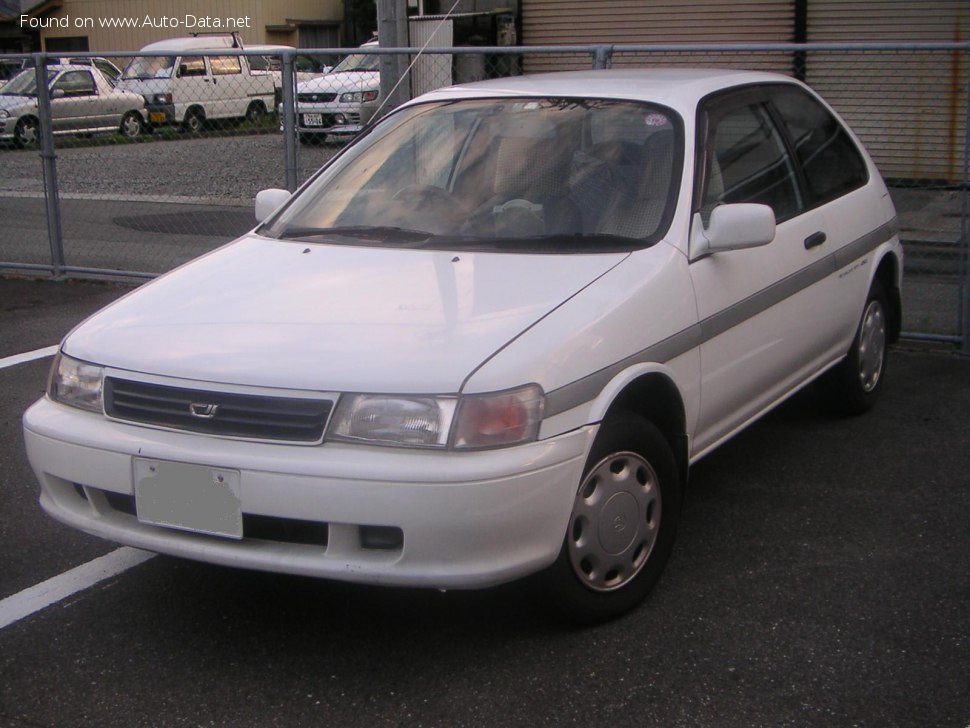
The Toyota Tercel EL41, produced between September 1990 and 1993, represented the third generation of Toyota’s subcompact car. Within this generation, the 1.5i 16V VS variant, equipped with a 1.5-liter gasoline engine and a four-speed automatic transmission, occupied a mid-range position in the Tercel lineup. It offered a balance between affordability, fuel efficiency, and convenience, appealing to buyers seeking a practical and easy-to-drive vehicle. The EL41 Tercel was built on the Toyota E platform, shared with other compact models of the era, and was primarily available as a three-door hatchback, though a five-door version was also offered in some markets.
1.5i 16V VS: Powertrain & Engine Architecture
The heart of the 1.5i 16V VS was the Toyota 5E-FE inline-four cylinder engine. This 1497 cc (91.35 cubic inches) engine featured a cast iron block and an aluminum cylinder head. The “16V” designation indicates the engine utilized a dual overhead camshaft (DOHC) valvetrain, operating four valves per cylinder. This configuration contributed to improved breathing and higher engine speeds compared to older, simpler designs. Fuel delivery was managed by a multi-port fuel injection system, providing precise fuel metering for optimal combustion and efficiency. The engine produced 100 horsepower at 6200 rpm and 126 Nm (92.93 lb-ft) of torque at 3000 rpm.
The engine was paired with a four-speed automatic transmission, a popular choice for buyers prioritizing ease of use over outright performance. This transmission was electronically controlled, offering smoother shifts and improved fuel economy compared to earlier hydraulically controlled units. While not known for its sportiness, the automatic transmission provided adequate performance for everyday driving conditions. The transmission’s gear ratios were optimized for fuel efficiency and comfortable cruising, rather than rapid acceleration.
Engine Codes and Variations
The 5E-FE engine was a relatively common Toyota powerplant of the early 1990s, appearing in other models like the Corolla and Starlet. While the basic engine architecture remained consistent, slight variations existed depending on the market and specific application. The 1.5i 16V VS version was specifically tuned for a balance of power and fuel economy, making it suitable for the Tercel’s lightweight chassis.
Driving Characteristics
The 1990-1993 Toyota Tercel 1.5i 16V VS with the automatic transmission delivered a comfortable, if not particularly exciting, driving experience. Acceleration was adequate for merging onto highways and navigating city streets, but it was noticeably slower than the Tercel models equipped with the five-speed manual transmission. The automatic transmission’s shift points were programmed for fuel efficiency, which sometimes resulted in the engine feeling slightly strained during uphill climbs or when attempting quick overtaking maneuvers. The weight-to-power ratio of 8.8 kg/hp meant that the car wasn’t particularly quick, but the engine’s torque delivery at 3000 rpm provided sufficient power for most everyday driving situations.
Steering was light and responsive, making the Tercel easy to maneuver in tight spaces. The suspension, while basic, provided a reasonably comfortable ride, absorbing bumps and imperfections in the road surface without excessive jarring. Overall, the driving experience was geared towards practicality and ease of use, rather than sporty handling or exhilarating acceleration.
Equipment & Trim Levels
The 1.5i 16V VS trim level offered a step up in features compared to the base Tercel models. Standard equipment typically included features such as power steering, a basic audio system (often a cassette player), and cloth upholstery. Depending on the market, air conditioning was often either standard or an optional extra. The interior was functional and durable, with a focus on practicality rather than luxury. The dashboard layout was straightforward and easy to use, with clearly labeled controls.
Optional extras available for the 1.5i 16V VS could include upgraded audio systems, alloy wheels, and power windows. The availability of these options varied depending on the region and dealer.
Chassis & Braking
The Tercel EL41 utilized a front-engine, front-wheel-drive layout. The front suspension consisted of independent wishbones, providing a reasonable level of ride comfort and handling. The rear suspension employed a coil spring setup, offering a simple and reliable design. The car’s relatively light curb weight of 880 kg (1940.07 lbs) contributed to its fuel efficiency and manageable handling characteristics.
Braking duties were handled by disc brakes on the front wheels and drum brakes on the rear wheels. The inclusion of an Anti-lock Braking System (ABS) was a notable feature for the time, enhancing safety by preventing wheel lockup during hard braking. The steering system utilized a rack and pinion setup, providing precise and responsive steering feel.
Market Reception & Comparison
The Toyota Tercel EL41 1.5i 16V VS was generally well-received by automotive critics as a practical and reliable subcompact car. Its fuel economy, rated at 4.7 l/100 km (50 US mpg, 60.1 UK mpg), was a major selling point, particularly during a period of fluctuating gasoline prices. Compared to other Tercel trims, the 1.5i 16V VS offered a good balance between performance and fuel efficiency, making it a popular choice for buyers who wanted a comfortable and convenient driving experience without sacrificing economy.
Compared to the manual transmission versions of the Tercel, the automatic variant offered less spirited performance but greater ease of use. It also lagged behind the higher-performance Corolla models in terms of acceleration and handling. However, the Tercel’s affordability and reputation for reliability made it a compelling alternative for budget-conscious buyers.
Technical Specifications
| Brand | Toyota |
| Model | Tercel |
| Generation | Tercel (EL41) |
| Type (Engine) | 1.5i 16V VS (100 Hp) Automatic |
| Start of production | September, 1990 |
| End of production | 1993 |
| Powertrain Architecture | Internal Combustion engine |
| Body type | Hatchback |
| Seats | 5 |
| Doors | 3 |
| Fuel consumption (combined) | 4.7 l/100 km |
| Fuel Type | Petrol (Gasoline) |
| Weight-to-power ratio | 8.8 kg/Hp |
| Weight-to-torque ratio | 7 kg/Nm |
| Power | 100 Hp @ 6200 rpm |
| Power per litre | 66.8 Hp/l |
| Torque | 126 Nm @ 3000 rpm (92.93 lb.-ft. @ 3000 rpm) |
| Engine layout | Front, Transverse |
| Engine displacement | 1497 cm3 (91.35 cu. in.) |
| Number of cylinders | 4 |
| Engine configuration | Inline |
| Cylinder Bore | 74 mm (2.91 in.) |
| Piston Stroke | 87 mm (3.43 in.) |
| Compression ratio | 9.4:1 |
| Number of valves per cylinder | 4 |
| Fuel injection system | Multi-port manifold injection |
| Engine aspiration | Naturally aspirated engine |
| Valvetrain | DOHC |
| Kerb Weight | 880 kg (1940.07 lbs.) |
| Max. weight | 1155 kg (2546.34 lbs.) |
| Max load | 275 kg (606.27 lbs.) |
| Fuel tank capacity | 45 l (11.89 US gal | 9.9 UK gal) |
| Length | 3930 mm (154.72 in.) |
| Width | 1645 mm (64.76 in.) |
| Height | 1365 mm (53.74 in.) |
| Wheelbase | 2380 mm (93.7 in.) |
| Front track | 1400 mm (55.12 in.) |
| Rear track | 1395 mm (54.92 in.) |
| Minimum turning circle | 9 m (29.53 ft.) |
| Drivetrain Architecture | Front wheel drive |
| Number of gears and type of gearbox | 4 gears, automatic transmission |
| Front suspension | Wishbone |
| Rear suspension | Coil spring |
| Front brakes | Disc |
| Rear brakes | Drum |
| Assisting systems | ABS (Anti-lock braking system) |
| Steering type | Steering rack and pinion |
| Tires size | 175/70 R13 |
| Wheel rims size | 13 |
Legacy
The Toyota Tercel EL41 1.5i 16V VS, while not a particularly iconic or sought-after model today, enjoys a reputation for exceptional reliability. The 5E-FE engine is known for its durability and longevity, and the automatic transmission, while not the most sophisticated, is generally dependable. As a result, well-maintained examples of this Tercel variant can still be found on the used car market, often with surprisingly high mileage. These cars represent a practical and affordable transportation option for those seeking a simple, reliable, and fuel-efficient vehicle. However, due to their age, potential buyers should be aware of the possibility of age-related issues such as rust, worn suspension components, and deteriorating rubber seals.