
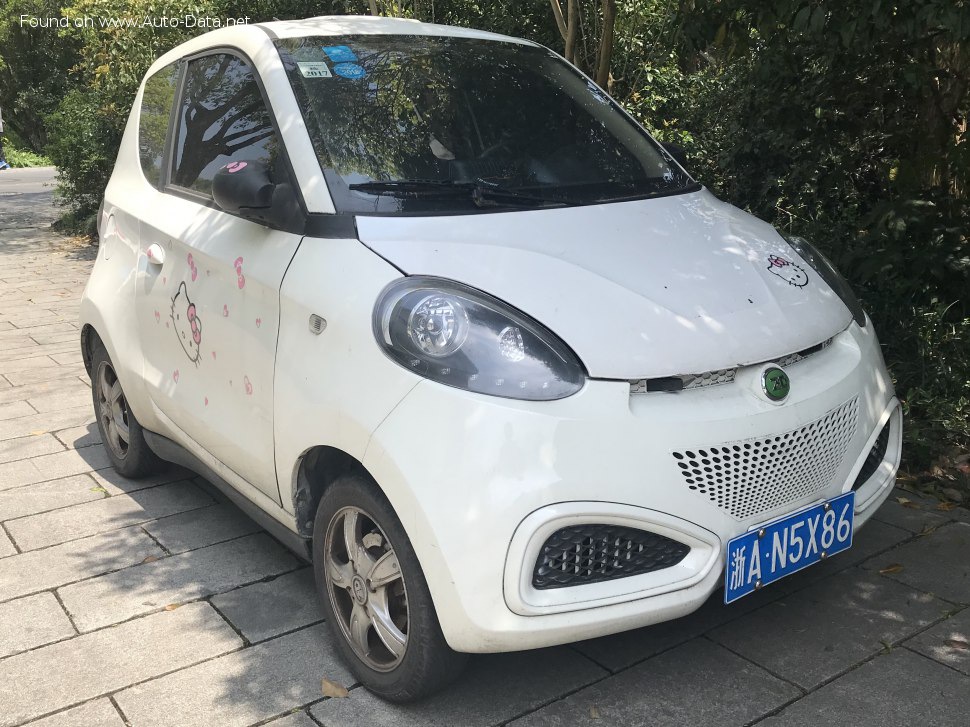
The Zhidou D1 11.5 kWh (24 hp) is a small, urban electric vehicle produced by the Chinese manufacturer Zhidou from 2014 onwards. Positioned as an entry-level electric hatchback, the D1 was designed for short-distance city commuting and represented one of the earliest attempts to provide affordable electric mobility in the Chinese market. It’s a three-door hatchback with seating for two, utilizing a fully electric powertrain and a single-speed automatic transmission. The D1 played a significant role in establishing Zhidou as a key player in the burgeoning Chinese electric vehicle sector.
Zhidou D1 11.5 kWh: Powertrain and Engine Architecture
The Zhidou D1 is powered by a single electric motor producing 24 horsepower (18 kW) between 4200 and 5000 rpm. The motor delivers 82 Nm (60.48 lb-ft) of torque. The vehicle utilizes a 11.5 kWh lithium-ion battery pack, providing a gross capacity sufficient for a claimed all-electric range of 145 kilometers (90.1 miles). The powertrain is a Battery Electric Vehicle (BEV) system, meaning it relies entirely on electricity for propulsion. The D1 employs a single-speed automatic transmission, simplifying operation and focusing on ease of use for urban driving. Unlike internal combustion engine vehicles, the single-speed transmission eliminates the need for multiple gears, as electric motors deliver maximum torque from a standstill. The battery pack is located under the floor, contributing to a low center of gravity and improved stability. The electric motor is front-wheel drive, providing traction suitable for typical city conditions.
Electric Motor and Battery Details
The electric motor itself is a permanent magnet synchronous motor, chosen for its efficiency and relatively compact size. The 11.5 kWh battery pack is comprised of lithium-ion cells, offering a reasonable energy density for its price point. Charging times vary depending on the charging infrastructure available, but a full charge using a standard household outlet can take several hours. The battery management system (BMS) monitors the battery’s state of charge, temperature, and overall health, ensuring safe and efficient operation. The D1 does not feature regenerative braking, a common feature in more advanced electric vehicles, which recovers energy during deceleration.
Driving Characteristics
The Zhidou D1’s driving characteristics are dictated by its low power output and focus on urban usability. With only 24 hp, acceleration is modest, and the vehicle is best suited for navigating city streets at lower speeds. The maximum speed is limited to 80 km/h (49.71 mph). The single-speed automatic transmission provides smooth, linear acceleration, but lacks the responsiveness of more powerful electric vehicles. The lightweight construction of the D1, with a kerb weight of 670 kg (1477.1 lbs), helps to mitigate the effects of the low power output. Steering is light and easy, making maneuvering in tight spaces straightforward. The suspension, while basic, provides a reasonably comfortable ride on smooth surfaces. However, the ride quality can become harsh on uneven roads due to the dependent rear suspension. The D1 is not designed for highway driving or long-distance travel; its primary purpose is to provide efficient and affordable transportation within urban environments.
Equipment & Trim Levels
The Zhidou D1 was offered with a relatively basic level of equipment, reflecting its position as an entry-level vehicle. Standard features typically included manual windows, basic instrumentation, and a simple audio system. Air conditioning was often an optional extra. The interior upholstery was typically made of durable, easy-to-clean materials. Safety features were limited, with basic seatbelts and a rudimentary braking system. The dashboard layout was functional and straightforward, prioritizing ease of use over aesthetics. Due to the limited trim levels offered, customization options were minimal. The focus was on providing a practical and affordable electric vehicle, rather than luxury or advanced features.
Chassis & Braking
The Zhidou D1 utilizes a McPherson independent suspension system at the front, providing a degree of ride comfort and handling precision. The rear suspension, however, employs a dependent spring suspension, which is simpler and less expensive but offers a less refined ride quality. The braking system consists of disc brakes on all four wheels, providing adequate stopping power for the vehicle’s weight and performance. The tires are typically sized 145/60 R13 or 165/55 R13, chosen for their low rolling resistance and affordability. The steering system is a recirculating ball system, providing light and easy steering feel. The vehicle’s small wheelbase of 1765 mm (69.49 in) contributes to its maneuverability in tight spaces.
Market Reception & Comparison
The Zhidou D1 received mixed reviews upon its release. Critics praised its affordability and its contribution to the growing electric vehicle market in China. However, the vehicle was also criticized for its limited range, low power output, and basic level of equipment. Compared to other electric vehicles available at the time, the D1 was significantly more affordable, but it also offered considerably less performance and features. Within the Zhidou lineup, the D1 served as the entry point, with more expensive and capable models offering longer range and higher performance. The D1’s primary competitor was other low-cost electric microcars targeted at urban commuters. Its fuel economy, being an electric vehicle, is significantly better than comparable gasoline-powered vehicles, with a cost per mile substantially lower. Reliability reports are limited, but the simple design of the D1 suggests that it is relatively reliable, although the long-term durability of the battery pack remains a concern.
Technical Specifications
| Brand | Zhidou |
| Model | D1 |
| Generation | D1 |
| Type (Engine) | 11.5 kWh (24 Hp) |
| Start of production | 2014 |
| Body type | Hatchback |
| Seats | 2 |
| Doors | 3 |
| Fuel Type | Electricity |
| Maximum speed | 80 km/h (49.71 mph) |
| Weight-to-power ratio | 27.9 kg/Hp, 35.8 Hp/tonne |
| Gross battery capacity | 11.5 kWh |
| All-electric range | 145 km (90.1 mi) |
| Electric motor power | 24 Hp @ 4200-5000 rpm |
| Electric motor Torque | 82 Nm (60.48 lb.-ft.) |
| System power | 24 Hp @ 4200-5000 rpm |
| Kerb Weight | 670 kg (1477.1 lbs) |
| Length | 2763 mm (108.78 in) |
| Width | 1539 mm (60.59 in) |
| Height | 1524 mm (60 in) |
| Wheelbase | 1765 mm (69.49 in) |
| Minimum turning circle | 8 m (26.25 ft) |
| Drive wheel | Front wheel drive |
| Number of gears | 1 |
| Gearbox type | Automatic transmission |
| Front suspension | Independent type McPherson |
| Rear suspension | Dependent spring suspension |
| Front brakes | Disc |
| Rear brakes | Disc |
| Tires size | 145/60 R13; 165/55 R13 |
| Wheel rims size | 13 |
Legacy
The Zhidou D1, while not a groundbreaking vehicle, played a crucial role in popularizing electric mobility in China. It demonstrated that affordable electric vehicles were possible, paving the way for the widespread adoption of EVs in the country. The D1’s simple design and relatively low maintenance costs have contributed to its longevity in the used car market. However, the limited range and basic features mean that it is primarily suited for short-distance urban commuting. The long-term reliability of the battery pack remains a concern for potential buyers. As battery technology continues to improve and electric vehicle prices fall, the Zhidou D1 is gradually being replaced by more advanced and capable EVs. Nevertheless, it remains a significant milestone in the history of electric vehicles in China, representing an early step towards a more sustainable transportation future.
