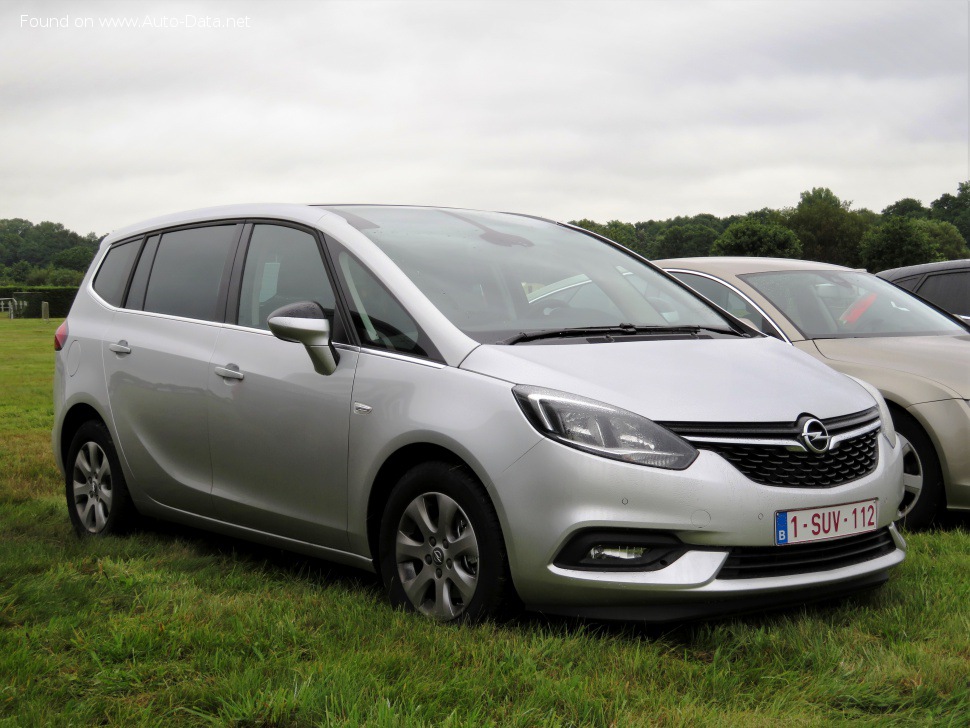
The Opel Zafira Tourer C, specifically the 1.6 Turbo (136 hp) variant, represents a mid-cycle refresh of the third-generation Zafira, produced from May 2018 to March 2019. This model year saw a facelift aimed at modernizing the vehicle’s aesthetics and refining its powertrain options. Positioned as a mainstream offering within the Zafira Tourer C range, the 1.6 Turbo served as a balance between affordability and performance, targeting families seeking a practical and reasonably efficient multi-purpose vehicle (MPV). It sat below the more powerful diesel options and above any potential base-level gasoline engines in the lineup, offering a compelling alternative for those prioritizing a gasoline engine.
Powertrain & Engine Architecture
The heart of the Zafira Tourer C 1.6 Turbo is the A16XHT engine, a 1.6-liter inline-four cylinder gasoline engine. This engine is part of Opel’s family of small displacement, turbocharged engines designed for fuel efficiency and adequate performance. The engine code, D16SHJ, is crucial for identifying specific parts and service information. It features direct fuel injection, a technology that improves combustion efficiency and power output. The direct injection system operates at high pressure, precisely metering fuel into the combustion chamber. The engine also utilizes a single scroll turbocharger with an intercooler, which forces more air into the cylinders, boosting power and torque. The valvetrain employs four valves per cylinder (DOHC – Dual Overhead Camshaft), optimizing gas flow for improved performance across the rev range.
The 1.6 Turbo engine is paired with a six-speed manual transmission. This transmission was chosen to balance cost and driver engagement. The gear ratios are tuned for a blend of acceleration and fuel economy, with a relatively tall sixth gear for efficient cruising. The transmission is front-wheel drive, typical for vehicles in this class.
Engine Specifications
Key engine specifications include a compression ratio of 9.5:1, a bore of 79mm, and a stroke of 81.5mm, resulting in a displacement of 1598 cm³ (97.52 cu. in.). The engine produces a maximum power output of 136 hp at 4000-6000 rpm and a peak torque of 240 Nm (177.01 lb-ft) between 1650-3500 rpm. This torque curve provides good low-end responsiveness, making it suitable for everyday driving conditions.
Driving Characteristics
The Zafira Tourer C 1.6 Turbo offers a comfortable and predictable driving experience. While not a performance-oriented vehicle, the 136 hp engine provides sufficient power for typical family duties, including highway cruising and carrying a full load of passengers. Acceleration from 0-100 km/h (0-62 mph) takes approximately 11.3 seconds, and 0-60 mph is achieved in around 10.7 seconds. The turbocharger provides a noticeable boost in power during acceleration, but there is some turbo lag at lower engine speeds. The six-speed manual transmission allows drivers to maintain optimal engine speed for efficient driving. Compared to the diesel variants, the 1.6 Turbo feels less powerful, particularly when fully loaded, but it offers a smoother and quieter driving experience. The manual transmission provides more driver control than an automatic, but requires more effort in stop-and-go traffic.
Equipment & Trim Levels
The Zafira Tourer C 1.6 Turbo typically came equipped with a reasonable level of standard features. These included air conditioning, power windows, power mirrors, a basic audio system with USB connectivity, and stability control. Interior upholstery was typically cloth, with options for upgraded materials available. The dashboard layout was functional and user-friendly, with a central touchscreen display for infotainment functions on higher trim levels. Optional extras included navigation, parking sensors, a panoramic sunroof, and advanced safety features like lane departure warning and automatic emergency braking. Trim levels varied by market, but generally offered progressively more features and comfort options.
Chassis & Braking
The Zafira Tourer C 1.6 Turbo utilizes a MacPherson strut front suspension and a semi-independent torsion beam rear suspension. This setup provides a good balance between ride comfort and handling. The torsion beam rear suspension is a cost-effective solution that minimizes space requirements. The vehicle is equipped with disc brakes on all four wheels, providing adequate stopping power. Anti-lock Braking System (ABS) is standard, enhancing safety during emergency braking situations. Steering is provided by an electric power steering system, which offers light and precise control. The vehicle rides on 255/50 R17 tires mounted on 7J x 17 alloy wheels.
Market Reception & Comparison
The Zafira Tourer C 1.6 Turbo received generally positive reviews from automotive critics. It was praised for its spacious interior, comfortable ride, and reasonable fuel economy. Fuel consumption figures ranged from 7.0-7.5 l/100 km (33.6-31.4 US mpg) combined, depending on driving conditions. Critics noted that the 1.6 Turbo engine was adequate for most driving situations, but it lacked the punch of the diesel engines. Compared to the 1.6 diesel, the gasoline version offered a quieter and smoother driving experience, but with slightly higher fuel consumption. Reliability reports suggest that the 1.6 Turbo engine is generally reliable, but regular maintenance is essential. The Zafira Tourer C competed with other MPVs such as the Ford C-Max, Renault Scenic, and Citroën C4 Picasso.
Technical Specifications
| Brand | Opel |
| Model | Zafira |
| Generation | Zafira Tourer C (facelift 2016) |
| Type (Engine) | 1.6 Turbo (136 Hp) |
| Start of production | May, 2018 |
| End of production | March, 2019 |
| Powertrain Architecture | Internal Combustion engine |
| Body type | MPV |
| Seats | 5 |
| Doors | 5 |
| Fuel consumption (urban) | 8.8-9.3 l/100 km (26.7 – 25.3 US mpg) |
| Fuel consumption (extra urban) | 5.9-6.5 l/100 km (39.9 – 36.2 US mpg) |
| Fuel consumption (combined) | 7.0-7.5 l/100 km (33.6 – 31.4 US mpg) |
| CO2 emissions | 160-172 g/km |
| Fuel Type | Petrol (Gasoline) |
| Acceleration 0 – 100 km/h | 11.3 sec |
| Acceleration 0 – 62 mph | 11.3 sec |
| Acceleration 0 – 60 mph | 10.7 sec |
| Maximum speed | 195 km/h (121.17 mph) |
| Emission standard | Euro 6d-Temp |
| Weight-to-power ratio | 11.7 kg/Hp |
| Power | 136 Hp @ 4000-6000 rpm |
| Torque | 240 Nm @ 1650-3500 rpm (177.01 lb.-ft.) |
| Engine layout | Front, Transverse |
| Engine Model/Code | D16SHJ |
| Engine displacement | 1598 cm3 (97.52 cu. in.) |
| Number of cylinders | 4 |
| Engine configuration | Inline |
| Cylinder Bore | 79 mm (3.11 in.) |
| Piston Stroke | 81.5 mm (3.21 in.) |
| Compression ratio | 9.5:1 |
| Number of valves per cylinder | 4 |
| Fuel injection system | Direct injection |
| Engine aspiration | Turbocharger, Intercooler |
| Engine oil capacity | 5.5 l (5.81 US qt | 4.84 UK qt) |
| Coolant | 6.3 l (6.66 US qt | 5.54 UK qt) |
| Kerb Weight | 1589-1616 kg (3503.15 – 3562.67 lbs.) |
| Max. weight | 2335-2360 kg (5147.79 – 5202.91 lbs.) |
| Trunk (boot) space – minimum | 710 l (25.07 cu. ft.) |
| Trunk (boot) space – maximum | 1860 l (65.69 cu. ft.) |
| Fuel tank capacity | 58 l (15.32 US gal | 12.76 UK gal) |
| Drive wheel | Front wheel drive |
| Number of gears and type of gearbox | 6 gears, manual transmission |
| Front brakes | Disc |
| Rear brakes | Disc |
| Tires size | 255/50 R17 |
| Wheel rims size | 7J x 17 |
| Length | 4666 mm (183.7 in.) |
| Width | 1884 mm (74.17 in.) |
| Height | 1660 mm (65.35 in.) |
| Wheelbase | 2760 mm (108.66 in.) |
Legacy
The Opel Zafira Tourer C 1.6 Turbo, while not the most powerful or fuel-efficient version of the Zafira, remains a viable option in the used car market. Its relatively simple engine design and readily available parts contribute to reasonable maintenance costs. The 1.6 Turbo engine has proven to be generally durable, although regular servicing is crucial to prevent issues. As a practical and spacious MPV, the Zafira Tourer C continues to appeal to families seeking a versatile vehicle at an affordable price point. Its blend of comfort, practicality, and reasonable running costs ensures its continued relevance in the used car landscape.