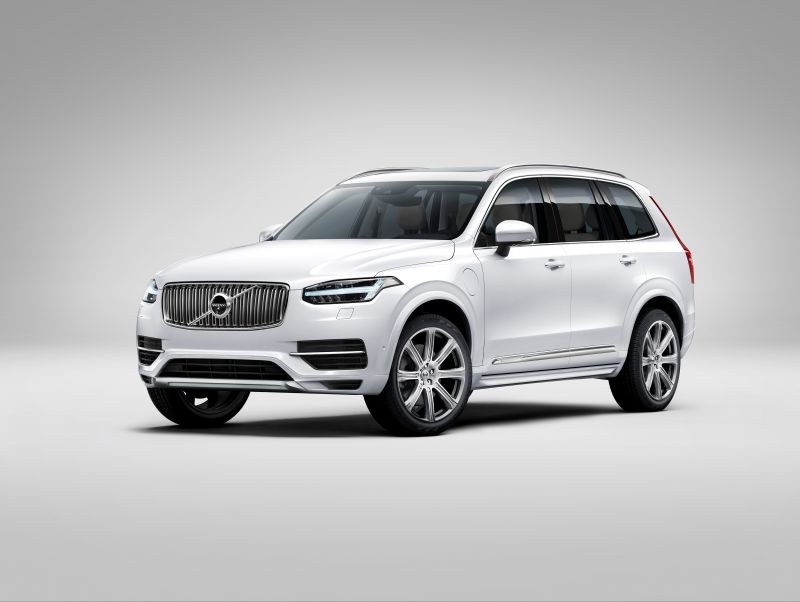
The Volvo XC90 II 2.0 T6 AWD Automatic represents a significant entry in Volvo’s second-generation XC90 lineup, produced from 2015 to 2017. This variant, positioned as a mid-to-premium offering, combined a potent 2.0-liter turbocharged and supercharged four-cylinder engine with an eight-speed automatic transmission and Volvo’s all-wheel-drive system. It marked a departure from Volvo’s traditional six and eight-cylinder engines, embracing downsized, forced-induction technology for improved efficiency and performance. The XC90 II, built on the Scalable Product Architecture (SPA) platform, aimed to redefine the luxury SUV segment with its Scandinavian design, advanced safety features, and sophisticated interior.
Powertrain & Engine Architecture
At the heart of the XC90 II 2.0 T6 lies the B4204T27 engine, a 2.0-liter inline-four cylinder powerplant. This engine is notable for its combination of a turbocharger and a supercharger, a configuration designed to eliminate turbo lag and provide a broad, flat torque curve. The supercharger, mechanically driven by the engine’s crankshaft, provides instant boost at lower RPMs, while the turbocharger takes over at higher speeds for sustained power delivery. Direct fuel injection is employed, optimizing combustion efficiency and contributing to the engine’s 320 horsepower output at 5700 rpm and 400 Nm (295.02 lb-ft) of torque available from 2200-5400 rpm. The engine features a double overhead camshaft (DOHC) valvetrain with four valves per cylinder, further enhancing its breathing and performance. The compression ratio is set at 10.3:1.
The engine’s oil capacity is 5.9 liters (6.23 US quarts / 5.19 UK quarts), and Volvo specifies a particular oil grade for optimal performance and longevity. The eight-speed automatic transmission, sourced from Aisin, is a crucial component of the T6’s drivetrain. It’s designed for smooth and responsive shifting, with gear ratios optimized for both acceleration and fuel efficiency. The transmission features a wide ratio spread, allowing the engine to operate within its optimal power band in various driving conditions. The all-wheel-drive system is primarily front-wheel drive, engaging the rear wheels as needed to maintain traction and stability.
Fuel Injection and Turbocharging
The direct injection system precisely meters fuel directly into the combustion chamber, improving fuel atomization and combustion efficiency. This contributes to both power output and reduced emissions. The turbocharging and supercharging combination is a key differentiator for this engine. The supercharger provides immediate response, while the turbocharger sustains power at higher engine speeds. An intercooler is integrated into the system to cool the compressed air, further increasing power and efficiency.
Driving Characteristics
The XC90 II 2.0 T6 Automatic delivers a refined and capable driving experience. The combined turbo and supercharger setup provides strong acceleration, with a 0-60 mph time of approximately 6.2 seconds and a 0-100 km/h time of 6.5 seconds. The eight-speed automatic transmission shifts smoothly and efficiently, contributing to a comfortable ride. Compared to the base T5 model, the T6 offers a significant performance upgrade, while remaining more fuel-efficient than the range-topping T8 plug-in hybrid. The all-wheel-drive system provides excellent traction in various weather conditions, enhancing stability and control. The steering is precise and well-weighted, providing a confident feel behind the wheel. While not a sports SUV, the T6 offers ample power for overtaking and merging onto highways. The weight of the vehicle (2078 kg / 4581.21 lbs) is noticeable, but the engine’s torque helps to mitigate this.
Equipment & Trim Levels
The XC90 II 2.0 T6 typically came well-equipped, reflecting its mid-to-premium positioning. Standard features often included leather upholstery, a panoramic sunroof, a premium audio system, and a suite of advanced safety technologies such as City Safety (Volvo’s collision avoidance system), lane departure warning, and adaptive cruise control. The dashboard featured a large, vertically oriented touchscreen display that controlled most of the vehicle’s functions, including navigation, climate control, and infotainment. Optional extras included upgraded leather options, a head-up display, and a rear-seat entertainment system. Trim levels varied by market, but generally offered increasing levels of luxury and technology. The interior design emphasized Scandinavian minimalism, with clean lines and high-quality materials.
Chassis & Braking
The XC90 II utilizes a double wishbone front suspension and an independent coil spring rear suspension, providing a comfortable and controlled ride. The suspension is tuned to balance ride comfort with handling performance. Stabilizer bars are fitted to both the front and rear axles to reduce body roll during cornering. The braking system consists of ventilated discs on all four wheels, providing ample stopping power. Anti-lock braking system (ABS) is standard, along with electronic brake-force distribution and brake assist. The steering system employs a rack and pinion setup, offering precise and responsive steering feel. The vehicle’s curb weight of 2078 kg (4581.21 lbs) influences the suspension and braking requirements, necessitating robust components to ensure safe and reliable performance.
Market Reception & Comparison
The Volvo XC90 II 2.0 T6 was generally well-received by automotive critics. It was praised for its stylish design, luxurious interior, advanced safety features, and refined driving experience. The 2.0-liter engine, while unconventional for a large SUV, was lauded for its performance and efficiency. Fuel economy figures ranged from 7.7-8.0 l/100 km (30.5 – 29.4 US mpg / 36.7 – 35.3 UK mpg), which was competitive for its class. Compared to the XC90 T5, the T6 offered a significant power boost, while the T8 plug-in hybrid provided even greater performance and fuel efficiency, but at a higher price point. Reliability reports have been generally positive, although some owners have reported minor issues with the infotainment system. The XC90 II 2.0 T6 successfully positioned Volvo as a serious contender in the luxury SUV market.
Technical Specifications
| Brand | Volvo |
| Model | XC90 |
| Generation | XC90 II |
| Type (Engine) | 2.0 T6 (320 Hp) AWD Automatic |
| Start of production | 2015 |
| End of production | 2017 |
| Powertrain Architecture | Internal Combustion engine |
| Body type | SUV |
| Seats | 5-7 |
| Doors | 5 |
| Fuel consumption (urban) | 9.6-9.8 l/100 km (24.5 – 24 US mpg) |
| Fuel consumption (extra urban) | 6.6-7.0 l/100 km (35.6 – 33.6 US mpg) |
| Fuel consumption (combined) | 7.7-8.0 l/100 km (30.5 – 29.4 US mpg) |
| CO2 emissions | 179-186 g/km |
| Fuel Type | Petrol (Gasoline) |
| Acceleration 0 – 100 km/h | 6.5 sec |
| Acceleration 0 – 62 mph | 6.5 sec |
| Acceleration 0 – 60 mph | 6.2 sec |
| Maximum speed | 230 km/h (142.92 mph) |
| Emission standard | Euro 6 |
| Weight-to-power ratio | 6.5 kg/Hp |
| Weight-to-torque ratio | 5.2 kg/Nm |
| Power | 320 Hp @ 5700 rpm |
| Torque | 400 Nm @ 2200-5400 rpm (295.02 lb.-ft.) |
| Engine layout | Front, Transverse |
| Engine Model/Code | B4204T27 |
| Engine displacement | 1969 cm3 (120.16 cu. in.) |
| Number of cylinders | 4 |
| Engine configuration | Inline |
| Cylinder Bore | 82 mm (3.23 in.) |
| Piston Stroke | 93.2 mm (3.67 in.) |
| Compression ratio | 10.3:1 |
| Number of valves per cylinder | 4 |
| Fuel injection system | Direct injection |
| Engine aspiration | Turbocharging and Supercharger, Intercooler |
| Valvetrain | DOHC |
| Engine oil capacity | 5.9 l (6.23 US qt | 5.19 UK qt) |
| Kerb Weight | 2078 kg (4581.21 lbs.) |
| Max. weight | 2750 kg (6062.71 lbs.) |
| Max load | 672 kg (1481.51 lbs.) |
| Trunk (boot) space – minimum | 368 l (13 cu. ft.) |
| Trunk (boot) space – maximum | 1886 l (66.6 cu. ft.) |
| Fuel tank capacity | 71 l (18.76 US gal | 15.62 UK gal) |
| Length | 4950 mm (194.88 in.) |
| Width | 1923 mm (75.71 in.) |
| Height | 1776 mm (69.92 in.) |
| Wheelbase | 2984 mm (117.48 in.) |
| Drive wheel | All wheel drive (4×4) |
| Number of gears and type of gearbox | 8 gears, automatic transmission Automatic |
Legacy
The Volvo XC90 II 2.0 T6 AWD Automatic has proven to be a relatively reliable vehicle in the used car market. The engine, while complex with its turbo and supercharger setup, has demonstrated good durability with proper maintenance. Regular oil changes and adherence to Volvo’s recommended service intervals are crucial for long-term reliability. The eight-speed automatic transmission has also proven to be robust. Common issues reported by owners include occasional glitches with the infotainment system and, in some cases, problems with the air suspension (if equipped). Today, the XC90 II 2.0 T6 remains a popular choice for buyers seeking a luxurious, safe, and capable SUV with a distinctive Scandinavian design. Its blend of performance, efficiency, and practicality continues to make it a compelling option in the used car market.