
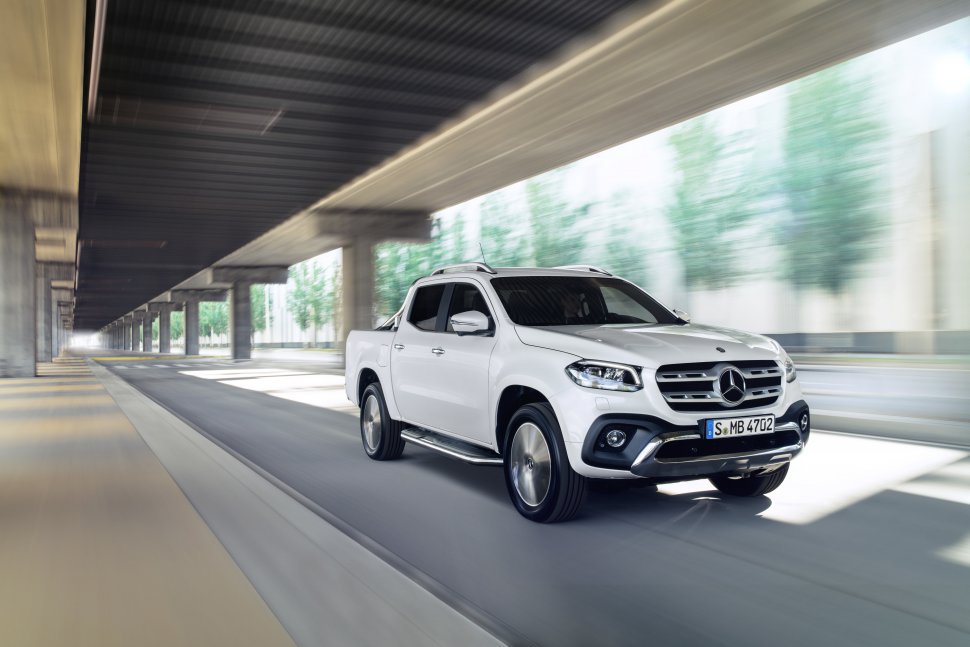
The Mercedes-Benz X-Class X 250d, produced from November 2017 to May 2020, represented Mercedes-Benz’s foray into the mid-size pickup truck segment. This variant, powered by a 2.3-liter four-cylinder diesel engine producing 190 horsepower, occupied a central position within the X-Class lineup, positioned between the entry-level X 220d and the higher-performance X 350d. The X 250d aimed to balance fuel efficiency, respectable power, and a more refined driving experience compared to traditional workhorse pickups, while still offering the utility expected of the class. It was built on a shared platform with the Nissan Navara, but with significant Mercedes-Benz engineering and interior appointments.
X-Class X 250d: Powertrain & Engine Architecture
The heart of the X 250d is the OM 699.3, a 2.3-liter inline-four cylinder diesel engine. This engine is part of the modular Mercedes-Benz engine family, known for its robust construction and advanced technology. The OM 699.3 features a high-pressure common rail direct fuel injection system, delivering fuel at up to 2,500 bar to optimize combustion efficiency and reduce emissions. The engine is turbocharged with an intercooler, enhancing power output and responsiveness. Key engine specifications include a compression ratio of 15.4:1 and 4 valves per cylinder, contributing to its relatively high power density. The engine’s longitudinal front-engine layout was a departure from the transverse engine placement common in many pickups.
While a six-speed manual transmission was standard, a seven-speed automatic transmission (7G-TRONIC PLUS) was also available as an option. The automatic transmission offered smoother shifts and enhanced convenience, particularly in urban driving conditions. The automatic transmission’s gear ratios were tuned to provide a balance between acceleration and fuel economy, with a relatively tall final drive ratio geared towards highway cruising. The X 250d was exclusively offered with rear-wheel drive, although a selectable four-wheel-drive system was available as an option, enhancing its off-road capability.
Engine Details
- Engine Code: OM 699.3
- Displacement: 2298 cm³ (140.23 cu. in.)
- Bore x Stroke: 85 mm x 101.3 mm (3.35 in x 3.99 in)
- Fuel Injection: Diesel Commonrail
- Turbocharging: Turbocharger with Intercooler
Driving Characteristics
The X 250d offered a driving experience that aimed to be more refined than typical pickups. The 190 horsepower and 331.9 lb-ft of torque provided adequate power for everyday driving and moderate towing capabilities. Acceleration from 0 to 60 mph was achieved in approximately 10.4 seconds, and 0-100 km/h in 10.9 seconds. While not a performance-oriented pickup, the X 250d delivered smooth and linear power delivery, particularly within the engine’s peak torque band of 1500-2500 rpm. The optional automatic transmission contributed to a relaxed driving experience, especially in city traffic.
Compared to the X 220d, the X 250d offered a noticeable improvement in acceleration and overall responsiveness. However, it lacked the outright power and performance of the range-topping X 350d, which featured a more powerful V6 engine. The rear-wheel-drive configuration provided a more traditional pickup truck feel, while the optional four-wheel-drive system enhanced traction and off-road capability. The X-Class, in general, was praised for its relatively comfortable ride quality, a characteristic attributed to its well-tuned suspension system.
Equipment & Trim Levels
The X 250d was available in several trim levels, including Pure, Progressive, and Power. The base Pure trim offered a functional and utilitarian interior, with durable materials and essential features. The Progressive trim added more comfort and convenience features, such as upgraded upholstery, infotainment system, and exterior styling elements. The top-of-the-line Power trim included premium leather upholstery, advanced driver-assistance systems, and a more luxurious overall ambiance.
Standard equipment on the X 250d typically included air conditioning, power windows and locks, a basic audio system, and steel wheels. Optional extras included leather upholstery, a touchscreen infotainment system with navigation, a rearview camera, parking sensors, and a suite of driver-assistance features such as lane keeping assist and adaptive cruise control. Interior color options varied depending on the trim level and market.
Chassis & Braking
The X-Class chassis was based on the Nissan Navara platform, but with modifications to enhance ride comfort and handling. The front suspension featured independent double wishbones, while the rear suspension utilized a multi-link setup with coil springs. This suspension configuration provided a good balance between ride comfort and load-carrying capacity. The X 250d featured ventilated disc brakes on all four wheels, providing ample stopping power. Anti-lock braking system (ABS) was standard, enhancing safety and stability during braking maneuvers.
The X 250d’s curb weight of 2161 kg (4764.19 lbs) influenced its handling characteristics. The rear-wheel-drive configuration contributed to a more traditional pickup truck feel, while the optional four-wheel-drive system enhanced traction and stability, particularly on slippery surfaces. Tire sizes varied depending on the trim level, ranging from 255/65 R17 to 255/55 R19.
Market Reception & Comparison
The Mercedes-Benz X-Class received mixed reviews upon its launch. Critics praised its refined interior, comfortable ride, and relatively sophisticated driving experience compared to traditional pickups. However, it was also criticized for its high price, limited payload capacity, and the fact that it shared its platform with the Nissan Navara. The X 250d, in particular, was seen as a good compromise between performance and fuel economy, but some reviewers felt that its power output was insufficient for demanding tasks.
In terms of fuel economy, the X 250d offered combined fuel consumption of 7.4 l/100 km (31.8 US mpg, 38.2 UK mpg), which was competitive for its class. However, its CO2 emissions of 196 g/km were relatively high. Compared to the X 220d, the X 250d offered better performance but slightly lower fuel economy. The X 350d, with its V6 engine, provided significantly more power but at the expense of fuel efficiency.
Technical Specifications
| Brand | Mercedes-Benz |
| Model | X-Class |
| Generation | X-Class |
| Type (Engine) | X 250d (190 Hp) |
| Start of production | November, 2017 |
| End of production | May, 2020 |
| Powertrain Architecture | Internal Combustion engine |
| Body type | Pick-up |
| Seats | 5 |
| Doors | 4 |
| Fuel consumption (urban) | 8.6 l/100 km (27.4 US mpg) |
| Fuel consumption (extra urban) | 6.8 l/100 km (34.6 US mpg) |
| Fuel consumption (combined) | 7.4 l/100 km (31.8 US mpg) |
| CO2 emissions | 196 g/km |
| Fuel Type | Diesel |
| Acceleration 0 – 100 km/h | 10.9 sec |
| Acceleration 0 – 62 mph | 10.9 sec |
| Acceleration 0 – 60 mph | 10.4 sec |
| Maximum speed | 184 km/h (114.33 mph) |
| Emission standard | Euro 6 |
| Weight-to-power ratio | 11.4 kg/Hp |
| Power | 190 Hp @ 3750 rpm |
| Torque | 450 Nm @ 1500-2500 rpm (331.9 lb.-ft.) |
| Engine layout | Front, Longitudinal |
| Engine Model/Code | OM 699.3 |
| Engine displacement | 2298 cm3 (140.23 cu. in.) |
| Number of cylinders | 4 |
| Engine configuration | Inline |
| Cylinder Bore | 85 mm (3.35 in.) |
| Piston Stroke | 101.3 mm (3.99 in.) |
| Compression ratio | 15.4:1 |
| Kerb Weight | 2161 kg (4764.19 lbs.) |
| Max. weight | 3200 kg (7054.79 lbs.) |
| Fuel tank capacity | 73 l (19.28 US gal) |
| Length | 5340 mm (210.24 in.) |
| Width | 1920 mm (75.59 in.) |
| Height | 1819 mm (71.61 in.) |
Legacy
The Mercedes-Benz X-Class, including the X 250d variant, was discontinued after a relatively short production run due to disappointing sales figures. While the X-Class offered a unique combination of luxury and utility, its high price and limited practicality hindered its market success. However, the X 250d remains a relatively sought-after model on the used car market, particularly among buyers who appreciate its refined interior and comfortable driving experience. The OM 699.3 engine is known for its reliability and durability, making the X 250d a potentially good long-term investment, provided it has been properly maintained. The X-Class represents an interesting chapter in Mercedes-Benz’s history, demonstrating the brand’s willingness to experiment with new segments and challenge conventional automotive norms.
