
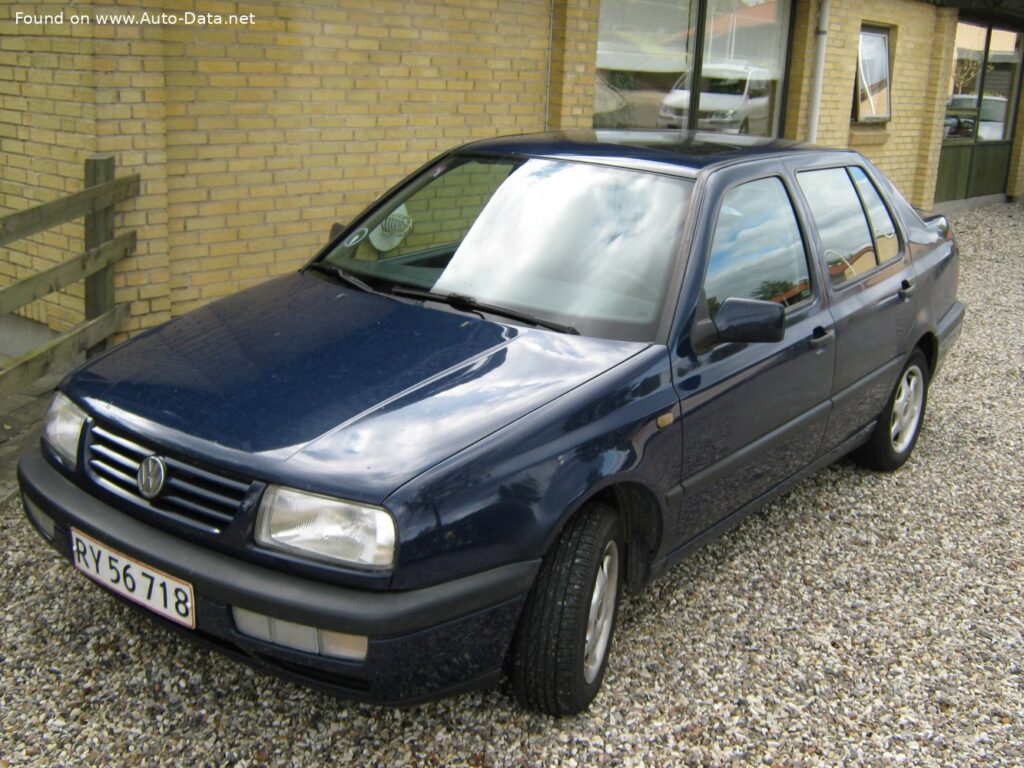
The Volkswagen Vento (1HX0) 2.0 Automatic, produced between January 1992 and 1998, represented a mid-range offering within the Vento lineup, which itself was the successor to the popular Volkswagen Jetta (B2) in many markets. Built on the A2 platform – internally designated 1HX0 – the Vento aimed to provide a more modern and refined experience than its predecessor. The 2.0-liter, 115 horsepower variant with an automatic transmission was positioned as a comfortable and practical choice for buyers prioritizing ease of use over outright performance, appealing to families and those seeking a relaxed driving experience. It served as a bridge between the more economical 1.6 and 1.8-liter models and the sportier, higher-performance VR6 versions.
Powertrain & Engine Architecture
The heart of the Vento 2.0 Automatic is the ADY engine code, a 1984cc (121.07 cubic inches) inline four-cylinder gasoline engine. This engine featured multi-port fuel injection, a relatively common system for the time, delivering fuel directly into the intake ports rather than directly into the combustion chamber. The engine employed an overhead camshaft (OHC) valvetrain with two valves per cylinder. Compression ratio was set at 10:1. The ADY engine produced 115 hp at 5200 rpm and 170 Nm (125.39 lb-ft) of torque at 2400 rpm. This torque figure, while not exceptionally high, was delivered relatively early in the rev range, contributing to the car’s usability in everyday driving situations.
Paired with the ADY engine was a four-speed automatic transmission. This transmission, while providing convenience, was a key differentiator in driving experience compared to the available five-speed manual gearbox. The automatic transmission featured standard torque converter technology, prioritizing smooth shifts and ease of operation over ultimate efficiency. The gear ratios were tuned for comfortable cruising and adequate acceleration, but at the expense of some responsiveness. Specific gear ratios were not widely published, but were geared towards maximizing fuel economy and minimizing shift shock.
Engine Code Specifics: ADY
The ADY engine code is significant as it represents a refinement of Volkswagen’s earlier 2.0-liter inline-four designs. It was known for its relative reliability, although preventative maintenance was crucial. Common issues included oil leaks from the valve cover gasket and occasional failures of the coolant temperature sensor. The engine’s design allowed for relatively straightforward servicing, making it popular with DIY mechanics.
Driving Characteristics
The Vento 2.0 Automatic offered a comfortable, if not particularly sporty, driving experience. Acceleration from 0-60 mph took approximately 11.3 seconds, and 0-100 km/h in 11.9 seconds. Top speed was rated at 194 km/h (120.55 mph). Compared to the manual transmission version of the same engine, the automatic resulted in a slight performance decrease due to the inherent power loss within the torque converter and the transmission’s shift programming. The automatic transmission’s shift points were programmed to prioritize fuel economy and smoothness, often holding gears longer than a driver might choose in a manual transmission vehicle.
The power delivery was linear, with usable torque available from relatively low engine speeds. This made the Vento 2.0 Automatic well-suited for city driving and highway cruising. However, overtaking maneuvers required careful planning, as the engine lacked the outright punch of the VR6 models. The steering was light and precise, contributing to the car’s ease of maneuverability. Overall, the driving experience was geared towards comfort and convenience rather than performance.
Equipment & Trim Levels
The Vento 2.0 Automatic typically came equipped with a reasonable level of standard features. These included power steering, central locking, electric windows, and a basic stereo system. Interior upholstery was typically cloth, with options for upgraded velour or leather available at extra cost. The dashboard layout was functional and straightforward, with clearly labeled controls. Air conditioning was a common optional extra, as were power mirrors and a sunroof.
Trim levels varied depending on the market, but generally, the 2.0 Automatic sat in the mid-range of the Vento lineup. It offered more features than the base 1.6-liter models but lacked the premium appointments of the VR6 versions. Optional extras could significantly enhance the car’s comfort and convenience, allowing buyers to tailor the vehicle to their specific needs and preferences.
Chassis & Braking
The Vento 2.0 Automatic utilized a front-wheel-drive layout with an independent wishbone suspension at the front and a semi-independent suspension with traction connecting levers at the rear. This suspension setup provided a comfortable ride quality, absorbing bumps and imperfections in the road surface effectively. Stabilizer bars were fitted to both the front and rear axles to reduce body roll during cornering.
Braking duties were handled by ventilated discs at the front and solid discs at the rear. An Anti-lock Braking System (ABS) was often included as standard equipment, enhancing braking performance and stability, particularly on slippery surfaces. The steering system employed a hydraulic power steering rack and pinion, providing light and precise steering control. The Vento 2.0 Automatic rode on 205/50 R15 tires mounted on 15-inch steel or alloy wheels.
Market Reception & Comparison
The Vento 2.0 Automatic received generally positive reviews from automotive critics. It was praised for its comfortable ride, spacious interior, and practical features. However, some critics noted its lack of outright performance compared to the VR6 models and the more engaging driving experience offered by the manual transmission versions. Fuel economy was considered adequate, with combined fuel consumption figures of around 8.2 l/100 km (28.7 US mpg, 34.4 UK mpg).
Compared to other trims in the Vento lineup, the 2.0 Automatic offered a good balance of performance, comfort, and price. The 1.6 and 1.8-liter models were more economical but lacked the 2.0’s power, while the VR6 offered significantly more performance but came at a higher cost. In terms of reliability, the 2.0 Automatic was generally considered to be a dependable powertrain, although regular maintenance was essential to prevent issues.
Technical Specifications
| Brand | Volkswagen |
| Model | Vento |
| Generation | Vento (1HX0) |
| Type (Engine) | 2.0 (115 Hp) Automatic |
| Start of production | January, 1992 |
| End of production | 1998 |
| Fuel consumption (urban) | 11.6 l/100 km (20.3 US mpg) |
| Fuel consumption (extra urban) | 6.5 l/100 km (36.2 US mpg) |
| Fuel consumption (combined) | 8.2 l/100 km (28.7 US mpg) |
| Fuel Type | Petrol (Gasoline) |
| Acceleration 0 – 100 km/h | 11.9 sec |
| Acceleration 0 – 62 mph | 11.9 sec |
| Acceleration 0 – 60 mph | 11.3 sec |
| Maximum speed | 194 km/h (120.55 mph) |
| Kerb Weight | 1235 kg (2722.71 lbs) |
| Max. weight | 1630 kg (3593.53 lbs) |
| Engine Displacement | 1984 cm3 (121.07 cu. in.) |
| Number of cylinders | 4 |
| Power | 115 Hp @ 5200 rpm |
| Torque | 170 Nm @ 2400 rpm (125.39 lb.-ft. @ 2400 rpm) |
| Engine Code | ADY |
| Fuel tank capacity | 55 l (14.53 US gal) |
| Length | 4380 mm (172.44 in) |
| Width | 1695 mm (66.73 in) |
| Height | 1415 mm (55.71 in) |
| Wheelbase | 2475 mm (97.44 in) |
| Number of gears | 4 |
| Gearbox type | Automatic transmission |
Legacy
The Volkswagen Vento 2.0 Automatic, while not a particularly rare or sought-after model today, remains a relatively reliable and affordable classic car. The ADY engine, when properly maintained, can provide many years of service. Parts availability is generally good, although some specific components may be becoming increasingly difficult to find. The car’s simple mechanical design makes it relatively easy to repair and maintain, appealing to enthusiasts and DIY mechanics. In the used car market, the Vento 2.0 Automatic typically commands modest prices, making it an accessible entry point into classic Volkswagen ownership. Its enduring appeal lies in its blend of practicality, comfort, and understated style.
