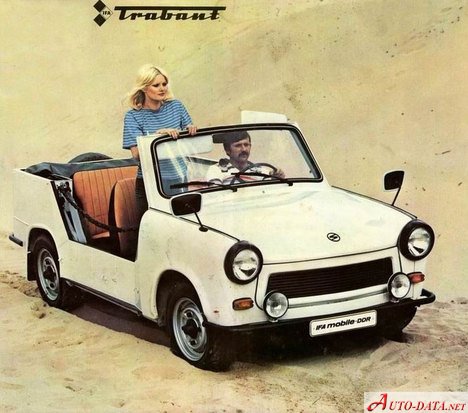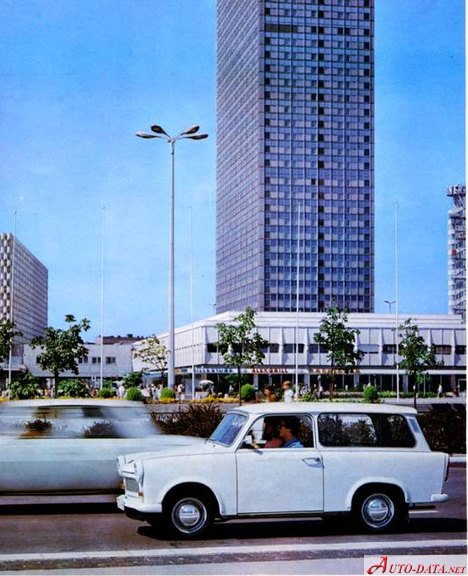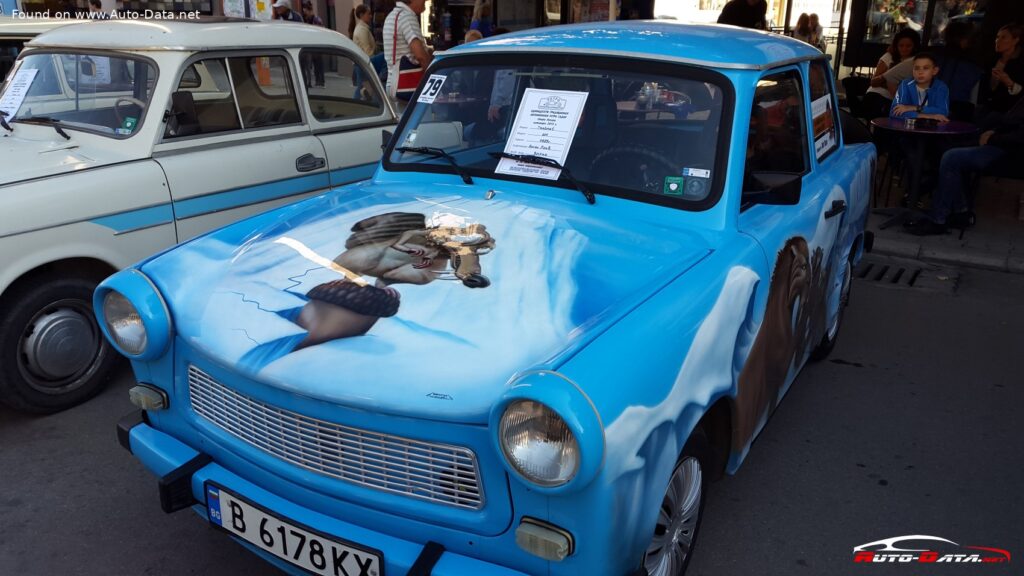
The Trabant P 601 0.6, producing 23 horsepower, represents the foundational model of the iconic East German automobile. Production spanned from 1963 to 1970, establishing the P 601 as the primary vehicle offered by VEB Automobilwerke Zwickau during this period. Built upon the P 601 generation and utilizing a unibody construction with plastic body panels, the 0.6 variant served as the entry point into the Trabant range, offering basic transportation for the citizens of the German Democratic Republic and, later, export markets. It was a defining symbol of the Eastern Bloc automotive industry.
The 0.6L Trabant P 601: Entry-Level Mobility
The P 601 0.6 was positioned as the most affordable and accessible version of the Trabant. It was intended for buyers prioritizing basic functionality and economy over performance or luxury. While later P 601 models would receive engine upgrades, the 0.6L version remained in production for several years, catering to a broad segment of the population. Compared to potential future variants, the 0.6L offered the lowest purchase price and the simplest feature set.
Powertrain & Engine Architecture
The heart of the Trabant P 601 0.6 was its 594 cc (36.25 cu. in.) two-stroke, inline two-cylinder engine. Designated as a naturally aspirated engine, it produced 23 hp at 3800 rpm and 53 Nm (39.09 lb-ft) of torque. This engine utilized a carburetor fuel injection system, a common feature for two-stroke engines of the era. The engine was transversely mounted at the front of the vehicle, driving the front wheels. A key characteristic of the engine was its reliance on a mixture of gasoline and a special two-stroke oil, which was essential for lubricating the engine’s internal components. The compression ratio was 7.6:1. The engine’s relatively simple design contributed to its low manufacturing cost, but also to its limited power output and higher emissions compared to four-stroke engines.
The P 601 0.6 was equipped with a four-speed manual transmission. The gear ratios were optimized for maximizing fuel efficiency and providing adequate acceleration for everyday driving conditions. The transmission was mechanically simple, contributing to the vehicle’s overall reliability, though shift quality was often described as notchy and imprecise by modern standards.
Driving Characteristics
The driving experience in a Trabant P 601 0.6 was defined by its modest performance. Acceleration was slow, and the engine required frequent shifting to maintain speed, particularly when climbing hills. The 0-62 mph (0-100 km/h) time was approximately 22-25 seconds. The lightweight construction of the vehicle – weighing in at around 615 kg (1355.84 lbs) – helped to mitigate the effects of the low horsepower. Handling was basic, with understeer being a prominent characteristic. The suspension, while adequate for the roads of the time, offered a firm and somewhat bumpy ride. Compared to later, more powerful Trabant variants, the 0.6L model felt significantly underpowered, making overtaking maneuvers challenging. However, its simplicity and light weight made it relatively easy to maintain and operate.
Equipment & Trim Levels
The Trabant P 601 0.6 was characterized by its spartan interior. Standard features were minimal, reflecting its position as the entry-level model. The interior typically featured vinyl upholstery, simple steel dashboards, and basic instrumentation consisting of a speedometer, fuel gauge, and warning lights. Heating was often an optional extra. The car offered seating for four passengers, although rear legroom was limited. Optional extras included a radio, upgraded upholstery, and whitewall tires. The exterior trim was equally basic, with minimal chrome accents and painted steel wheels. The focus was on providing functional transportation at the lowest possible cost.
Chassis & Braking
The Trabant P 601 0.6 featured a unibody construction with plastic body panels mounted on a steel chassis. The suspension consisted of independent front suspension with trailing arms and a rigid rear axle with leaf springs. The front brakes were disc brakes, while the rear brakes were drums. This combination provided adequate stopping power for the vehicle’s weight and performance. Tire size was 145/80 SR13, mounted on 4JX13H-45 steel wheels. The steering was a recirculating ball system, offering relatively heavy but predictable steering feel. The vehicle’s lightweight construction contributed to its relatively nimble handling, despite its basic suspension setup.
Market Reception & Comparison
The Trabant P 601 0.6 was not subject to extensive critical review in the Western automotive press, as it was primarily intended for the Eastern European market. However, it was widely recognized as a basic but reliable form of transportation. Its affordability and simplicity were its key selling points. Compared to other vehicles available in the Eastern Bloc, such as the Škoda Octavia or the Wartburg, the Trabant offered a more modern design and a slightly more refined driving experience. However, it lagged behind Western European and North American vehicles in terms of performance, safety, and comfort. Fuel economy was relatively good for the time, averaging around 7-8 liters per 100 kilometers (34-35 mpg). Reliability was generally acceptable, although the two-stroke engine required regular maintenance and was prone to wear and tear.
Technical Specifications
| Brand | Trabant |
| Model | P 601 |
| Generation | P 601 |
| Type (Engine) | 0.6 (23 Hp) |
| Start of production | 1963 year |
| End of production | 1970 year |
| Powertrain Architecture | Internal Combustion engine |
| Body type | Sedan |
| Seats | 4 |
| Doors | 2 |
| Fuel Type | Mixture of two stroke engine |
| Maximum speed | 100 km/h (62.14 mph) |
| Weight-to-power ratio | 26.7 kg/Hp, 37.4 Hp/tonne |
| Weight-to-torque ratio | 11.6 kg/Nm, 86.2 Nm/tonne |
| Power | 23 Hp @ 3800 rpm |
| Power per litre | 38.7 Hp/l |
| Torque | 53 Nm (39.09 lb.-ft.) |
| Engine layout | Front, Transverse |
| Engine displacement | 594 cm3 (36.25 cu. in.) |
| Number of cylinders | 2 |
| Engine configuration | Inline |
| Cylinder Bore | 72 mm (2.83 in.) |
| Piston Stroke | 73 mm (2.87 in.) |
| Compression ratio | 7.6:1 |
| Fuel injection system | Carburettor |
| Engine aspiration | Naturally aspirated engine |
| Kerb Weight | 615 kg (1355.84 lbs.) |
| Max. weight | 1000 kg (2204.62 lbs.) |
| Max load | 385 kg (848.78 lbs.) |
| Trunk (boot) space – maximum | 415 l (14.66 cu. ft.) |
| Fuel tank capacity | 24 l (6.34 US gal | 5.28 UK gal) |
| Length | 3510 mm (138.19 in.) |
| Width | 1510 mm (59.45 in.) |
| Height | 1440 mm (56.69 in.) |
| Wheelbase | 2020 mm (79.53 in.) |
| Front track | 1206 mm (47.48 in.) |
| Rear (Back) track | 1255 mm (49.41 in.) |
| Minimum turning circle (turning diameter) | 10 m (32.81 ft.) |
| Drivetrain Architecture | The Internal combustion engine (ICE) drives the front wheels of the vehicle. |
| Drive wheel | Front wheel drive |
| Number of gears and type of gearbox | 4 gears, manual transmission |
| Front brakes | Disc |
| Rear brakes | Drum |
| Tires size | 145/80 SR13 |
| Wheel rims size | 4JX13H-45 |
Legacy
The Trabant P 601 0.6, while technologically outdated by Western standards, played a crucial role in providing affordable transportation to millions of people in Eastern Europe. Its simple design and relatively robust construction contributed to its longevity, and many examples remain on the road today, often cherished as nostalgic symbols of a bygone era. The 0.6L engine, while the least powerful in the P 601 range, is considered relatively reliable, although it requires regular maintenance and careful operation. In the used car market, the P 601 0.6 is sought after by collectors and enthusiasts, particularly those interested in preserving a piece of automotive history. Its affordability and simplicity make it a relatively easy vehicle to restore and maintain, further contributing to its enduring appeal.