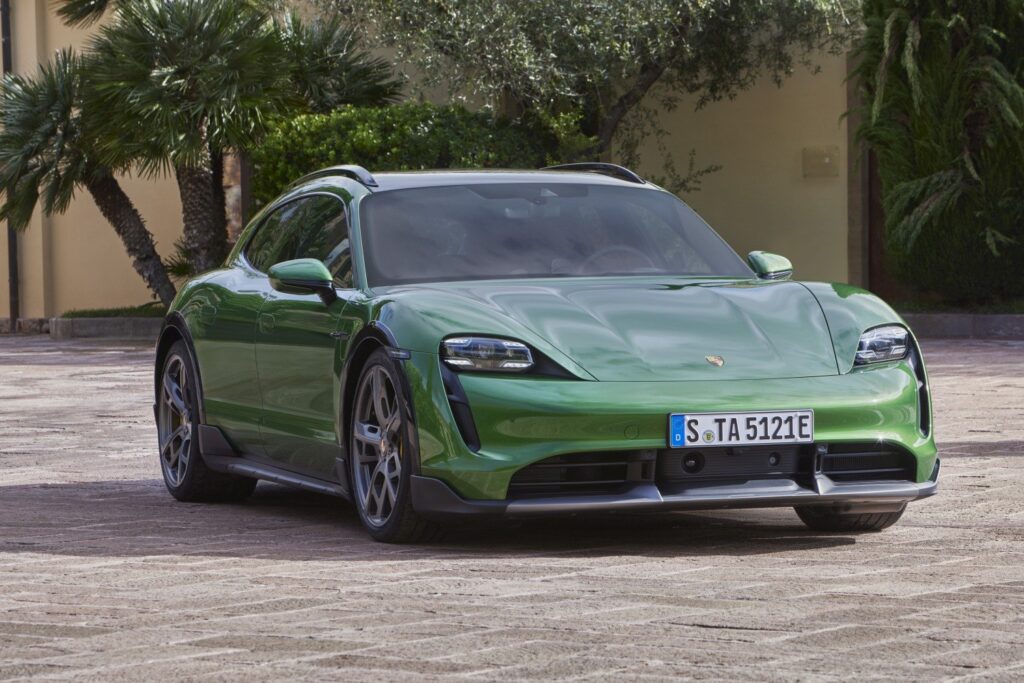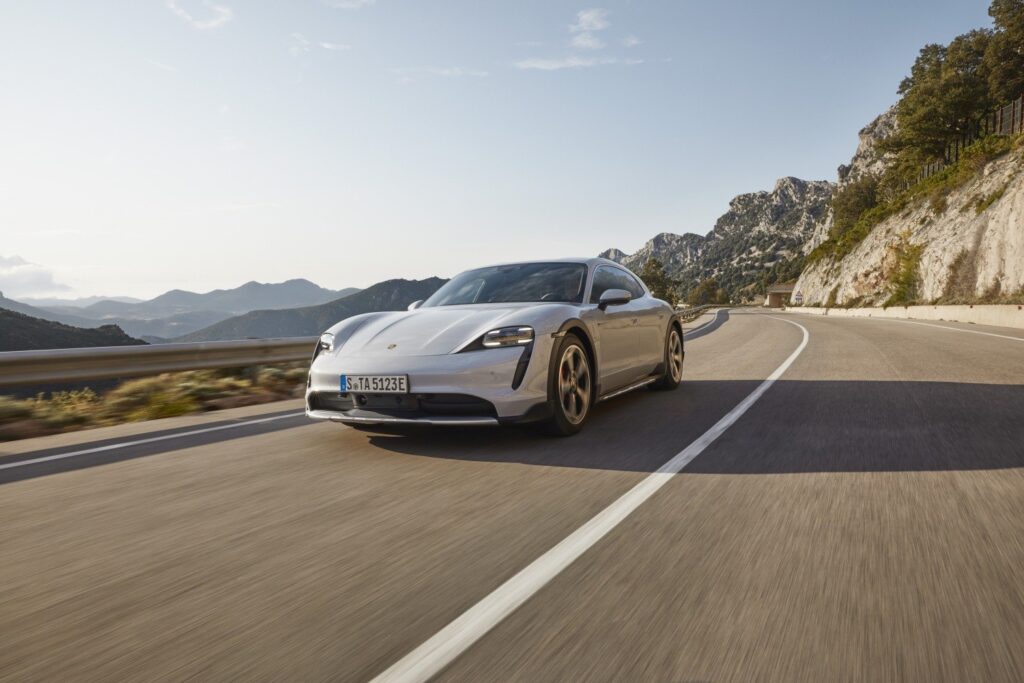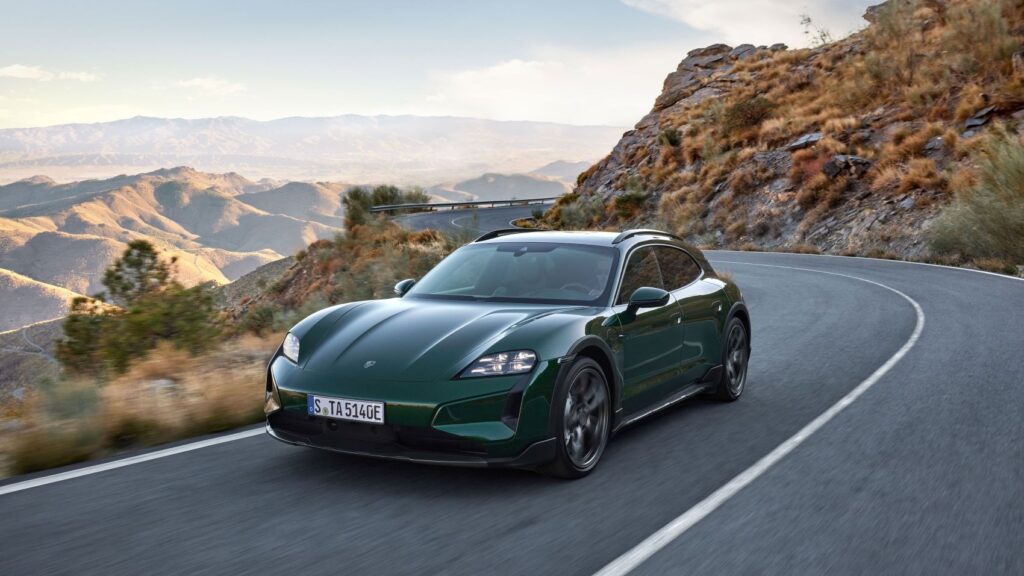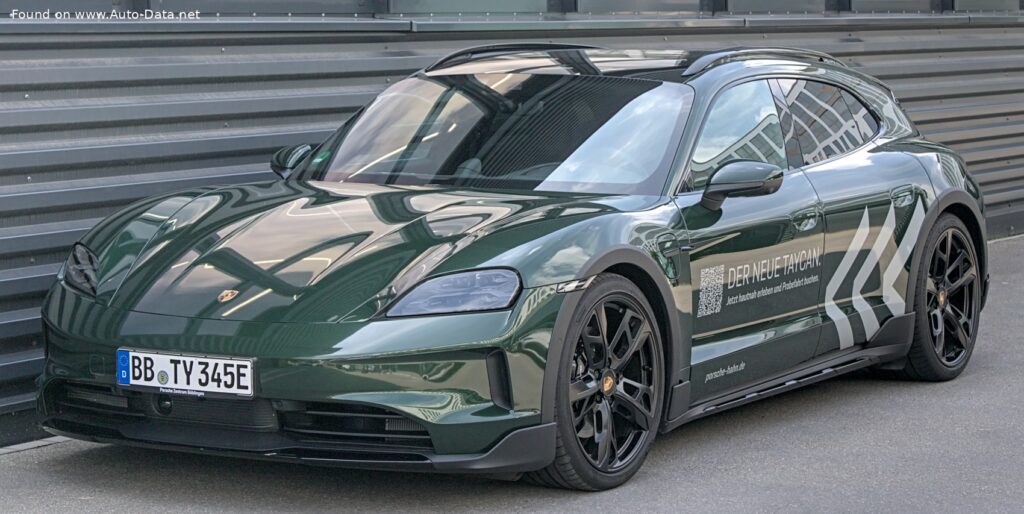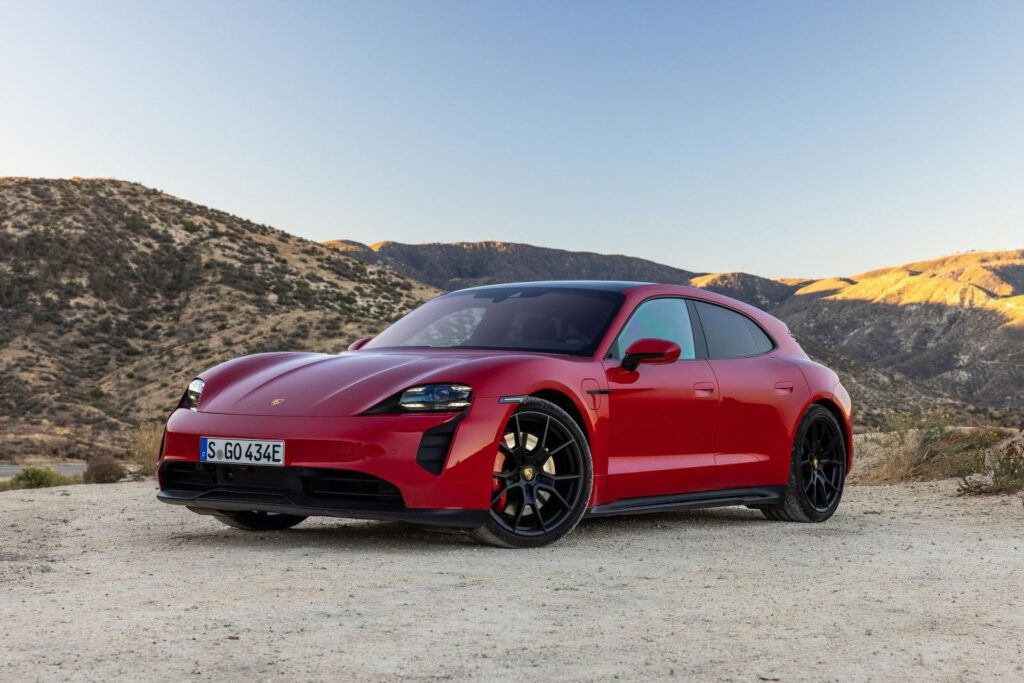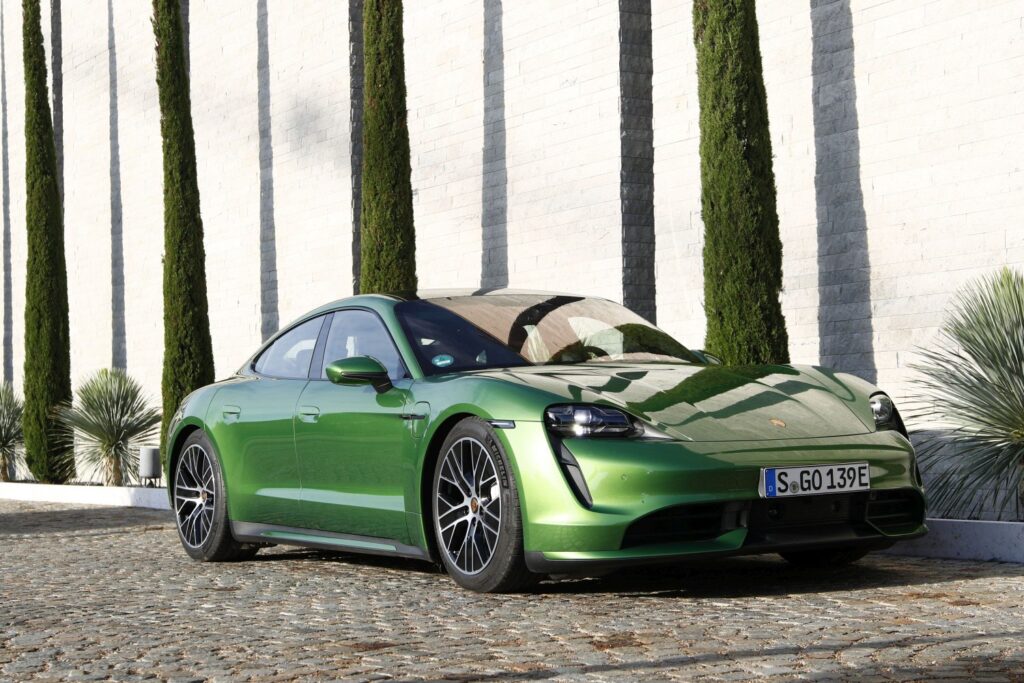
The Porsche Taycan Performance Plus 93.4 kWh (476 hp) is a fully electric, four-door sedan produced by Porsche from 2021 to February 2024. It represents a key variant within the first generation of the Taycan (Y1A) model line, positioned as a performance-oriented option offering a balance between range, acceleration, and price within the broader Taycan portfolio. The Taycan, as a whole, marked Porsche’s first foray into the all-electric vehicle market, built upon a dedicated platform designed to showcase the brand’s engineering prowess in a new era of sustainable mobility.
Taycan Performance Plus: Positioning and Overview
The Performance Plus trim occupied a significant middle ground in the early Taycan lineup. Below it sat the base Taycan, offering a slightly smaller battery and reduced power output. Above it were the more potent Turbo and Turbo S models, which prioritized ultimate performance and featured dual-motor all-wheel drive. The Performance Plus was aimed at buyers seeking a genuinely quick and engaging electric vehicle experience without the substantial price premium of the top-tier models. It appealed to those prioritizing a blend of everyday usability and spirited driving.
Powertrain & Engine Architecture
The Taycan Performance Plus is built around a single, permanently excited synchronous electric motor located on the rear axle. This motor, designated EBF, produces 476 horsepower and 357 Nm (263.31 lb-ft) of torque. The vehicle utilizes an 800-volt architecture, a significant innovation at the time of its release, allowing for exceptionally fast charging times. This high-voltage system reduces charging times considerably when connected to compatible DC fast chargers.
The battery pack is a lithium-ion unit with a gross capacity of 93.4 kWh, providing a net (usable) capacity of 83.7 kWh. This substantial battery capacity contributes to the Taycan’s competitive range. The battery is positioned low in the vehicle floor, contributing to a low center of gravity and enhanced handling characteristics. The car employs a sophisticated thermal management system to maintain optimal battery temperature, crucial for both performance and longevity. The single-speed, two-gear automatic transmission is designed to efficiently deliver power from the electric motor to the rear wheels.
Electric Motor and Transmission Details
The synchronous electric motor operates with high efficiency, converting electrical energy into mechanical power with minimal losses. The two-speed transmission isn’t a traditional multi-gear system like those found in internal combustion engine vehicles. Instead, it features a short gear ratio for acceleration and a longer ratio for efficient cruising. This design optimizes both performance and energy consumption. The motor’s transverse mounting further contributes to packaging efficiency within the rear of the vehicle.
Driving Characteristics
The Taycan Performance Plus delivers impressive acceleration, achieving 0-60 mph in approximately 5.1 seconds and 0-100 km/h in 5.4 seconds. While not as brutally quick as the dual-motor Turbo models, the rear-wheel-drive configuration provides a unique driving experience, emphasizing agility and driver engagement. The instant torque delivery characteristic of electric motors provides responsive acceleration in all situations. The car’s weight distribution, aided by the low-mounted battery pack, contributes to balanced handling.
The two-speed transmission is largely seamless in operation, with shifts occurring quickly and unobtrusively. In everyday driving, the Taycan Performance Plus feels refined and comfortable, offering a quiet and smooth ride. When pushed, it reveals a sporty character, with precise steering and confident cornering ability. Compared to the base Taycan, the Performance Plus offers a noticeable increase in acceleration and overall performance.
Equipment & Trim Levels
The Taycan Performance Plus came standard with a comprehensive suite of features, including Porsche Active Suspension Management (PASM), Porsche Communication Management (PCM) with a 10.9-inch touchscreen display, and a partial leather interior. Standard safety features included Porsche Stability Management (PSM), automatic emergency braking, and lane keep assist.
Optional extras were plentiful, allowing buyers to personalize their vehicles. These included adaptive cruise control, a panoramic sunroof, premium audio systems, and a wider range of interior upholstery options. The Sport Chrono Package, a popular option, added a Sport Response button for temporary power boosts and a launch control function for optimized acceleration. Interior color combinations and trim materials could be extensively customized through Porsche’s “Porsche Exclusive” program.
Chassis & Braking
The Taycan Performance Plus features a double-wishbone front suspension and an independent multi-link rear suspension, optimized for both comfort and handling. The suspension is tuned to provide a balance between ride quality and body control. Ventilated disc brakes are used on all four wheels, with 360mm rotors at the front and 358mm rotors at the rear, providing ample stopping power. The car is equipped with ABS (Anti-lock Braking System) and features optional 4-wheel steering (4WS), which enhances agility at low speeds and stability at high speeds. The steering system is an electric power steering rack and pinion system, providing precise and responsive steering feel.
Market Reception & Comparison
The Taycan Performance Plus was generally well-received by automotive critics, who praised its performance, handling, and fast-charging capabilities. It was often lauded as a compelling alternative to established luxury electric vehicles like the Tesla Model S. Fuel economy, expressed as MPGe (miles per gallon equivalent), ranged from 97-82 MPGe depending on driving conditions. The Taycan’s energy consumption was rated at 21.5-25.4 kWh/100 km (34.6 – 40.88 kWh/100 mi). Compared to the base Taycan, the Performance Plus offered a noticeable improvement in acceleration and range, justifying its higher price point. Reliability reports have been generally positive, although, as with any new technology, some early adopters experienced minor software glitches.
Technical Specifications
| Brand | Porsche |
| Model | Taycan |
| Generation | Taycan (Y1A) |
| Type | Performance Plus 93.4 kWh (476 Hp) |
| Start of production | 2021 |
| End of production | February 2024 |
| Powertrain Architecture | BEV (Electric Vehicle) |
| Body type | Sedan |
| Seats | 4 |
| Doors | 4 |
| Fuel Type | Electricity |
| Acceleration 0 – 100 km/h | 5.4 sec |
| Acceleration 0 – 62 mph | 5.4 sec |
| Acceleration 0 – 60 mph | 5.1 sec |
| Acceleration 0 – 200 km/h | 16.5 sec |
| Maximum speed | 230 km/h (142.92 mph) |
| Gross battery capacity | 93.4 kWh |
| Net (usable) battery capacity | 83.7 kWh |
| Battery voltage | 800 V |
| Battery technology | Lithium-ion (Li-Ion) |
| Battery weight | 650 kg (1433 lbs) |
| All-electric range (WLTP) | 407-484 km (252.9 – 300.74 mi) |
| Average Energy consumption (WLTP) | 21.5-25.4 kWh/100 km |
| Average Energy consumption (NEDC) | 28.7 kWh/100 km |
| Electric motor power | 476 Hp |
| Electric motor Torque | 357 Nm (263.31 lb.-ft.) |
| Kerb Weight | 2130 kg (4695.85 lbs) |
| Max. weight | 2795 kg (6161.92 lbs) |
| Trunk (boot) space – minimum | 407 l (14.37 cu. ft.) |
| Length | 4963 mm (195.39 in) |
| Width | 1966 mm (77.4 in) |
| Height | 1394 mm (54.88 in) |
| Wheelbase | 2900 mm (114.17 in) |
Legacy
The Taycan Performance Plus has proven to be a reliable and desirable vehicle in the used car market. Its 800-volt architecture and robust battery technology have contributed to long-term durability. While battery degradation is a factor in all electric vehicles, the Taycan’s battery management system has helped to minimize this effect. The Performance Plus variant continues to appeal to buyers seeking a premium electric sedan with a balance of performance, range, and value. It solidified Porsche’s position as a serious contender in the electric vehicle segment and paved the way for future Taycan models and other electric offerings from the brand.