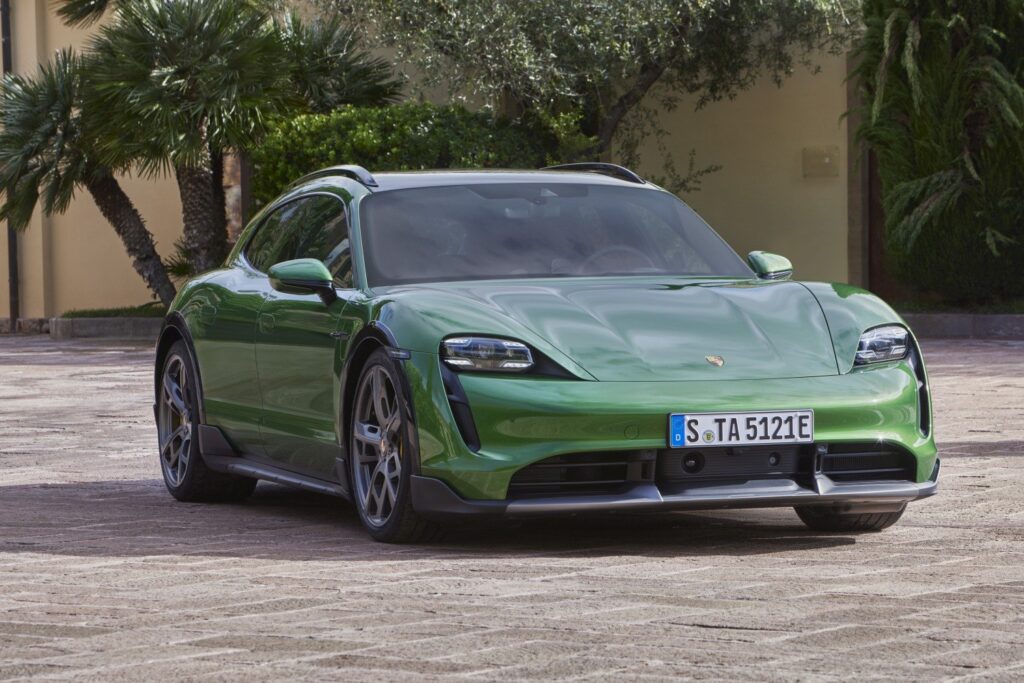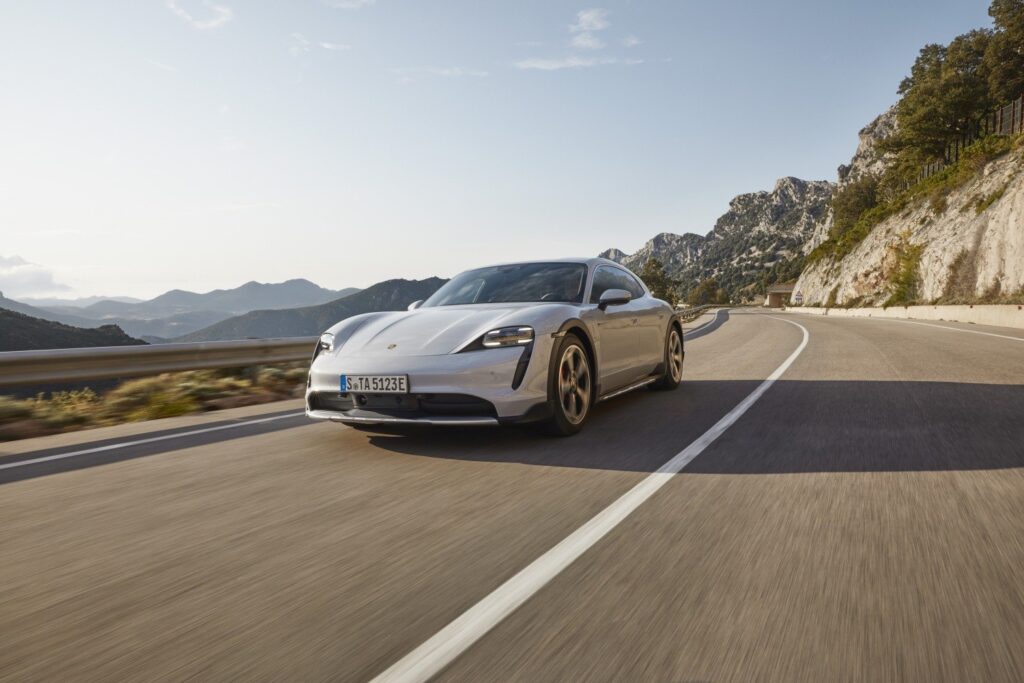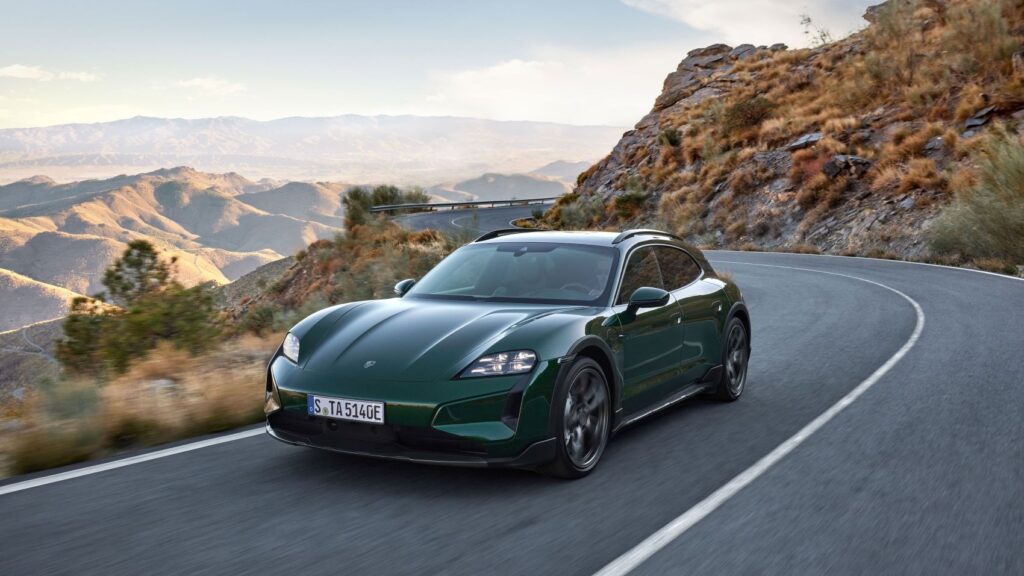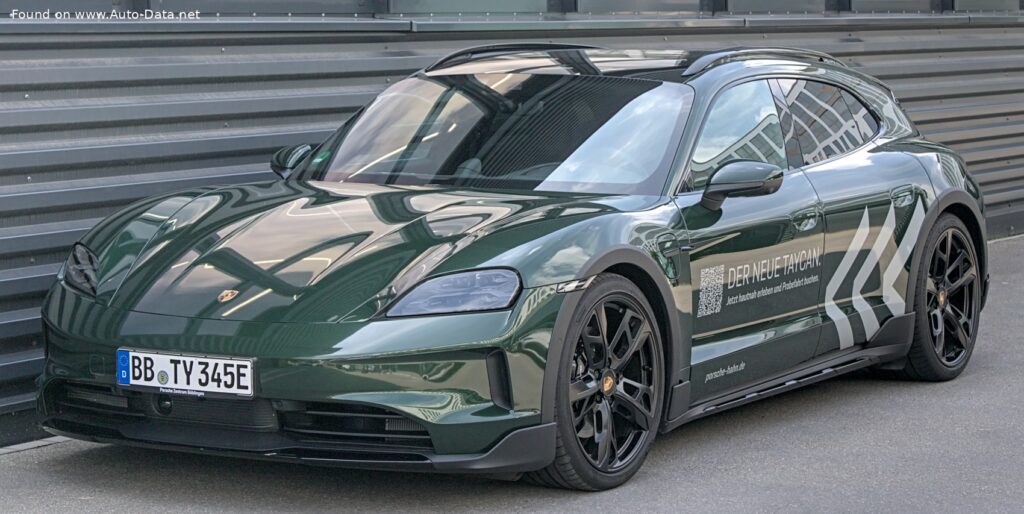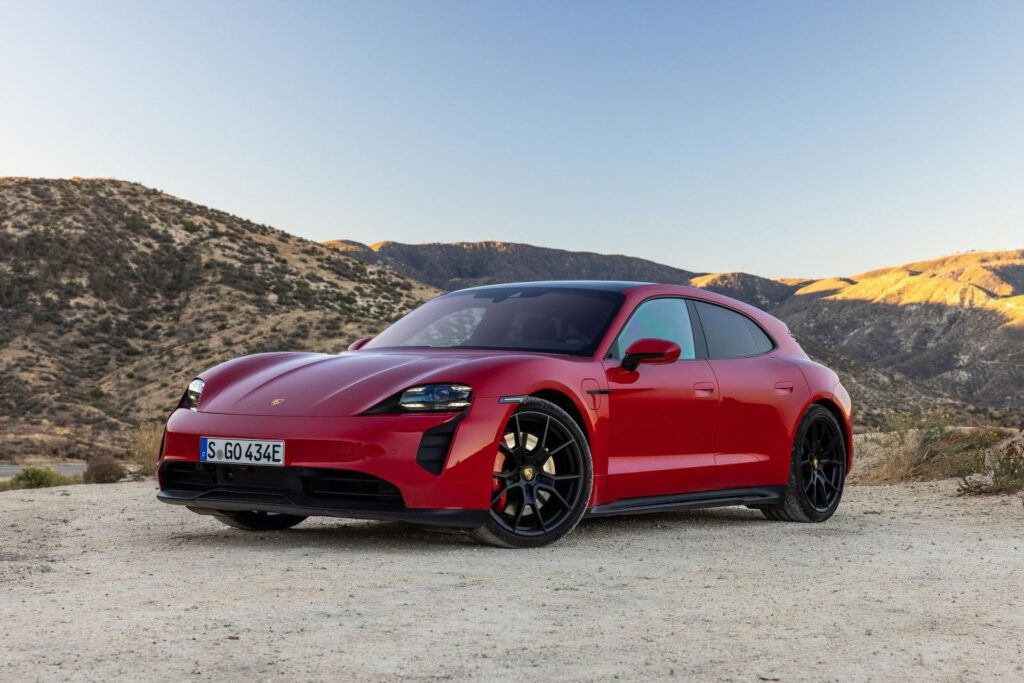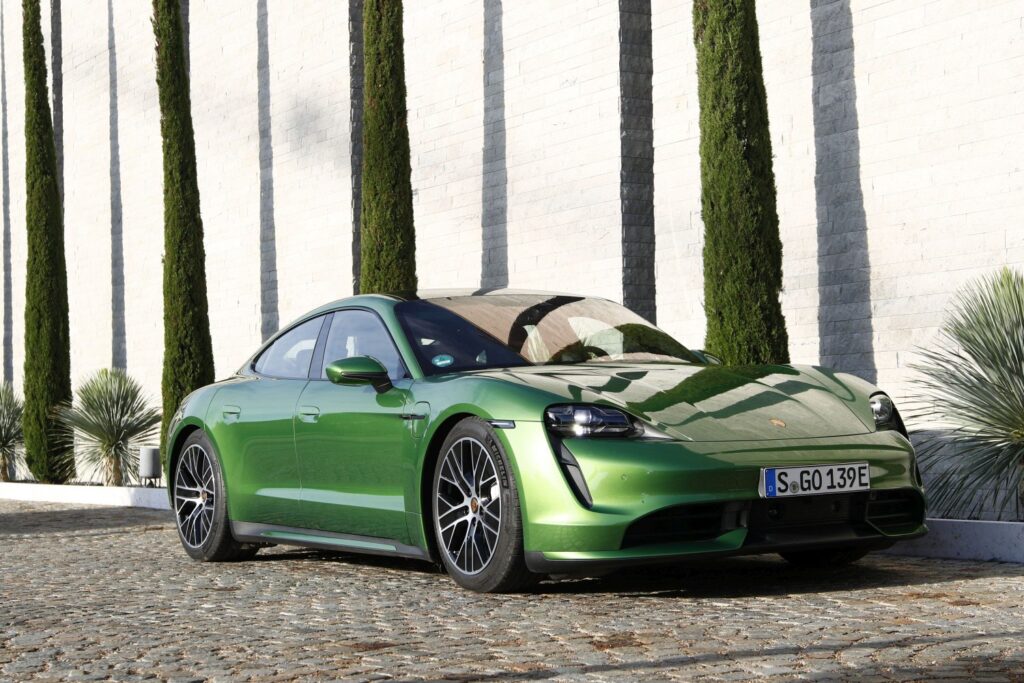
The Porsche Taycan Turbo, specifically the variant equipped with the 93.4 kWh battery pack and producing 680 horsepower, represents the high-performance flagship of the initial Taycan (Y1A) lineup launched in 2020. Positioned as the top-tier model, it offered a significant step up in power and performance compared to the base Taycan 4S and the mid-range Taycan Turbo S. Production of this specific configuration continued through February 2024, establishing it as a key component of Porsche’s first all-electric vehicle offering and a benchmark in the burgeoning luxury EV market. The Taycan, built on a dedicated J1 platform (internally designated as the Y1A), aimed to deliver the driving experience synonymous with Porsche while embracing the benefits of electric propulsion.
Powertrain & Engine Architecture
The Taycan Turbo utilizes a dual-motor, all-wheel-drive (AWD) powertrain. Unlike traditional internal combustion engine vehicles, the “engine” architecture consists of two permanently excited synchronous electric motors – one driving the front axle (EBG code) and one driving the rear axle (EBF code). Both motors are transversely mounted. The system operates on an 800-volt architecture, a pioneering feature at the time of its release, allowing for significantly faster charging times compared to the then-standard 400-volt systems. This high-voltage system necessitates specialized charging infrastructure, but enables the Taycan to gain a substantial range boost with relatively short charging sessions. The gross battery capacity is 93.4 kWh, providing a net (usable) capacity of 83.7 kWh. The battery pack itself is a lithium-ion unit weighing approximately 650 kg (1433 lbs) and is positioned low in the vehicle floor to contribute to a lower center of gravity and improved handling. The motors do not have a traditional multi-gear transmission in the conventional sense; instead, they employ a two-speed single-speed gearbox on each axle, providing both acceleration and efficiency. The first gear is optimized for rapid acceleration, while the second gear is geared for efficient cruising at higher speeds.
Electric Motor Specifications
The EBF (rear) and EBG (front) motors are highly sophisticated units. They feature hairpin winding technology for increased power density and efficiency. The motors are liquid-cooled, utilizing a dedicated cooling system to maintain optimal operating temperatures during demanding driving conditions. The synchronous motor design provides instant torque delivery, a hallmark of electric vehicles. The combined system output of 680 hp (500 kW) and 850 Nm (626.93 lb.-ft.) of torque allows for exceptional acceleration capabilities.
Driving Characteristics
The Taycan Turbo delivers a driving experience markedly different from Porsche’s traditional internal combustion engine models, yet retains the brand’s focus on performance and driver engagement. The instant torque availability from the electric motors results in breathtaking acceleration – 0 to 60 mph in approximately 3 seconds and 0 to 100 km/h in 3.2 seconds. The two-speed transmission on each axle is largely seamless in operation, providing a smooth and linear power delivery. The all-wheel-drive system, coupled with Porsche’s Traction Management system, ensures optimal grip and stability in various driving conditions. Compared to the Taycan 4S, the Turbo offers a significantly more potent acceleration experience. While the 4S provides a respectable level of performance, the Turbo’s additional power and torque are readily apparent. The Turbo S, being the ultimate performance variant, offers even greater acceleration, but the Turbo strikes a balance between exhilarating performance and everyday usability. The low center of gravity, thanks to the battery placement, contributes to exceptional handling and cornering stability. Regenerative braking is also a key feature, allowing the Taycan to recapture energy during deceleration and extend its range.
Equipment & Trim Levels
The Taycan Turbo came standard with a comprehensive suite of features reflecting its premium positioning. Interior appointments included a predominantly leather interior with available Alcantara accents. Standard features included adaptive air suspension, Porsche Active Suspension Management (PASM), and Porsche Surface Coated Brakes (PSCB) with tungsten carbide coating for improved durability and performance. The interior featured Porsche’s advanced infotainment system with a large central touchscreen display and a fully digital instrument cluster. Optional extras were extensive, including Porsche Ceramic Composite Brakes (PCCB), a panoramic glass roof, adaptive cruise control, lane keep assist, and a premium Burmester sound system. Customers could also personalize their Taycan Turbo with a wide range of exterior colors and interior trim options. SportDesign packages were available to enhance the vehicle’s aesthetic appeal.
Chassis & Braking
The Taycan Turbo utilizes a double-wishbone front suspension and an independent multi-link rear suspension, both incorporating adaptive air suspension. This system allows for adjustable ride height and damping characteristics, optimizing comfort and handling. The air suspension automatically adjusts to road conditions and driving style. The braking system consists of ventilated discs – 415×40 mm at the front and 365×28 mm at the rear. As mentioned, Porsche Surface Coated Brakes (PSCB) were standard, offering improved resistance to wear and fade. ABS (Anti-lock braking system) is standard, along with 4-wheel steering (4WS), which enhances agility and maneuverability, particularly at lower speeds. The steering system is an electric power steering rack and pinion system, providing precise and responsive steering feel.
Market Reception & Comparison
The Porsche Taycan Turbo was widely praised by automotive critics for its exceptional performance, handling, and technological innovation. It was lauded as a true Porsche, despite being an all-electric vehicle. Comparisons were frequently drawn to the Tesla Model S Performance, with the Taycan often being favored for its superior build quality, handling dynamics, and more traditional Porsche driving experience. Fuel economy, expressed as energy consumption, ranged from 23-26.7 kWh/100 km (37.01 – 42.97 kWh/100 mi) under WLTP testing, translating to approximately 91-78 MPGe. Reliability reports have been generally positive, although, as with any new technology, early production models experienced some minor software glitches that were addressed through over-the-air updates. The Taycan Turbo’s higher price point compared to the base Taycan 4S reflected its increased performance and premium features.
Technical Specifications
| Brand | Porsche |
| Model | Taycan Turbo |
| Generation | Taycan (Y1A) |
| Type (Engine) | Turbo 93.4 kWh (680 Hp) |
| Start of production | 2020 |
| End of production | February, 2024 |
| Powertrain Architecture | BEV (Electric Vehicle) |
| Body type | Sedan |
| Seats | 4 |
| Doors | 4 |
| Fuel Type | Electricity |
| Acceleration 0 – 100 km/h | 3.2 sec |
| Acceleration 0 – 62 mph | 3.2 sec |
| Acceleration 0 – 60 mph | 3 sec |
| Acceleration 0 – 200 km/h | 10.6 sec |
| Maximum speed | 260 km/h (161.56 mph) |
| Gross battery capacity | 93.4 kWh |
| Net (usable) battery capacity | 83.7 kWh |
| Battery voltage | 800 V |
| Battery technology | Lithium-ion (Li-Ion) |
| Battery weight | 650 kg (1433 lbs) |
| All-electric range (WLTP) | 381-450 km (236.74 – 279.62 mi) |
| Average Energy consumption (WLTP) | 23-26.7 kWh/100 km |
| Kerb Weight | 2305 kg (5081.66 lbs) |
| Max. weight | 2880 kg (6349.31 lbs) |
| Trunk (boot) space – minimum | 366 l (12.93 cu. ft.) |
| Length | 4963 mm (195.39 in) |
| Width | 1966 mm (77.4 in) |
| Height | 1381 mm (54.37 in) |
Legacy
The Porsche Taycan Turbo, and the Y1A generation as a whole, established Porsche as a serious contender in the electric vehicle market. The 93.4 kWh battery pack and 680 hp powertrain proved to be a robust and reliable combination. On the used car market, Taycan Turbos from the 2020-2024 model years hold their value relatively well, reflecting the brand’s prestige and the vehicle’s desirable performance characteristics. While battery degradation is a concern with all electric vehicles, the Taycan’s 800-volt architecture and sophisticated battery management system have helped to mitigate this issue. The Taycan Turbo paved the way for subsequent iterations of the model, including the Turbo S and the updated Taycan models with further refinements to performance, range, and technology. It remains a significant milestone in Porsche’s history and a benchmark for electric vehicle performance.