
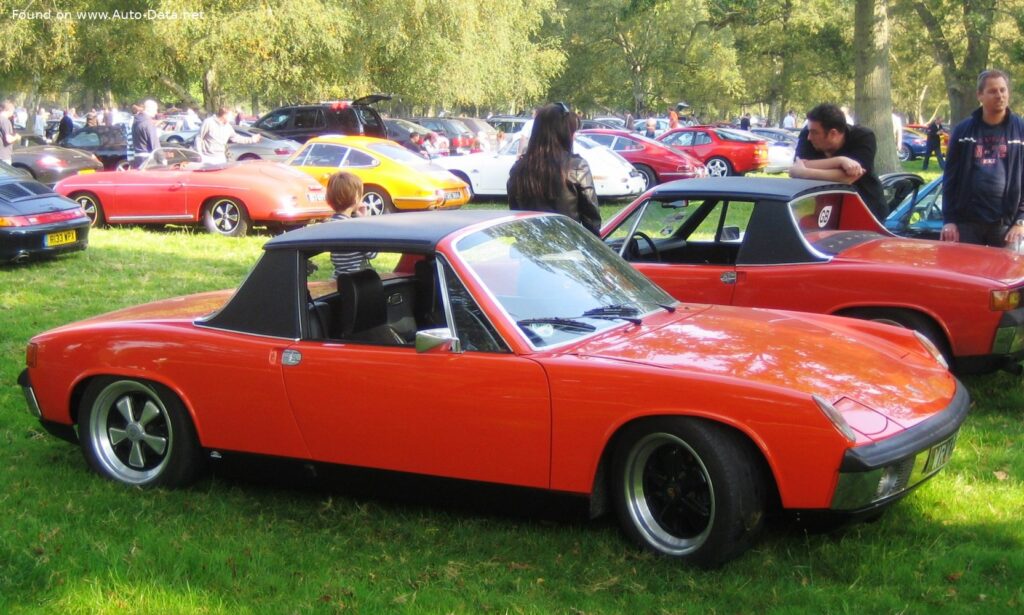
The VW-Porsche 914 1.7, producing 80 horsepower, was a pivotal model in the 914 lineup, manufactured between 1969 and 1973. This variant represented the entry point into the 914 range, a collaborative effort between Volkswagen and Porsche intended to fill a gap in the market for an affordable, mid-engined sports car. The 914 was built on the Volkswagen Type 4 platform, internally designated as the 914/4, and shared components with the Volkswagen Beetle and Type 4. The 1.7-liter engine version was the initial offering, later joined by 1.8-liter and 2.0-liter variants, as well as a Porsche-tuned 2.0-liter version. The 914 aimed to provide a genuine sports car experience at a price point accessible to a wider audience than Porsche’s traditional offerings.
The 1.7-Liter 914: Positioning and Target Audience
The 1.7-liter 914 served as the base model, designed for buyers seeking a sporty and unique vehicle without the higher price tag of the more powerful versions. It was marketed towards enthusiasts who appreciated the mid-engine layout and handling characteristics but prioritized affordability and fuel economy. Compared to the later 1.8-liter and 2.0-liter models, the 1.7 offered a more economical driving experience, albeit with reduced performance. It differed significantly from the Porsche 914/6, which featured a six-cylinder engine and catered to a more performance-oriented clientele. The 1.7 was intended to be a driver’s car, emphasizing nimble handling and a fun-to-drive character over outright speed.
Powertrain & Engine Architecture
The heart of the 914 1.7 was the Volkswagen Type 4 engine, specifically the 022 engine code. This was a 1679 cc (102.46 cubic inches) air-cooled, naturally aspirated, four-cylinder boxer engine. The boxer configuration, with horizontally opposed cylinders, contributed to a low center of gravity, enhancing the car’s handling. The engine featured a compression ratio of 8.2:1 and utilized multi-port manifold fuel injection, a relatively advanced system for its time, improving fuel efficiency and responsiveness. The engine produced 80 horsepower at 4900 rpm and 133 Nm (98.1 lb-ft) of torque at 2700 rpm. The engine’s oil capacity was 3.5 liters (3.7 US quarts / 3.08 UK quarts). The engine was mounted longitudinally in the chassis, driving the rear wheels.
Transmission
The 914 1.7 was exclusively offered with a 5-speed manual transmission. This transmission was designed to complement the engine’s power characteristics, providing a good balance between acceleration and fuel economy. The gear ratios were tailored to maximize the engine’s torque in the lower gears and allow for comfortable cruising at highway speeds. While an automatic transmission was not available for the 1.7-liter version, it would later be offered with the 1.8-liter engine, further broadening the 914’s appeal.
Driving Characteristics
The 914 1.7 offered a unique driving experience thanks to its mid-engine layout and relatively lightweight construction. Acceleration from 0 to 60 mph took approximately 12.4 seconds, and 0 to 100 km/h took 13 seconds. The top speed was around 109.98 mph (177 km/h). While not exceptionally quick by modern standards, the 914 1.7 felt nimble and responsive, particularly on winding roads. The boxer engine provided a distinctive sound and vibration, adding to the car’s character. The 5-speed manual transmission allowed drivers to keep the engine in its optimal power band, maximizing performance. Compared to the more powerful 1.8 and 2.0-liter versions, the 1.7 felt less stressed at higher speeds, making it a comfortable choice for long-distance driving. The weight-to-power ratio was 11.3 kg/Hp, and the weight-to-torque ratio was 6.8 kg/Nm.
Equipment & Trim Levels
The 1.7-liter 914 was relatively spartan in its standard equipment, reflecting its position as the entry-level model. Standard features included basic instrumentation, vinyl upholstery, and steel wheels. Optional extras included upgraded upholstery, a more comprehensive instrument cluster, and a sunroof. The interior was functional and driver-focused, with a minimalist design. The dashboard layout was straightforward, with easy-to-read gauges. While not luxurious, the interior was well-built and durable. The 914’s targa top design, with a removable roof panel, provided an open-air driving experience.
Chassis & Braking
The 914 featured a robust chassis designed to handle the stresses of sporty driving. The front suspension utilized a spring strut and wishbone configuration, while the rear suspension employed a trailing arm and coil spring setup. This suspension design provided a good balance between ride comfort and handling precision. The 914 1.7 was equipped with ventilated discs on the front wheels and discs on the rear wheels, providing adequate stopping power for its weight and performance. The steering system was a rack and pinion setup, offering precise and responsive steering feel. The car rode on 4.5J x 15 inch wheels. The curb weight of the 914 1.7 was 900 kg (1984.16 lbs), and the maximum weight was 1220 kg (2689.64 lbs).
Market Reception & Comparison
The VW-Porsche 914 1.7 received mixed reviews upon its introduction. Critics praised its handling, mid-engine layout, and affordability, but some found the engine underpowered. Compared to other sports cars of the era, such as the MG B and the Triumph TR6, the 914 offered a more modern and sophisticated driving experience. However, it lacked the outright performance of some of its competitors. Fuel economy was a strong point, with the 1.7-liter engine achieving around 29.4 US mpg (8 l/100 km). Reliability was generally good, although the air-cooled engine required regular maintenance. The 914 1.7 offered a unique combination of performance, handling, and affordability, making it an attractive option for enthusiasts seeking a sporty and distinctive vehicle.
Technical Specifications
| Brand | VW-Porsche |
| Model | 914 |
| Generation | 914 |
| Type (Engine) | 1.7 (80 Hp) |
| Start of production | 1969 |
| End of production | 1973 |
| Powertrain Architecture | Internal Combustion engine |
| Body type | Roadster |
| Seats | 2 |
| Doors | 2 |
| Fuel consumption (combined) | 8 l/100 km |
| Fuel consumption (US mpg) | 29.4 |
| Fuel consumption (UK mpg) | 35.3 |
| Fuel Type | Petrol (Gasoline) |
| Acceleration 0 – 100 km/h | 13 sec |
| Acceleration 0 – 62 mph | 13 sec |
| Acceleration 0 – 60 mph | 12.4 sec |
| Maximum speed | 177 km/h (109.98 mph) |
| Weight-to-power ratio | 11.3 kg/Hp |
| Weight-to-torque ratio | 6.8 kg/Nm |
| Power | 80 Hp @ 4900 rpm |
| Power per litre | 47.6 Hp/l |
| Torque | 133 Nm @ 2700 rpm (98.1 lb.-ft. @ 2700 rpm) |
| Engine layout | Middle, Longitudinal |
| Engine Model/Code | 022 |
| Engine displacement | 1679 cm3 (102.46 cu. in.) |
| Number of cylinders | 4 |
| Engine configuration | Boxer |
| Cylinder Bore | 90 mm (3.54 in.) |
| Piston Stroke | 66 mm (2.6 in.) |
| Compression ratio | 8.2:1 |
| Fuel injection system | Multi-port manifold injection |
| Engine aspiration | Naturally aspirated |
| Engine oil capacity | 3.5 l (3.7 US qt | 3.08 UK qt) |
| Kerb Weight | 900 kg (1984.16 lbs) |
| Max. weight | 1220 kg (2689.64 lbs) |
| Max load | 320 kg (705.48 lbs) |
| Fuel tank capacity | 62 l (16.38 US gal | 13.64 UK gal) |
| Length | 3985 mm (156.89 in.) |
| Width | 1650 mm (64.96 in.) |
| Height | 1230 mm (48.43 in.) |
| Wheelbase | 2450 mm (96.46 in.) |
| Front track | 1337 mm (52.64 in.) |
| Rear track | 1374 mm (54.09 in.) |
| Ride height | 120 mm (4.72 in.) |
| Minimum turning circle | 11 m (36.09 ft.) |
| Drivetrain Architecture | Rear wheel drive |
| Number of gears | 5 gears, manual transmission |
| Front suspension | Spring Strut, Wishbone |
| Rear suspension | Trailing arm, Coil spring |
| Front brakes | Ventilated discs, 281 mm |
| Rear brakes | Disc, 282 mm |
| Steering type | Steering rack and pinion |
| Wheel rims size | 4.5J x 15 |
Legacy
The 914 1.7, while the least powerful variant, remains a desirable classic car. Its relative affordability and simple mechanicals make it an accessible entry point into the world of classic Porsche ownership. The air-cooled engine, while requiring regular maintenance, is known for its durability. Today, well-maintained examples of the 914 1.7 are sought after by collectors and enthusiasts. The car’s unique mid-engine layout and distinctive styling continue to appeal to those seeking a fun and engaging driving experience. The 914’s legacy as a collaborative effort between Volkswagen and Porsche, and its role in making sports car ownership more accessible, ensures its place in automotive history.
