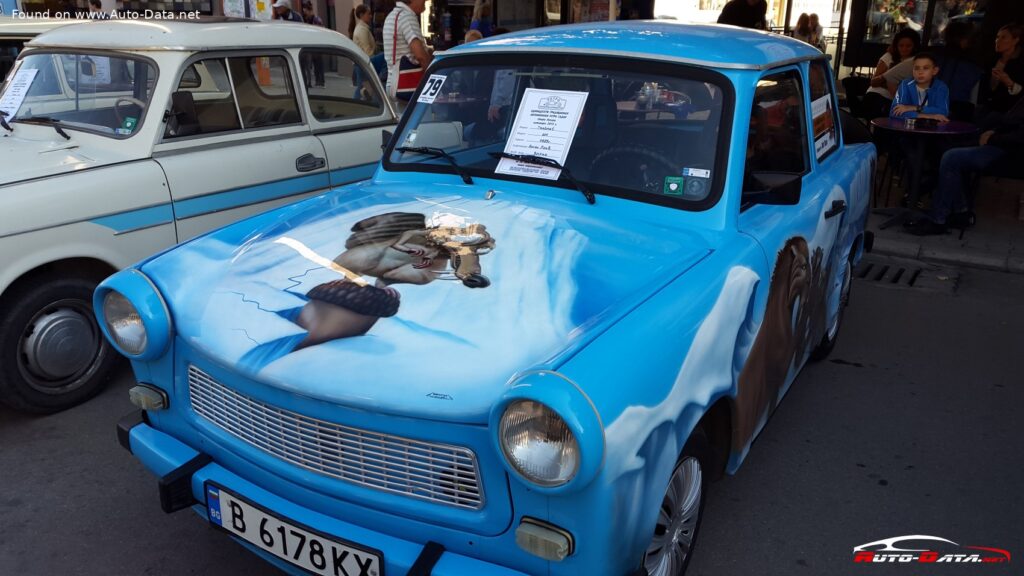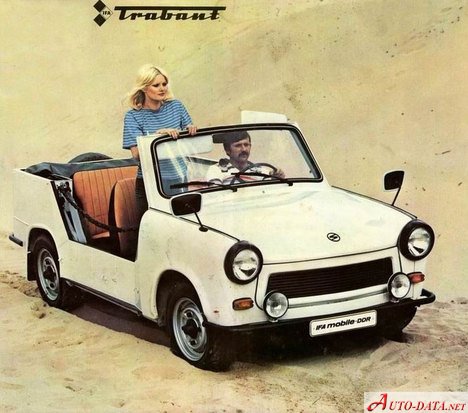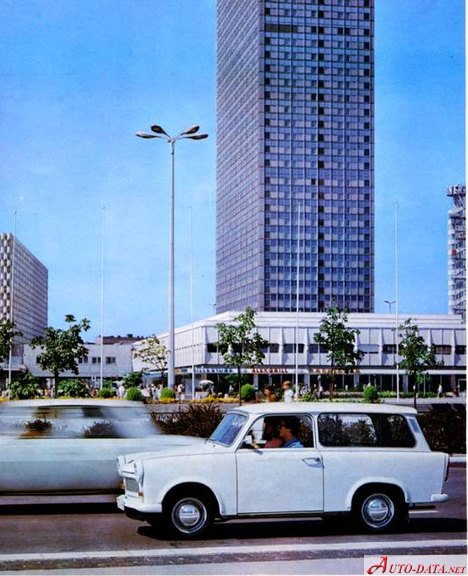
The Trabant P 601 Universal 0.6, a variant of the iconic East German automobile, was produced from 1963 to 1985. As the station wagon (estate) version of the P 601, it represented a practical and affordable transportation option for families within the Eastern Bloc. The “Universal” designation signified its increased cargo capacity compared to the standard P 601 sedan. This particular 0.6-liter, 26 horsepower model occupied the entry-level position in the Trabant lineup, prioritizing affordability and fuel efficiency over outright performance. It was built on the P601 chassis, a development of the earlier P50, and shared its core construction principles – a plastic body molded onto a steel frame.
Powertrain & Engine Architecture
The Trabant P 601 Universal 0.6 was powered by a 594 cc (36.25 cu. in.) two-stroke, inline two-cylinder engine. This engine, designated as the type 601, was a defining characteristic of the Trabant and a source of both its charm and its mechanical quirks. Unlike conventional four-stroke engines, the two-stroke design required a mixture of gasoline and oil to be added to the fuel tank for lubrication. This resulted in a characteristic smoky exhaust. The engine featured a carburetor fuel injection system, a relatively simple design chosen for its reliability and ease of maintenance. The valvetrain consisted of ports in the cylinder walls controlled by the piston’s movement, eliminating the need for traditional valves and camshafts.
The engine produced 26 horsepower at 4200 rpm and 53 Nm (39.09 lb-ft) of torque. Power was delivered to the front wheels via a four-speed manual transmission. The transmission was a simple, non-synchronized unit, requiring a degree of skill to operate smoothly. The engine was transversely mounted, contributing to the car’s compact dimensions and maximizing interior space. The relatively low compression ratio of 7.6:1 was typical for two-stroke engines, and the engine’s design prioritized simplicity and durability over high performance.
Engine Codes & Variations
While the core engine design remained consistent throughout the P 601’s production run, minor variations existed. Early models utilized slightly different carburetor setups. Later iterations saw improvements in ignition systems, but the fundamental two-stroke architecture remained unchanged. The 0.6-liter engine was the base offering, with larger 1.1-liter variants available for those seeking more power, though these were less common in the Universal body style.
Driving Characteristics
The Trabant P 601 Universal 0.6 offered modest performance. Acceleration was slow, and reaching highway speeds required considerable planning. The 0 to 100 km/h (0 to 62.14 mph) sprint took a considerable amount of time. The four-speed manual transmission had relatively widely spaced gear ratios, requiring frequent shifting to maintain optimal engine speed. The engine’s torque peak was relatively low in the rev range, making it reasonably tractable around town, but lacking in passing power. The front-wheel-drive layout provided adequate traction in most conditions, but the car was prone to understeer when pushed hard. The lightweight construction (650 kg / 1433 lbs) helped to mitigate the effects of the low horsepower output, making the car feel less sluggish than the numbers might suggest.
Compared to the later 1.1-liter versions, the 0.6-liter engine felt significantly underpowered, especially when carrying a full load or navigating hilly terrain. The 1.1-liter models offered a more relaxed driving experience, with improved acceleration and higher top speeds. However, the 0.6-liter engine was more fuel-efficient and required less maintenance, making it a popular choice for budget-conscious buyers.
Equipment & Trim Levels
The Trabant P 601 Universal 0.6 was sparsely equipped, reflecting its position as an affordable vehicle. Standard features included basic cloth upholstery, a simple dashboard with minimal instrumentation (speedometer, fuel gauge), and manually operated windows and door locks. Heating was available, but air conditioning was not an option. The interior was functional rather than luxurious, with a focus on durability and ease of cleaning. The rear seats could be folded down to increase cargo capacity, enhancing the Universal’s practicality.
Optional extras were limited but included a radio, upgraded upholstery, and a sunroof. The exterior trim was minimal, with painted steel wheels and chrome bumpers. The Universal body style offered a larger rear cargo area than the sedan, making it ideal for families and those needing to transport goods. Trim levels were largely defined by the engine size and the presence of optional extras, rather than distinct model designations.
Chassis & Braking
The Trabant P 601 Universal 0.6 featured a simple chassis design. The car utilized a monocoque construction, with a steel frame supporting the plastic body panels. The front suspension consisted of independent trailing arms with coil springs and shock absorbers. The rear suspension employed a rigid axle with leaf springs. This setup provided a reasonably comfortable ride, but handling was somewhat imprecise. The steering was a recirculating ball system, offering limited feedback.
The braking system consisted of drum brakes on all four wheels. The brakes were mechanically operated and provided adequate stopping power for the car’s weight and performance. However, they were prone to fading under heavy use. The car rode on 145/80 SR13 tires mounted on 4JX13H-45 steel wheels. Stabilizer bars were not typically fitted to the base 0.6-liter models, further contributing to the car’s tendency to roll in corners.
Market Reception & Comparison
The Trabant P 601 Universal 0.6 was primarily sold within the Eastern Bloc countries, where it was a popular choice for families and individuals seeking affordable transportation. It was praised for its practicality, fuel efficiency, and ease of maintenance. However, it was also criticized for its slow performance, basic features, and somewhat crude construction. Compared to Western European cars of the same era, the Trabant was significantly less refined. However, it offered a level of affordability that was simply unattainable for many Eastern European consumers.
Within the Trabant lineup, the 0.6-liter Universal was the most accessible model. It offered a good balance of practicality and affordability, making it a popular choice for those who did not require the extra performance of the 1.1-liter versions. Fuel economy was a key selling point, as gasoline was relatively expensive in Eastern Bloc countries. Reliability was generally good, although the two-stroke engine required regular maintenance and careful operation.
Technical Specifications
| Brand | Trabant |
| Model | P 601 Universal |
| Type (Engine) | 0.6 (26 Hp) |
| Start of production | 1963 |
| End of production | 1985 |
| Powertrain Architecture | Internal Combustion engine |
| Body type | Station wagon (estate) |
| Seats | 4 |
| Doors | 3 |
| Fuel Type | Mixture of two stroke engine |
| Maximum speed | 100 km/h (62.14 mph) |
| Weight-to-power ratio | 25 kg/Hp, 40 Hp/tonne |
| Weight-to-torque ratio | 12.3 kg/Nm, 81.5 Nm/tonne |
| Power | 26 Hp @ 4200 rpm |
| Power per litre | 43.8 Hp/l |
| Torque | 53 Nm (39.09 lb.-ft.) |
| Engine layout | Front, Transverse |
| Engine displacement | 594 cm3 (36.25 cu. in.) |
| Number of cylinders | 2 |
| Engine configuration | Inline |
| Cylinder Bore | 72 mm (2.83 in.) |
| Piston Stroke | 73 mm (2.87 in.) |
| Compression ratio | 7.6:1 |
| Fuel injection system | Carburettor |
| Engine aspiration | Naturally aspirated engine |
| Kerb Weight | 650 kg (1433 lbs.) |
| Max. weight | 1040 kg (2292.81 lbs.) |
| Max load | 390 kg (859.8 lbs.) |
| Trunk (boot) space – minimum | 450 l (15.89 cu. ft.) |
| Trunk (boot) space – maximum | 1400 l (49.44 cu. ft.) |
| Fuel tank capacity | 26 l (6.87 US gal | 5.72 UK gal) |
| Length | 3560 mm (140.16 in.) |
| Width | 1510 mm (59.45 in.) |
| Height | 1437 mm (56.57 in.) |
| Wheelbase | 2020 mm (79.53 in.) |
| Front track | 1206 mm (47.48 in.) |
| Rear (Back) track | 1255 mm (49.41 in.) |
| Minimum turning circle (turning diameter) | 10 m (32.81 ft.) |
| Drivetrain Architecture | The Internal combustion engine (ICE) drives the front wheels of the vehicle. |
| Drive wheel | Front wheel drive |
| Number of gears and type of gearbox | 4 gears, manual transmission |
| Front brakes | Drum |
| Rear brakes | Drum |
| Tires size | 145/80 SR13 |
| Wheel rims size | 4JX13H-45 |
Legacy
The Trabant P 601 Universal 0.6, while mechanically simple and lacking in modern amenities, holds a significant place in automotive history. It represents a bygone era of affordable, practical transportation in Eastern Europe. The two-stroke engine, while prone to issues if neglected, was relatively easy to repair and maintain, making the Trabant a popular choice for those with limited mechanical skills. Today, the Trabant P 601 Universal 0.6 is a sought-after classic car, particularly among collectors and enthusiasts. Its unique design, quirky engine, and historical significance make it a charming and nostalgic reminder of a different time. While not known for exceptional reliability in the long term, well-maintained examples can still provide years of enjoyment. The availability of spare parts has become increasingly limited, making preservation and restoration efforts all the more important.