
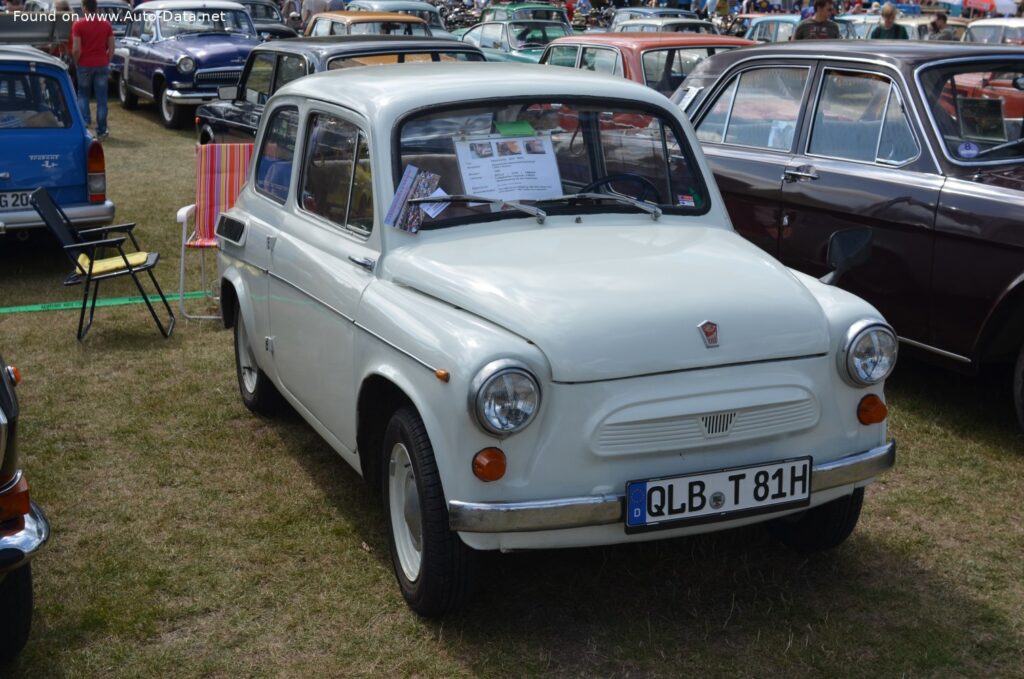
The ZAZ 965, specifically the 0.9 A variant producing 27 horsepower, was a significant automobile in the early automotive landscape of the Soviet Union. Produced from 1962 to 1969, it represented a move towards accessible personal transportation for the masses. This model, often nicknamed the “Hunchback” due to its distinctive roofline, was built upon a rear-engine, rear-wheel-drive platform and played a crucial role in motorizing the country. The 965 was part of the broader ZAZ (Zaporozhsky Avtomobilny Zavod) effort to create affordable and reliable vehicles, and the 0.9 A served as the initial, entry-level offering within the 965 range.
ZAZ 965 0.9 A: An Overview
The ZAZ 965 0.9 A was conceived as a compact, economical vehicle designed to address the growing demand for personal transport in the Soviet Union during the 1960s. It was heavily influenced by the Fiat 600, with ZAZ acquiring tooling and licenses from the Italian manufacturer. The 0.9 A was the first iteration of the 965, establishing the core design and mechanical layout that would characterize the model throughout its production run. It was intended to be a practical, no-frills vehicle for everyday use, prioritizing affordability and ease of maintenance over outright performance or luxury.
Powertrain & Engine Architecture
The heart of the ZAZ 965 0.9 A was the ME MZ-965 engine, a 0.9-liter (887 cc / 54.13 cu. in.) inline-four cylinder engine. This engine featured a V-configuration, though it wasn’t a true V-engine in the modern sense, but rather a flat-four layout. It produced 27 horsepower at 4000 rpm and 52 Nm (38.35 lb-ft) of torque at 2600 rpm, resulting in a power-to-weight ratio of 24.1 kg/hp. The engine utilized a compression ratio of 6.5:1 and employed a carburetor fuel injection system, typical for the era. The valvetrain consisted of two valves per cylinder. The engine was longitudinally mounted at the rear of the vehicle, driving the rear wheels. This rear-engine layout contributed to the car’s unique handling characteristics and compact dimensions.
Driving Characteristics
The driving experience of the ZAZ 965 0.9 A was defined by its modest power output and rear-engine configuration. With a top speed of approximately 90 km/h (55.92 mph), it was not designed for high-speed travel. Acceleration was slow, and the engine required frequent shifting to maintain momentum, especially when climbing hills or carrying a full load. The rear-engine layout resulted in noticeable oversteer, particularly on slippery surfaces, demanding careful driving. The four-speed manual transmission was relatively simple and robust, but its shift quality was not particularly refined. Despite its limitations, the 965 0.9 A offered a surprisingly nimble and engaging driving experience for its time, particularly in urban environments.
Equipment & Trim Levels
The ZAZ 965 0.9 A was characterized by its spartan interior and minimal equipment levels. It was designed to be functional and affordable, rather than luxurious. Standard features included basic cloth upholstery, a simple dashboard with minimal instrumentation (speedometer, fuel gauge), and manually operated windows. Heating was typically an optional extra. The interior space was relatively small, accommodating four passengers, but with limited legroom and headroom, especially in the rear seats. The car featured a two-door hatchback body style, providing reasonable cargo capacity for its size. Optional extras were limited, typically including a radio and upgraded interior trim.
Chassis & Braking
The ZAZ 965 0.9 A utilized a simple yet effective chassis design. The front suspension consisted of torsion bars, while the rear suspension employed coil springs. This setup provided a reasonably comfortable ride, considering the car’s low weight and basic construction. The braking system consisted of drum brakes on all four wheels. The steering was a recirculating ball system, providing adequate control but lacking in precision. The car’s relatively light curb weight of 650 kg (1433 lbs) contributed to its nimble handling and reduced braking distances. Tire size was 135/80 SR13.
Market Reception & Comparison
The ZAZ 965 0.9 A was generally well-received in the Soviet Union, fulfilling its intended role as an affordable and accessible vehicle for the masses. Critics praised its compact size, fuel efficiency (5.5 l/100 km – 42.8 US mpg), and ease of maintenance. However, it was also criticized for its limited power, basic interior, and somewhat challenging handling characteristics. Compared to other vehicles available in the Soviet Union at the time, such as the Moskvich and Volga, the 965 0.9 A was significantly more affordable and compact, making it a popular choice for first-time car buyers and urban dwellers. Later iterations of the 965, such as the 966, offered increased power and improved features, but the 0.9 A remained a significant milestone in the history of Soviet automotive manufacturing.
Technical Specifications
| Brand | ZAZ |
| Model | 965 |
| Generation | 965 |
| Type (Engine) | 0.9 A (27 Hp) |
| Start of production | 1962 |
| End of production | 1969 |
| Body type | Hatchback |
| Seats | 4 |
| Doors | 2 |
| Fuel consumption (combined) | 5.5 l/100 km (42.8 US mpg) |
| Maximum speed | 90 km/h (55.92 mph) |
| Kerb Weight | 650 kg (1433 lbs) |
| Fuel tank capacity | 30 l (7.93 US gal) |
| Length | 3330 mm (131.1 in) |
| Width | 1395 mm (54.92 in) |
| Height | 1450 mm (57.09 in) |
| Wheelbase | 2023 mm (79.65 in) |
| Engine displacement | 887 cm3 (54.13 cu. in) |
| Number of cylinders | 4 |
| Power | 27 Hp @ 4000 rpm |
| Torque | 52 Nm @ 2600 rpm (38.35 lb.-ft. @ 2600 rpm) |
| Engine layout | Rear, Longitudinal |
| Fuel injection system | Carburettor |
| Number of gears | 4 |
| Gearbox type | Manual |
Legacy
The ZAZ 965 0.9 A, while relatively simple by modern standards, holds a significant place in automotive history. It represented a crucial step in making personal transportation accessible to a wider segment of the population in the Soviet Union. The engine, while modest in its output, proved to be reasonably reliable and durable, and many examples of the 965 0.9 A remained on the road for decades. Today, the ZAZ 965 is a popular classic car among collectors and enthusiasts, particularly in Eastern Europe. Its unique design, historical significance, and relative affordability have contributed to its enduring appeal. While parts availability can be a challenge, the 965 0.9 A remains a testament to the ingenuity and resourcefulness of Soviet automotive engineering.
