
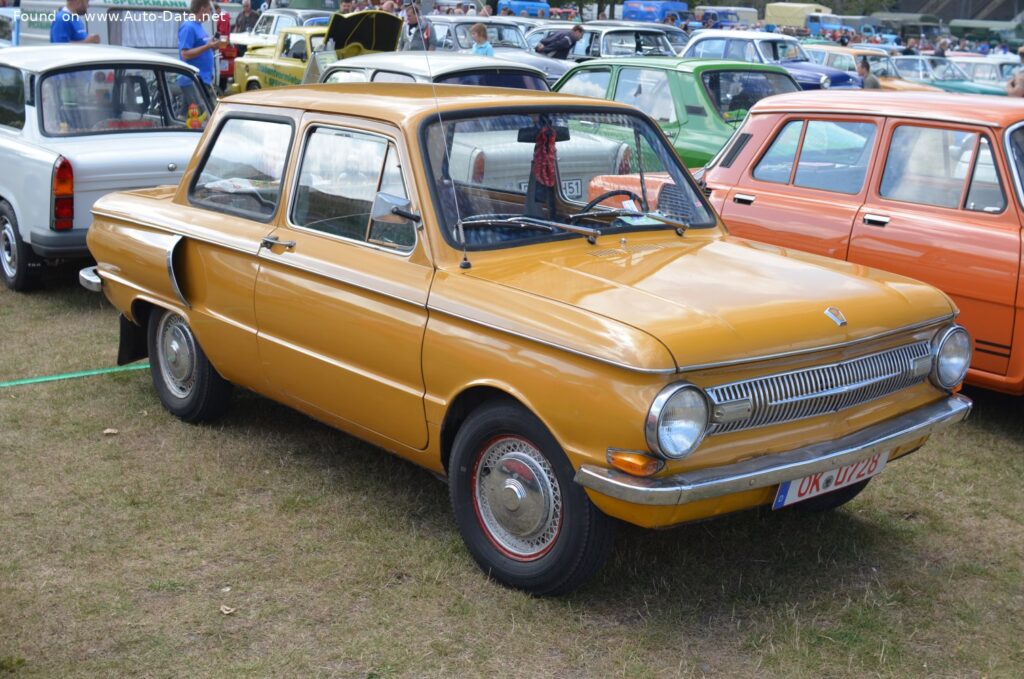
The ZAZ 966, produced between 1966 and 1972, was a significant small car in the Soviet automotive landscape. Representing a departure from previous ZAZ models, the 966 aimed to provide a modern, albeit basic, form of personal transportation to a wider segment of the population. The 0.9-liter (27 hp) variant, powered by the ME MZ-965 engine, served as the entry-level model during its production run. It was positioned as an affordable and economical option, prioritizing practicality over performance. The 966 was built on a rear-engine, rear-wheel-drive platform, a configuration common in European economy cars of the era, and was part of a broader effort to modernize Soviet automotive manufacturing.
ZAZ 966 0.9: A Detailed Overview
The ZAZ 966 0.9 represented a pivotal moment for ZAZ (Zaporizhzhia Automobile Building Plant). It was the first car produced in large numbers by the plant, and its design was heavily influenced by the Fiat 600, licensed for production in the Soviet Union. The 0.9-liter engine version was the mainstay of the lineup for the initial years, offering a balance between fuel efficiency and acceptable, though limited, performance for urban driving. The car’s compact size and relatively simple construction made it suitable for the often-challenging road conditions prevalent in the Soviet Union at the time.
Powertrain & Engine Architecture
The heart of the ZAZ 966 0.9 was the ME MZ-965 engine, a 0.9-liter (887 cc) V4 engine. This engine was a key element of the Fiat 600 license agreement, though it underwent some modifications for Soviet production. The engine featured a 6.5:1 compression ratio and utilized a carburetor fuel injection system. The valvetrain consisted of two valves per cylinder. The engine’s longitudinal rear-engine placement was a defining characteristic of the 966, impacting its handling and weight distribution. The engine produced 27 horsepower at 4000 rpm and 52 Nm (38.35 lb-ft) of torque at 2600 rpm. While modest by modern standards, this output was considered adequate for a vehicle of its size and intended purpose. The engine’s relatively simple design contributed to its robustness and ease of maintenance, important factors in the Soviet context.
Driving Characteristics
The driving experience in a ZAZ 966 0.9 was characterized by its modest performance. Acceleration was slow, and the car was not designed for high-speed cruising. The 4-speed manual transmission was the only option available for this variant. The rear-engine layout contributed to a distinctive driving feel, with noticeable rear-end weight bias. This could lead to oversteer in certain conditions, requiring careful handling. The gear ratios were optimized for low-speed torque, making the car reasonably capable of navigating urban streets and less-than-ideal road surfaces. Compared to later, slightly more powerful versions of the 966, the 0.9-liter model felt noticeably underpowered, particularly when carrying a full load of passengers or cargo. However, its simplicity and predictable handling made it a relatively easy car to drive, even for inexperienced motorists.
Equipment & Trim Levels
The ZAZ 966 0.9 was intentionally spartan in its equipment levels. It was designed to be an affordable car, and luxury features were largely absent. Standard features included basic cloth upholstery, a simple dashboard with minimal instrumentation (speedometer, fuel gauge), and manually operated windows. The car featured a two-door body style with seating for five passengers, although rear passenger space was limited. Optional extras were scarce, typically limited to a radio or upgraded seat covers. The interior was functional rather than aesthetically pleasing, reflecting the car’s utilitarian purpose. The exterior paint options were also limited, typically consisting of basic solid colors.
Chassis & Braking
The ZAZ 966 0.9 featured an independent coil spring suspension on both the front and rear axles. This suspension setup, while relatively simple, provided a reasonable level of ride comfort, considering the car’s price point and intended use. The braking system consisted of drum brakes on all four wheels. The steering system was a cone worm with recirculation balls, providing a relatively heavy but precise steering feel. The car’s wheelbase measured 2160 mm (85.04 in), and its track widths were 1220 mm (48.03 in) at the front and 1200 mm (47.24 in) at the rear. The relatively narrow track contributed to the car’s compact dimensions and maneuverability.
Market Reception & Comparison
The ZAZ 966 0.9 was generally well-received in the Soviet Union, primarily due to its affordability and availability. It filled a crucial gap in the market for a small, economical car. Critics acknowledged its limitations in terms of performance and refinement but praised its robustness and ease of maintenance. Compared to other cars available in the Soviet Union at the time, such as the Moskvich 408, the ZAZ 966 offered a more modern design and a more compact size. However, the Moskvich generally offered more interior space and a slightly more powerful engine. Fuel economy was a strong point for the 966 0.9, making it an attractive option for drivers facing fuel shortages or high fuel prices. Reliability was generally good, although the car’s simple construction meant that it required regular maintenance to prevent issues.
Technical Specifications
| Body Type | Sedan, 2 Doors, 5 Seats |
| Engine Displacement | 0.9 l (887 cm3 / 54.13 cu. in.) |
| Engine Model/Code | ME MZ-965 |
| Number of Cylinders | 4, V-engine |
| Power | 27 Hp @ 4000 rpm |
| Torque | 52 Nm @ 2600 rpm (38.35 lb.-ft. @ 2600 rpm) |
| Fuel Type | Petrol (Gasoline) |
| Compression Ratio | 6.5:1 |
| Fuel Injection System | Carburettor |
| Number of Valves per Cylinder | 2 |
| Drivetrain | Rear wheel drive |
| Transmission | 4 gears, manual transmission |
| Length | 3730 mm (146.85 in.) |
| Width | 1570 mm (61.81 in.) |
| Height | 1400 mm (55.12 in.) |
| Wheelbase | 2160 mm (85.04 in.) |
| Minimum Turning Circle | 11.8 m (38.71 ft.) |
Legacy
The ZAZ 966 0.9, and the 966 series as a whole, left a lasting legacy in the Soviet automotive history. It was the first mass-produced car from ZAZ and helped to democratize car ownership in the Soviet Union. While the 0.9-liter engine variant was eventually superseded by more powerful versions, it remains a significant part of the 966’s story. Today, the ZAZ 966 is a popular classic car among collectors and enthusiasts, particularly in Eastern Europe. Its simple construction and readily available parts make it relatively easy to maintain and restore. The 0.9-liter engine, while not particularly powerful, is known for its reliability and durability. The car’s unique design and historical significance continue to make it a cherished piece of automotive history.
