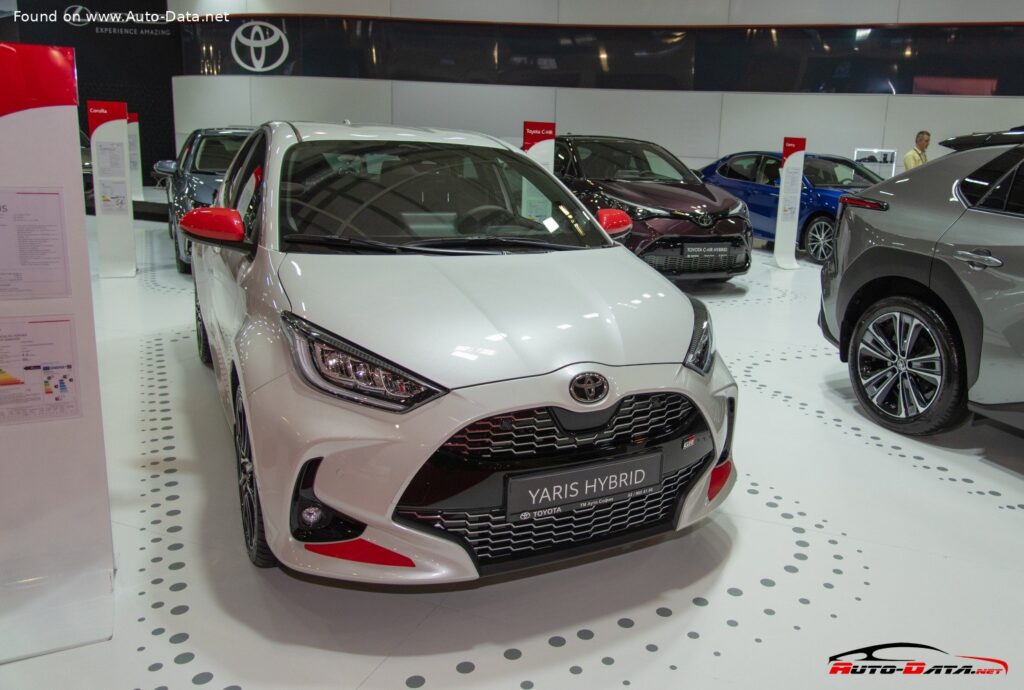
The Toyota Yaris (XP210) 1.5 Hybrid, produced from September 2020 to February 2024, represents the fourth generation of Toyota’s globally successful supermini. This particular variant, equipped with a 1.5-liter gasoline engine and an e-CVT transmission, served as a core model within the XP210 lineup, positioned as a fuel-efficient and technologically advanced option for urban commuters and environmentally conscious buyers. Built on the GA-B platform – a derivative of the Toyota New Global Architecture (TNGA) – the XP210 Yaris aimed to deliver improved safety, driving dynamics, and fuel economy compared to its predecessors. The hybrid powertrain was a key selling point, offering a blend of gasoline and electric power for reduced emissions and enhanced efficiency.
Powertrain & Engine Architecture
The heart of the Yaris 1.5 Hybrid is the 1.5-liter, three-cylinder M15A-FXE engine. This engine, part of Toyota’s Dynamic Force Engine family, utilizes a 14:1 compression ratio and direct fuel injection to maximize thermal efficiency. It produces 91 horsepower at 5500 rpm and 120 Nm (88.51 lb-ft) of torque between 3800-4800 rpm. The engine’s design emphasizes reduced friction and improved combustion, contributing to its fuel efficiency. The engine is transversely mounted at the front of the vehicle.
However, the powertrain is more than just the gasoline engine. It’s a full hybrid system (FHEV) incorporating an electric motor. This electric motor generates 80 hp and 141 Nm (104 lb-ft) of torque. The electric motor is integrated directly into the e-CVT transmission, eliminating the need for a conventional torque converter. This unique transmission, a key component of Toyota’s Hybrid Synergy Drive, isn’t a traditional continuously variable transmission; instead, it’s a power-split device that seamlessly blends power from the engine and electric motor. The lithium-ion battery, located under the rear seats, provides the energy storage for the electric motor. The system automatically switches between electric-only, gasoline-only, and combined operation, optimizing for efficiency and performance.
e-CVT Operation
The e-CVT operates differently than a conventional automatic. It doesn’t have fixed gear ratios. Instead, it uses a planetary gearset to continuously vary the effective gear ratio, allowing the engine to operate at its most efficient speed regardless of vehicle speed. This results in smooth acceleration and optimized fuel consumption. The system prioritizes electric drive at low speeds and during gentle acceleration, switching to gasoline power or a combination of both during higher demand situations.
Driving Characteristics
The Yaris 1.5 Hybrid e-CVT delivers a smooth and refined driving experience, particularly well-suited for urban environments. Acceleration is adequate, though not particularly brisk. The combined output of the engine and electric motor provides sufficient power for everyday driving, but the focus is clearly on efficiency rather than outright performance. The e-CVT contributes to a seamless driving experience, with no noticeable gear changes. However, under hard acceleration, the engine can become somewhat noisy as it operates at a constant rpm while the e-CVT adjusts the vehicle speed. Compared to a manual transmission Yaris, the e-CVT prioritizes ease of use and fuel economy over driver engagement. The weight-to-power ratio of 11.5 kg/hp reflects the car’s focus on efficiency over raw power.
Equipment & Trim Levels
The Yaris 1.5 Hybrid typically came standard with a respectable level of equipment. Standard features generally included air conditioning, a touchscreen infotainment system with smartphone integration (Apple CarPlay and Android Auto), Toyota Safety Sense (a suite of active safety features including pre-collision system, lane departure alert, and adaptive cruise control), and power windows and mirrors. Interior upholstery was typically cloth, with a functional and durable design. Higher trim levels offered upgrades such as alloy wheels, a larger touchscreen display, automatic climate control, and parking sensors. Optional extras included a premium audio system, heated seats, and a panoramic sunroof.
Chassis & Braking
The Yaris XP210 utilizes a McPherson strut independent suspension at the front and a torsion beam suspension at the rear. This setup provides a good balance between ride comfort and handling. The torsion beam rear suspension is a cost-effective solution that contributes to the car’s overall efficiency. The front brakes are ventilated discs, providing adequate stopping power, while the rear brakes are drums. This combination is typical for vehicles in this weight class. Electric power steering provides light and precise steering feel. The Yaris is equipped with ABS (Anti-lock Braking System) as standard, enhancing safety during emergency braking situations.
Market Reception & Comparison
The Yaris 1.5 Hybrid was generally well-received by automotive critics. Its fuel economy – achieving 2.8 l/100 km (84 US mpg) on the WLTP cycle – was a major highlight. Reviewers praised its comfortable ride, refined driving experience, and comprehensive safety features. However, some critics noted its relatively modest performance and the somewhat uninspiring interior design. Compared to other trims in the Yaris lineup, the 1.5 Hybrid offered a significant advantage in fuel efficiency but lacked the sporty appeal of the non-hybrid variants. Against competitors like the Honda Jazz/Fit Hybrid and Renault Clio E-Tech, the Yaris Hybrid held its own, offering a competitive combination of fuel economy, reliability, and value.
Technical Specifications
| Engine Type | 1.5L Inline-3 Gasoline |
| Engine Code | M15A-FXE |
| Engine Displacement | 1490 cm3 (90.93 cu. in.) |
| Maximum Power | 91 hp @ 5500 rpm |
| Maximum Torque | 120 Nm (88.51 lb-ft) @ 3800-4800 rpm |
| Compression Ratio | 14:1 |
| Fuel Injection | Direct Injection |
| Transmission | e-CVT (Electronically controlled Continuously Variable Transmission) |
| Drivetrain | Front-Wheel Drive |
| Battery Type | Lithium-ion |
| Electric Motor Power | 80 hp |
| Electric Motor Torque | 141 Nm (104 lb-ft) |
| Combined Fuel Consumption (WLTP) | 2.8 l/100 km (84 US mpg, 100.9 UK mpg) |
| Kerb Weight | 1050-1090 kg (2314.85 – 2403.04 lbs.) |
| Fuel Tank Capacity | 36 l (9.51 US gal, 7.92 UK gal) |
| Length | 3940 mm (155.12 in.) |
| Width | 1695 mm (66.73 in.) |
| Height | 1500 mm (59.06 in.) |
Legacy
The Toyota Yaris (XP210) 1.5 Hybrid has proven to be a reliable and durable vehicle. Toyota’s hybrid technology is well-established, and the powertrain has a strong track record for longevity. On the used car market, these models are generally sought after for their fuel efficiency and low running costs. The e-CVT transmission, while not known for its sporty feel, is generally reliable and requires minimal maintenance. The Yaris 1.5 Hybrid continues to be a popular choice for buyers seeking a practical, economical, and environmentally friendly supermini. Its reputation for reliability and fuel efficiency ensures its continued presence on roads for years to come.