
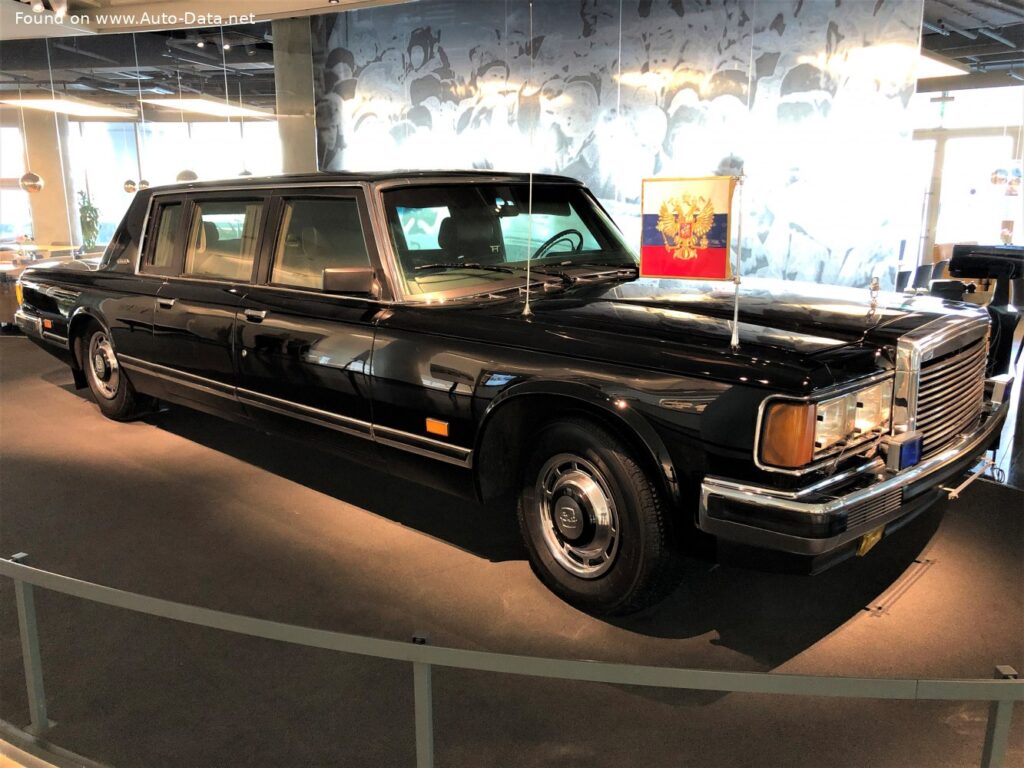
The ZIL 4104, produced between 1978 and 1985, represented a significant refinement of the ZIL 114 limousine, continuing the Soviet tradition of large, luxurious automobiles intended for high-ranking government officials and the political elite. Positioned as the flagship sedan of the ZIL factory, the 4104 aimed to provide a blend of prestige, comfort, and robust engineering. This particular variant, equipped with the 7.7-liter V8 engine producing 315 horsepower and paired with a 3-speed automatic transmission, was the standard powertrain for the model, representing the pinnacle of ZIL’s automotive capabilities during its production run. The 4104 was built on a modified version of the earlier ZIL 111 platform, utilizing a body-on-frame construction.
ZIL 4104 7.7 V8 (315 Hp): Powertrain & Engine Architecture
The heart of the ZIL 4104 was its 7.7-liter (7695 cc) V8 engine, designated internally as a series of codes reflecting ongoing development. This engine was a naturally aspirated, gasoline-fueled powerplant featuring a cast iron block and aluminum cylinder heads. The engine employed a pushrod valvetrain with two valves per cylinder. Fuel delivery was managed by a carburetor, a relatively archaic system by Western standards of the late 1970s and early 1980s, but one favored for its simplicity and reliability in the challenging operating conditions often encountered in the Soviet Union. The engine produced 315 horsepower at 4400 rpm and a substantial 608 Nm (448.44 lb-ft) of torque at 2500 rpm. The bore and stroke dimensions were 108 mm (4.25 in) and 105 mm (4.13 in) respectively, resulting in a compression ratio of 9.3:1.
The 3-speed automatic transmission was a crucial component of this variant, designed to provide smooth and effortless operation befitting the car’s intended clientele. While details on the transmission’s internal construction are scarce, it was a conventional hydraulic automatic, prioritizing durability and ease of maintenance over outright performance. The transmission was longitudinally mounted, driving the rear wheels.
Engine Specifications in Detail
The ZIL V8 was known for its robust construction and relatively simple design, prioritizing longevity and ease of repair over cutting-edge technology. The engine oil capacity was a substantial 12 liters (12.68 US quarts / 10.56 UK quarts), reflecting the engine’s large displacement and the need for adequate lubrication. The engine’s longitudinal front-engine layout contributed to a balanced weight distribution, although the car’s overall weight remained considerable.
Driving Characteristics
The ZIL 4104 7.7 V8 Automatic offered a driving experience focused on comfort and effortless cruising rather than sporty handling. The large displacement V8 provided ample torque, allowing for brisk acceleration despite the car’s substantial weight. Acceleration from 0 to 100 km/h (0-62 mph) was achieved in approximately 12 seconds, while 0-60 mph took around 11.4 seconds. The automatic transmission, while smooth, lacked the responsiveness of more modern units, resulting in a somewhat leisurely pace. The gear ratios were optimized for relaxed highway cruising, with the emphasis on providing smooth power delivery rather than maximizing fuel efficiency. The car’s considerable weight (3030 kg / 6680.01 lbs) and body-on-frame construction contributed to a noticeable body roll in corners, further reinforcing its focus on comfort over handling.
Equipment & Trim Levels
The ZIL 4104 was generously equipped, reflecting its status as a luxury vehicle. Standard features included power steering, disc brakes on all four wheels, and plush interior appointments. The interior typically featured leather upholstery, wood trim, and ample space for passengers. While the base specification was already luxurious, government officials and other high-ranking individuals could specify a range of bespoke options, including upgraded audio systems, customized interior trim, and even modifications to the exterior styling. Air conditioning was a common option, as were power windows and central locking. The dashboard layout was relatively conservative, prioritizing functionality and ease of use over modern aesthetics.
Chassis & Braking
The ZIL 4104 utilized a traditional body-on-frame construction, providing a robust and durable platform. The suspension system employed coil springs at both the front and rear, designed to provide a comfortable ride. The front suspension featured independent coil springs, while the rear suspension utilized a solid axle with coil springs. Braking was provided by disc brakes on all four wheels, supplemented by an anti-lock braking system (ABS), a relatively advanced feature for a Soviet-built vehicle of that era. The tires were typically 245/70 R16, providing a good balance of comfort and grip. Hydraulic power steering was standard, making maneuvering the large sedan relatively easy.
Market Reception & Comparison
The ZIL 4104 was not a vehicle subject to public market forces in the traditional sense. It was produced exclusively for a limited clientele within the Soviet Union and allied countries. Consequently, there were no independent road tests or consumer reports in the Western sense. However, anecdotal evidence suggests that the car was generally well-regarded for its comfort, spaciousness, and robust construction. Compared to other trims within the ZIL lineup (which were largely variations on the same basic platform), the 7.7 V8 Automatic represented the top-of-the-line offering, providing the highest level of performance and refinement. Fuel economy was predictably poor, averaging 17 l/100 km (13.8 US mpg / 16.6 UK mpg / 5.9 km/l), a consequence of the large displacement engine and the car’s considerable weight. Reliability was generally good, owing to the engine’s robust design and the emphasis on durability in its construction.
Technical Specifications
| Brand | ZIL |
| Model | 4104 |
| Generation | 4104 |
| Type (Engine) | 7.7 V8 (315 Hp) |
| Start of production | 1978 |
| End of production | 1985 |
| Body type | Sedan |
| Seats | 5 |
| Doors | 4 |
| Fuel consumption (combined) | 17 l/100 km |
| Fuel Type | Petrol (Gasoline) |
| Acceleration 0 – 100 km/h | 12 sec |
| Acceleration 0 – 62 mph | 12 sec |
| Acceleration 0 – 60 mph | 11.4 sec |
| Maximum speed | 200 km/h (124.27 mph) |
| Weight-to-power ratio | 9.6 kg/Hp |
| Weight-to-torque ratio | 5 kg/Nm |
| Power | 315 Hp @ 4400 rpm |
| Torque | 608 Nm @ 2500 rpm (448.44 lb.-ft. @ 2500 rpm) |
| Engine layout | Front, Longitudinal |
| Engine displacement | 7695 cm3 (469.58 cu. in.) |
| Number of cylinders | 8 |
| Engine configuration | V-engine |
| Cylinder Bore | 108 mm (4.25 in) |
| Piston Stroke | 105 mm (4.13 in) |
| Compression ratio | 9.3:1 |
| Number of valves per cylinder | 2 |
| Fuel injection system | Carburettor |
| Engine aspiration | Naturally aspirated |
| Engine oil capacity | 12 l (12.68 US qt | 10.56 UK qt) |
| Kerb Weight | 3030 kg (6680.01 lbs) |
| Max. weight | 3405 kg (7506.74 lbs) |
| Max load | 375 kg (826.73 lbs) |
| Fuel tank capacity | 120 l (31.7 US gal | 26.4 UK gal) |
| Length | 5750 mm (226.38 in) |
| Width | 2085 mm (82.09 in) |
| Height | 1500 mm (59.06 in) |
| Wheelbase | 3300 mm (129.92 in) |
| Front track | 1645 mm (64.76 in) |
| Rear track | 1665 mm (65.55 in) |
| Drivetrain Architecture | Rear wheel drive |
| Number of gears and type of gearbox | 3 gears, automatic transmission |
| Front suspension | Coil spring |
| Rear suspension | Coil spring |
| Front brakes | Disc |
| Rear brakes | Disc |
| Assisting systems | ABS (Anti-lock braking system), Hydraulic Steering |
| Tires size | 245/70 R16 |
Legacy
The ZIL 4104, particularly the 7.7 V8 Automatic variant, remains a symbol of Soviet-era luxury and engineering prowess. While not known for its technological innovation, the car’s robust construction and comfortable ride ensured its longevity. Today, surviving examples are highly sought after by collectors, representing a unique and increasingly rare piece of automotive history. The powertrain, while relatively simple, proved to be durable and reliable, and many examples remain in running condition decades after their production ceased. The 4104’s legacy is one of understated elegance, robust engineering, and a glimpse into a bygone era of automotive exclusivity.
