
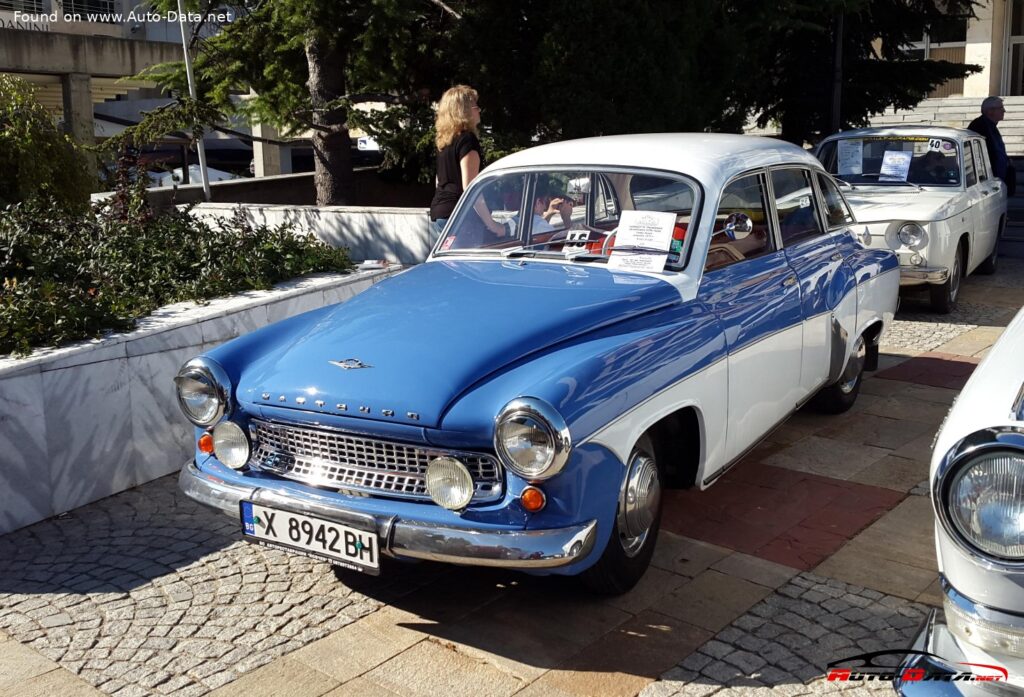
The Wartburg 311 1.0, producing 45 horsepower, was a pivotal model in the history of the East German automotive manufacturer, Wartburg. Produced between 1962 and 1967, it represented a significant step forward for the brand, offering a relatively modern and affordable vehicle to a population largely restricted in their automotive choices. The 311 was part of the broader 311 generation, built on a unibody construction and representing a departure from the earlier, more spartan designs. It served as the entry-level model in the 311 lineup, positioned below the more powerful 311/3 models and offering a more economical option for consumers.
Wartburg 311 1.0: An Overview
The Wartburg 311 1.0 was designed to address the growing demand for personal transportation in East Germany. It was intended to be a practical and reliable vehicle for everyday use, prioritizing affordability and fuel efficiency over outright performance. The car’s design reflected the prevailing aesthetic trends of the early 1960s, with a relatively boxy silhouette and a focus on maximizing interior space. The 311 1.0 was a four-door sedan, typically seating five passengers, and became a common sight on the roads of East Germany and other Eastern Bloc countries.
Powertrain & Engine Architecture
The heart of the Wartburg 311 1.0 was its 992 cc inline three-cylinder, two-stroke engine. Designated with engine code typically associated with early production, this engine was a key feature of the model. Unlike the four-stroke engines common in Western automotive production, the two-stroke design offered a simpler construction and lighter weight, but at the cost of increased fuel and oil consumption. The engine utilized a carburetor fuel injection system, a common practice for the time, and featured a compression ratio of 7.5:1. The cylinder bore measured 73.5 mm (2.89 inches) and the piston stroke was 78 mm (3.07 inches). The engine produced 45 hp at 4200 rpm and 93 Nm (68.59 lb-ft) of torque at 2200 rpm. The engine was mounted transversely at the front of the vehicle, driving the front wheels.
The 311 1.0 was exclusively offered with a four-speed manual transmission. This transmission was chosen for its simplicity and cost-effectiveness, aligning with the overall design philosophy of the vehicle. The gear ratios were optimized for fuel economy and everyday driving, rather than high-speed performance. The transmission was mechanically operated, with a traditional floor-mounted gear lever.
Driving Characteristics
The driving experience of the Wartburg 311 1.0 was characterized by its modest performance. With only 45 horsepower propelling a vehicle weighing approximately 903 kg (1990.77 lbs), acceleration was leisurely. The car’s top speed was around 125 km/h (77.67 mph). However, the engine’s torque delivery at lower revs made it reasonably tractable for urban driving and navigating the often-poor road conditions prevalent in East Germany. The front-wheel drive configuration provided adequate traction in most conditions, although it could exhibit understeer when pushed hard. The two-stroke engine’s distinctive sound and vibration were also notable aspects of the driving experience.
Compared to the more powerful Wartburg 311/3 variants, the 1.0-liter model offered a significantly different driving experience. The 311/3, with its larger engine, provided considerably more power and performance, making it a more appealing option for drivers who prioritized speed and responsiveness. However, the 1.0-liter model’s lower running costs and simpler mechanics made it a more practical choice for many buyers.
Equipment & Trim Levels
The Wartburg 311 1.0 was typically equipped with basic, functional features. Standard equipment included cloth upholstery, a simple dashboard with basic instrumentation (speedometer, fuel gauge, and temperature gauge), and manually operated windows and door locks. The interior was designed for practicality and durability, rather than luxury. Exterior features included chrome bumpers, relatively simple steel wheels, and basic lighting.
Optional extras were limited, reflecting the economic constraints of the time. Available options might have included a radio, upgraded upholstery, or a sunroof. The trim levels were generally minimal, with few opportunities for customization. The focus was on providing a reliable and affordable vehicle, rather than offering a wide range of personalization options.
Chassis & Braking
The Wartburg 311 1.0 featured a robust but relatively simple chassis. The suspension system consisted of leaf springs at both the front and rear. This design was chosen for its durability and ability to cope with the rough road conditions common in East Germany. The leaf spring suspension provided a comfortable ride, but it also resulted in a degree of body roll during cornering. The braking system utilized drum brakes on all four wheels. While adequate for the car’s performance, the drum brakes lacked the stopping power and fade resistance of disc brakes. The steering system was a worm-reduction unit, providing relatively heavy but precise steering feel.
Market Reception & Comparison
The Wartburg 311 1.0 was generally well-received in its target market. It offered a relatively affordable and reliable means of transportation for East German citizens, who had limited choices in the automotive market. Critics praised the car’s practicality and durability, but also noted its modest performance and somewhat crude refinement. Compared to Western European cars of the same era, the 311 1.0 was less sophisticated in terms of design and technology. However, it offered a comparable level of functionality at a significantly lower price point.
In terms of fuel economy, the 311 1.0 achieved approximately 8.47 l/100 km (27.8 US mpg) in combined driving conditions. This was a reasonable figure for the time, but it was somewhat higher than that of comparable Western European cars due to the two-stroke engine’s inherent inefficiencies. Reliability was generally good, although the two-stroke engine required more frequent maintenance than a traditional four-stroke engine.
Technical Specifications
| Body Type | Sedan, 4 Doors, 4-5 Seats |
| Fuel Economy (Combined) | 8.47 l/100 km / 27.8 US mpg / 33.4 UK mpg / 11.8 km/l |
| Maximum Speed | 125 km/h / 77.67 mph |
| Power | 45 Hp @ 4200 rpm |
| Torque | 93 Nm @ 2200 rpm / 68.59 lb.-ft. @ 2200 rpm |
| Engine Displacement | 1.0 l / 1000 cm3 / 61.02 cu. in. |
| Number of Cylinders | 3, Inline |
| Engine Layout | Front, Transverse |
| Kerb Weight | 903 kg / 1990.77 lbs. |
| Fuel Tank Capacity | 44 l / 11.62 US gal / 9.68 UK gal |
| Length | 4300 mm / 169.29 in. |
| Width | 1570 mm / 61.81 in. |
| Height | 1450 mm / 57.09 in. |
| Wheelbase | 2450 mm / 96.46 in. |
| Drivetrain | Front wheel drive |
| Gearbox | 4 gears, manual transmission |
| Front Suspension | Leaf spring |
| Rear Suspension | Leaf spring |
| Front Brakes | Drum |
| Rear Brakes | Drum |
Legacy
The Wartburg 311 1.0, while not a technologically advanced vehicle, played an important role in the history of East German automotive manufacturing. It provided affordable transportation to a large segment of the population and helped to establish Wartburg as a recognizable brand. Today, the 311 1.0 is a sought-after classic car, particularly among enthusiasts of Eastern European automotive history. The two-stroke engine requires specialized knowledge for maintenance, and parts availability can be challenging. However, the car’s simplicity and unique character continue to appeal to collectors and enthusiasts. The 1.0 variant, being the base model, is generally more affordable than the higher-spec 311/3, making it a more accessible entry point into Wartburg ownership.
