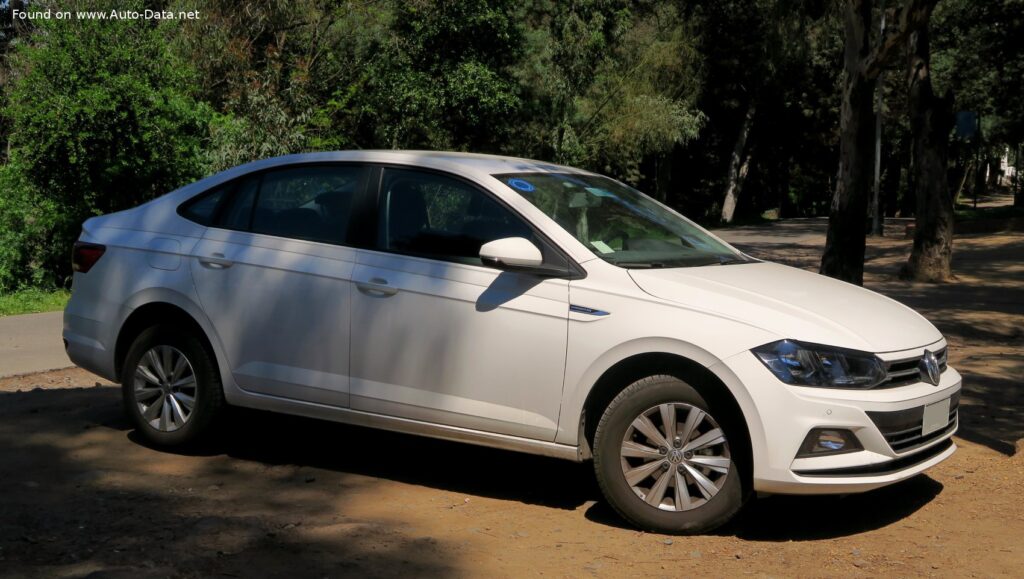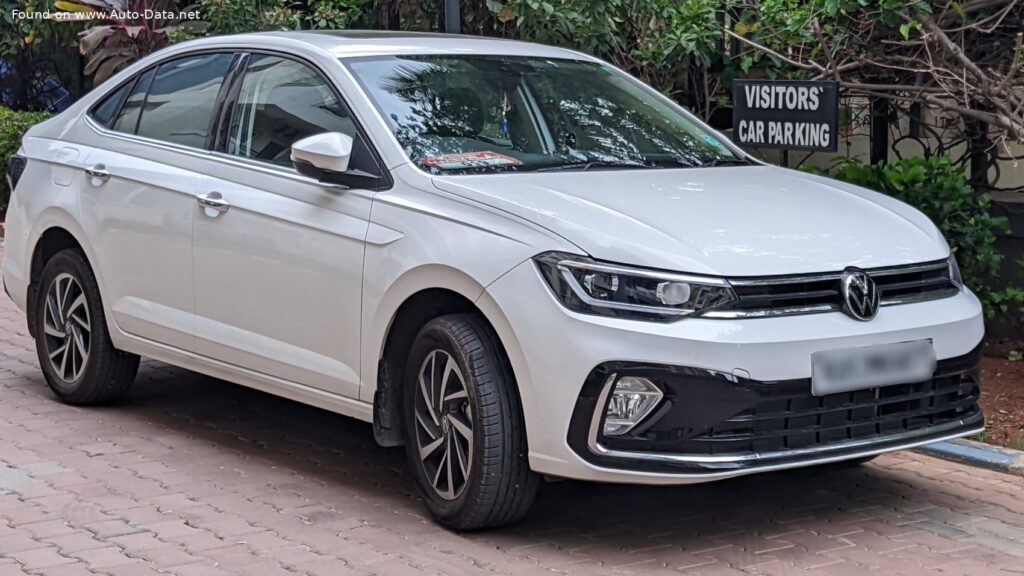
The Volkswagen Virtus (facelift 2023) 1.0 TSI, producing 109/116 horsepower with an automatic transmission, represents an entry-level offering within the Virtus range. Introduced in February 2023, this variant is part of the facelifted second generation of the Virtus, which itself is based on the Volkswagen Group’s MQB A0 platform – also known internally as the 1HX0/A3 platform. Positioned as the most accessible powertrain option, it caters to buyers prioritizing fuel efficiency and affordability within the compact sedan segment. The facelift brought styling updates and revised features, maintaining the Virtus’s appeal as a practical and well-rounded vehicle.
Powertrain & Engine Architecture
At the heart of the Virtus 1.0 TSI is the EA211 engine family, a three-cylinder, 1.0-liter (999 cc / 60.96 cubic inches) turbocharged gasoline engine. This engine utilizes direct fuel injection, a technology that improves combustion efficiency and power output. The engine’s configuration is inline, with four valves per cylinder, contributing to optimized gas flow. The turbocharger, coupled with an intercooler, enhances performance by forcing more air into the cylinders. The engine is transversely mounted in the front of the vehicle.
The 1.0 TSI engine is capable of running on both gasoline and ethanol (E85) fuel, with a slight power increase when utilizing ethanol – 116 hp versus 109 hp on gasoline. Peak torque of 165 Nm (121.7 lb-ft) is available between 1750 and 4250 rpm, providing a relatively broad powerband. The engine is paired with a six-speed automatic transmission, designed to deliver smooth and convenient gear changes. This transmission is a conventional torque-converter automatic, prioritizing comfort over outright performance.
Fuel Injection and Engine Management
The EA211 engine employs a sophisticated direct injection system, delivering fuel directly into the combustion chamber at high pressure. This allows for precise fuel metering and improved combustion control. The engine is managed by a modern engine control unit (ECU) that optimizes fuel delivery, ignition timing, and turbocharger boost based on various sensor inputs. The inclusion of a Start & Stop system further enhances fuel economy by automatically shutting off the engine when the vehicle is stationary.
Driving Characteristics
The 1.0 TSI automatic powertrain delivers adequate performance for everyday driving. Acceleration from 0 to 100 km/h (0-62 mph) takes approximately 11.8 seconds, while 0-60 mph is achieved in around 11.2 seconds. The maximum speed is electronically limited to 187 km/h (116.2 mph), increasing to 192 km/h (119.3 mph) when running on E85 fuel. While not a performance-oriented setup, the engine provides sufficient power for highway cruising and city driving.
The automatic transmission is tuned for comfort and efficiency, with gear changes generally smooth and unobtrusive. However, it may exhibit some hesitation during quick acceleration or when overtaking. Compared to higher-output versions of the Virtus, such as those equipped with larger engines, the 1.0 TSI automatic feels less responsive. The gear ratios are optimized for fuel economy, prioritizing lower engine speeds at cruising speeds. The weight-to-power ratio of 11 kg/Hp and weight-to-torque ratio of 7.3 kg/Nm reflect the engine’s modest output relative to the vehicle’s weight.
Equipment & Trim Levels
The Virtus 1.0 TSI automatic typically serves as the base trim level, offering a solid set of standard features. Interior upholstery is generally cloth, with a functional and durable design. The dashboard layout is straightforward and user-friendly, with essential controls readily accessible. Standard equipment often includes air conditioning, power windows, power door locks, and a basic audio system. Safety features typically include ABS (Anti-lock Braking System), airbags, and seatbelt pretensioners.
Optional extras available for this trim may include alloy wheels, a touchscreen infotainment system with smartphone integration, rear parking sensors, and a rearview camera. Higher trim levels build upon this foundation, adding features such as leather upholstery, automatic climate control, and advanced driver-assistance systems. The specific equipment levels can vary depending on the market and optional packages selected.
Chassis & Braking
The Virtus 1.0 TSI utilizes a conventional front-wheel-drive chassis with a MacPherson strut suspension in the front and a torsion beam suspension in the rear. This setup provides a comfortable ride quality, suitable for everyday driving conditions. The front brakes are ventilated discs, offering good stopping power, while the rear brakes are drums, a cost-saving measure common in entry-level trims. Electric power steering provides light and easy steering feel.
The suspension is tuned for comfort rather than sporty handling. Stabilizer bars are present, but their thickness is typically modest, prioritizing ride comfort over cornering stability. Tire size is typically 195/65 R15, providing a balance between ride comfort and fuel efficiency. The overall chassis setup is designed to provide a safe and predictable driving experience.
Market Reception & Comparison
The Virtus 1.0 TSI automatic has generally been well-received as an affordable and fuel-efficient option within the compact sedan segment. Critics have praised its practicality, comfortable ride, and reasonable fuel economy. However, some have noted its modest performance and relatively basic interior compared to more expensive trims.
Compared to other trims in the Virtus lineup, the 1.0 TSI automatic offers the lowest price point but also the least amount of power. The higher-output engines provide significantly better acceleration and overall performance. In terms of fuel economy, the 1.0 TSI automatic is generally the most efficient option, making it an attractive choice for buyers prioritizing fuel savings. Reliability has been generally good, with the EA211 engine proving to be a durable and dependable unit.
Technical Specifications
| Brand | Volkswagen |
| Model | Virtus (facelift 2023) |
| Type (Engine) | 1.0 TSI (109/116 Hp) Automatic |
| Start of production | February, 2023 |
| Powertrain Architecture | Internal Combustion engine |
| Body type | Sedan |
| Seats | 5 |
| Doors | 4 |
| Fuel Type | Petrol / Ethanol – E85 |
| Acceleration 0 – 100 km/h | 11.8 sec |
| Acceleration 0 – 62 mph | 11.8 sec |
| Acceleration 0 – 100 km/h (Ethanol – E85) | 11.7 sec |
| Acceleration 0 – 60 mph (Calculated by Auto-Data.net) | 11.2 sec |
| Maximum speed | 187 km/h (116.2 mph) |
| Maximum speed (Ethanol – E85) | 192 km/h |
| Weight-to-power ratio | 11 kg/Hp, 90.7 Hp/tonne |
| Weight-to-torque ratio | 7.3 kg/Nm, 137.3 Nm/tonne |
| Power | 109 Hp @ 5000 rpm |
| Power per litre | 109.1 Hp/l |
| Power (Ethanol – E85) | 116 Hp @ 5000 rpm |
| Power per litre (Ethanol – E85) | 116.1 Hp/l |
| Torque | 165 Nm @ 1750-4250 rpm (121.7 lb.-ft. @ 1750-4250 rpm) |
| Engine layout | Front, Transverse |
| Engine Model/Code | EA211 |
| Engine displacement | 999 cm3 (60.96 cu. in.) |
| Number of cylinders | 3 |
| Engine configuration | Inline |
| Number of valves per cylinder | 4 |
| Fuel injection system | Direct injection |
| Engine aspiration | Turbocharger, Intercooler |
| Kerb Weight | 1202 kg (2649.96 lbs) |
| Max. weight | 1600 kg (3527.4 lbs) |
| Max load | 398 kg (877.44 lbs) |
| Trunk (boot) space – minimum | 521 l (18.4 cu. ft.) |
| Fuel tank capacity | 52 l (13.74 US gal | 11.44 UK gal) |
| Length | 4561 mm (179.57 in) |
| Width | 1751 mm (68.94 in) |
| Height | 1476 mm (58.11 in) |
| Wheelbase | 2651 mm (104.37 in) |
| Drivetrain Architecture | The Internal combustion engine (ICE) drives the front wheels of the vehicle. |
| Drive wheel | Front wheel drive |
| Number of gears and type of gearbox | 6 gears, automatic transmission |
| Front brakes | Ventilated discs |
| Rear brakes | Drum |
| Assisting systems | ABS (Anti-lock braking system) |
| Steering type | Steering rack and pinion |
| Power steering | Electric Steering |
| Tires size | 195/65 R15 |
| Wheel rims size | 15 |
Legacy
The 1.0 TSI engine, in conjunction with the six-speed automatic transmission, has proven to be a reliable powertrain in the Virtus. While not known for exceptional performance, it offers a good balance of fuel efficiency and dependability. On the used car market, Virtus models equipped with this powertrain are generally considered a good value, particularly for buyers seeking an affordable and economical compact sedan. The EA211 engine family has a strong track record of longevity, and with proper maintenance, these engines can provide many years of trouble-free service. The combination of a relatively simple design and readily available parts contributes to its long-term viability and affordability of ownership.