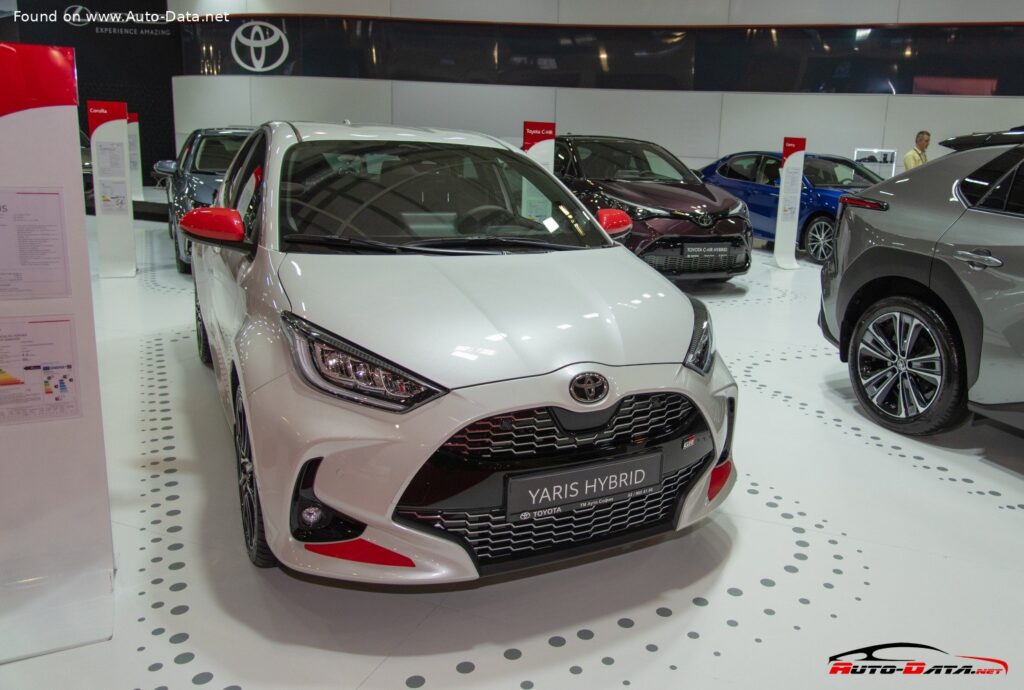
The Toyota Yaris (XP210) 1.5 Hybrid E-Four e-CVT, produced from September 2020 to February 2024, represents a significant iteration of Toyota’s supermini, blending gasoline engine power with electric motor assistance and all-wheel drive capability. This variant occupied a mid-to-upper position within the XP210 Yaris lineup, offering a compelling combination of fuel efficiency, practicality, and enhanced traction compared to the standard front-wheel-drive models. It was designed to appeal to buyers seeking a sophisticated and economical city car with the added security of all-wheel drive, particularly in regions experiencing inclement weather.
Powertrain & Engine Architecture
At the heart of the Yaris 1.5 Hybrid E-Four lies Toyota’s sophisticated Full Hybrid Electric Vehicle (FHEV) system. The powertrain centers around the 1.5-liter, three-cylinder M15A-FXE gasoline engine, producing 91 horsepower at 5500 rpm and 120 Nm (88.51 lb-ft) of torque between 3800-4800 rpm. This engine utilizes a direct injection system and boasts a high compression ratio of 14:1, contributing to its thermal efficiency. The engine’s compact size and inline configuration allow for a transverse mounting within the front engine bay.
However, the engine is only part of the story. The ‘Hybrid’ designation signifies the integration of two electric motors. The primary electric motor, integrated into the e-CVT transmission, delivers 80 horsepower and 141 Nm (104 lb-ft) of torque. A smaller, secondary electric motor, positioned on the rear axle, contributes 5 horsepower and 52 Nm (38.35 lb-ft) of torque. This rear motor is crucial for the E-Four all-wheel-drive system. The battery, a lithium-ion unit, is strategically located under the rear seats, minimizing intrusion into passenger or cargo space. The e-CVT (electronically controlled continuously variable transmission) seamlessly blends power from the engine and electric motors, optimizing fuel efficiency and providing smooth acceleration. Unlike traditional CVTs, Toyota’s e-CVT doesn’t rely on belts or chains; it uses a planetary gearset to achieve a continuously variable gear ratio.
E-Four All-Wheel Drive System
The E-Four system isn’t a traditional mechanical all-wheel-drive setup. Instead, it’s an electric all-wheel-drive system. The rear electric motor independently powers the rear wheels, providing torque on demand when the system detects a loss of traction at the front. This system operates automatically and seamlessly, enhancing stability and control in slippery conditions. The system prioritizes fuel efficiency by only engaging the rear motor when necessary, making it a reactive rather than a proactive AWD system.
Driving Characteristics
The Yaris 1.5 Hybrid E-Four offers a unique driving experience. The combined output of the engine and electric motors results in brisk, if not overtly sporty, acceleration. The e-CVT transmission provides smooth, linear power delivery, eliminating the stepped shifts of a conventional automatic. While the 91 horsepower output isn’t substantial, the instant torque from the electric motors provides responsive acceleration, particularly at lower speeds. Compared to the standard 1.5 Hybrid Yaris (front-wheel drive), the E-Four variant exhibits improved traction and stability, especially on loose surfaces or in wet conditions. However, the added weight of the rear motor and associated components does slightly impact overall fuel economy and responsiveness compared to the lighter front-wheel-drive models. The E-Four system is designed for enhancing grip rather than off-road capability; it’s best suited for providing confidence in everyday driving scenarios.
Equipment & Trim Levels
The 1.5 Hybrid E-Four trim typically included a generous level of standard equipment. Features commonly found in this variant include air conditioning, a touchscreen infotainment system with smartphone integration (Apple CarPlay and Android Auto), Toyota Safety Sense suite of driver-assistance features (including pre-collision system, lane departure alert, and adaptive cruise control), and automatic headlights. Interior upholstery generally consisted of fabric seats, with higher trim levels offering optional leather or partial leather options. Dashboard configurations were typically modern and functional, with a focus on ease of use. Optional extras available for the E-Four trim could include a premium audio system, heated front seats, parking sensors, and a rearview camera.
Chassis & Braking
The Yaris XP210 utilizes a McPherson strut independent suspension at the front and a double wishbone suspension at the rear, providing a comfortable and controlled ride. The E-Four variant often featured slightly stiffer spring rates and dampers to compensate for the added weight. Front brakes are ventilated discs, providing ample stopping power, while rear brakes are drums. The use of drum brakes on the rear was a cost-saving measure, common in this segment. The steering system is an electric power steering rack and pinion, offering light and precise steering feel. The E-Four models generally featured slightly larger stabilizer bars compared to the standard Yaris to reduce body roll during cornering.
Market Reception & Comparison
The Toyota Yaris 1.5 Hybrid E-Four was generally well-received by automotive critics. Reviewers praised its fuel efficiency, comfortable ride, and the added security of all-wheel drive. The E-Four system was particularly appreciated in regions with harsh winters or frequent rainfall. Compared to other trims in the Yaris lineup, the E-Four offered a premium experience, albeit at a slightly higher price point. Fuel economy, while excellent for a vehicle with all-wheel drive, was marginally lower than the front-wheel-drive hybrid models. Reliability was a strong point, consistent with Toyota’s reputation. Competitors in this segment included other small hybrid hatchbacks, but few offered a comparable all-wheel-drive option.
Technical Specifications
| Engine Type | 1.5L Inline-3 Gasoline |
| Engine Code | M15A-FXE |
| Engine Displacement | 1490 cm3 (90.93 cu. in.) |
| Maximum Power | 91 hp @ 5500 rpm |
| Maximum Torque | 120 Nm (88.51 lb-ft) @ 3800-4800 rpm |
| Fuel Type | Gasoline |
| Transmission | e-CVT (Electronically Controlled Continuously Variable Transmission) |
| Drive Type | All-Wheel Drive (E-Four) |
| Electric Motor (Front) | 80 hp / 141 Nm (104 lb-ft) |
| Electric Motor (Rear) | 5 hp / 52 Nm (38.35 lb-ft) |
| Battery Type | Lithium-ion |
| Combined Fuel Consumption (WLTP) | 3.3 l/100 km (71.3 US mpg / 85.6 UK mpg) |
| Kerb Weight | 1160-1180 kg (2557.36 – 2601.45 lbs) |
| Fuel Tank Capacity | 36 l (9.51 US gal / 7.92 UK gal) |
| Length | 3940 mm (155.12 in) |
| Width | 1695 mm (66.73 in) |
| Height | 1515 mm (59.65 in) |
Legacy
The Toyota Yaris (XP210) 1.5 Hybrid E-Four e-CVT has proven to be a reliable and economical vehicle. The hybrid powertrain, particularly the e-CVT transmission, has demonstrated long-term durability. On the used car market, these models hold their value relatively well, due to their fuel efficiency, practicality, and the added benefit of all-wheel drive. While some maintenance may be required for the hybrid system components over time, the overall cost of ownership is generally low. The E-Four variant remains a popular choice for buyers seeking a compact, efficient, and capable city car, especially in regions where all-wheel drive is a desirable feature.