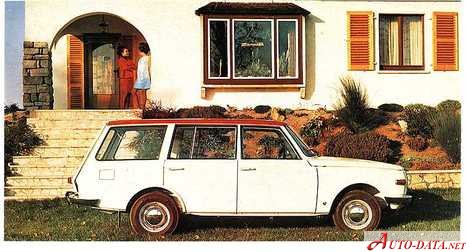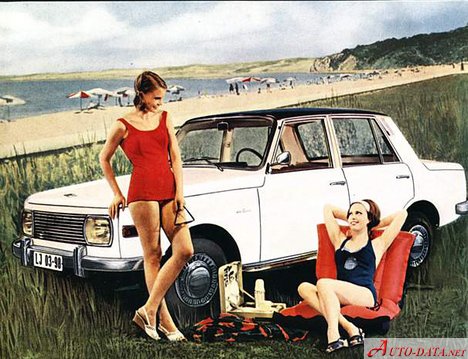
The Wartburg 353 1.0, designated model 353 W 000, was a variant of the Wartburg 353 produced between 1975 and 1988. It represented the base model within the 353 range, offering a more affordable entry point into the Wartburg lineup. The 353 itself was a significant vehicle for the East German automotive industry, serving as a popular family car throughout its production run. It was based on a front-wheel-drive layout, a relatively modern feature for its time, and utilized a distinctive two-stroke engine. The 1.0-liter version was positioned as the most economical and accessible option, appealing to buyers prioritizing practicality over performance.
Wartburg 353 1.0: An Overview
The Wartburg 353 was a product of the VEB Automobilwerk Eisenach, the state-owned automobile factory in Eisenach, East Germany. Introduced in 1966, the 353 underwent several revisions throughout its lifespan. The 1.0-liter variant, the 353 W 000, was introduced to address market demand for a more fuel-efficient and cost-effective model. While the larger 1.3-liter engines offered more power, the 1.0-liter version found favor with drivers who primarily used the car for commuting and everyday transportation. The 353, in all its iterations, was known for its robust construction and relative simplicity, characteristics that contributed to its longevity and ease of maintenance.
Powertrain & Engine Architecture
The heart of the Wartburg 353 1.0 was its 999 cc two-stroke, three-cylinder engine. This engine, while unusual by Western standards, was a key feature of Wartburg vehicles for decades. The engine code for this specific variant is 353 W 000. Unlike conventional four-stroke engines, two-stroke engines complete a power cycle with every revolution of the crankshaft, resulting in a higher power-to-weight ratio for a given displacement. However, they also tend to be less fuel-efficient and produce more emissions. The 353’s engine utilized a carburetor fuel injection system, a common setup for the period. The engine was mounted longitudinally in the front of the vehicle, driving the front wheels.
The valvetrain consisted of ports in the cylinder walls controlled by the piston’s movement, eliminating the need for traditional valves and camshafts. Lubrication was achieved through a pre-mixing system, where oil was added directly to the fuel. This system required drivers to carefully monitor the oil-to-fuel ratio to prevent engine damage. The 353 1.0 produced 50 horsepower, offering modest performance. The engine was coupled with a four-speed manual transmission, the only transmission option available for this variant. The transmission was designed to be durable and reliable, reflecting the overall engineering philosophy of the 353.
Driving Characteristics
The driving experience in a Wartburg 353 1.0 was characterized by its simplicity and utilitarian nature. The 50 hp engine provided adequate power for urban driving and moderate highway speeds. Acceleration was not a strong point, and the car felt noticeably slower than its 1.3-liter counterparts. The four-speed manual transmission required frequent shifting, particularly when climbing hills or overtaking. The front-wheel-drive layout provided reasonable handling, although the car was prone to understeer when pushed hard. The suspension, while basic, offered a comfortable ride on most road surfaces. The engine’s two-stroke nature resulted in a distinctive sound and vibration, which some drivers found endearing while others found it intrusive. The gear ratios were optimized for fuel economy and low-speed torque, rather than outright performance.
Equipment & Trim Levels
The Wartburg 353 1.0 was offered with a relatively sparse level of standard equipment, reflecting its position as the entry-level model. The interior typically featured cloth upholstery, a basic dashboard with minimal instrumentation, and rubber floor mats. The seats were designed for durability rather than luxury. Standard features included a steering wheel, windscreen wipers, and basic exterior lighting. Optional extras were limited but could include a radio, a heater, and upgraded upholstery. The exterior trim was also minimal, with simple chrome accents and unpainted bumpers. The overall interior design was functional and practical, prioritizing durability and ease of cleaning.
Chassis & Braking
The Wartburg 353 1.0 featured a robust chassis designed to withstand the rigors of East German roads. The front suspension utilized an independent McPherson strut design, providing a reasonable level of ride comfort and handling. The rear suspension employed a trailing arm setup with coil springs. The braking system consisted of disc brakes on the front wheels and drum brakes on the rear wheels. The steering was a rack and pinion system, offering precise and responsive steering feel. The car rode on 13-inch wheels with 165/70 R13 tires. The chassis was designed to be relatively lightweight, contributing to the car’s overall fuel efficiency. A stabilizer bar was included in the front suspension to reduce body roll during cornering.
Market Reception & Comparison
The Wartburg 353 1.0 was generally well-received in East Germany, where it was considered a reliable and affordable family car. Critics praised its robust construction and ease of maintenance. However, the 1.0-liter engine was often criticized for its lack of power, particularly when compared to the 1.3-liter versions. Fuel economy was a strong point, with the 353 1.0 achieving approximately 23.5 US mpg in urban driving and 33.6 US mpg on the highway. Compared to the 1.3-liter models, the 1.0-liter version offered lower running costs but at the expense of performance. The 353 1.0 was primarily targeted at drivers who prioritized practicality and affordability over driving excitement. It was a popular choice for families and commuters.
Technical Specifications
| Body Type | Sedan, 4 Doors, 5 Seats |
| Engine Displacement | 1.0 l (999 cm3 / 60.96 cu. in.) |
| Number of Cylinders | 3, Inline |
| Fuel Type | Mixture of two stroke engine |
| Maximum Speed | 160 km/h (99.42 mph) |
| Power Output | 50 Hp |
| Power per Liter | 50.1 Hp/l |
| Fuel Consumption (Urban) | 10 l/100 km (23.5 US mpg) |
| Fuel Consumption (Extra Urban) | 7 l/100 km (33.6 US mpg) |
| Drivetrain | Front Wheel Drive |
| Transmission | 4-speed Manual |
| Front Brakes | Disc |
| Rear Brakes | Drum |
| Tire Size | 165/70 R13 |
Legacy
The Wartburg 353 1.0, while not the most powerful or luxurious car of its era, holds a significant place in East German automotive history. Its robust construction and simple design contributed to its longevity, and many examples are still on the road today. The two-stroke engine, while unconventional, proved to be surprisingly durable with proper maintenance. In the used car market, the 353 1.0 is valued by collectors and enthusiasts who appreciate its unique character and historical significance. Parts availability can be a challenge, but a dedicated community of owners and restorers helps to keep these cars running. The 353 1.0 represents a bygone era of automotive engineering and a unique chapter in East German history.