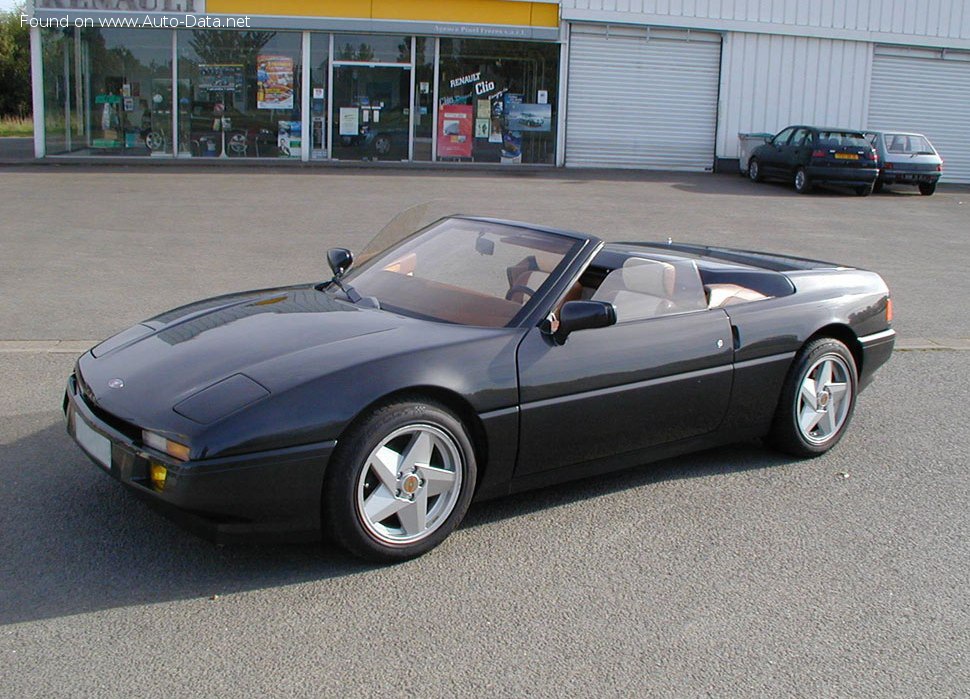
The Venturi 210 2.5 i V6 (210 Hp) was a high-performance coupe produced by the French manufacturer Venturi between 1984 and 1995. Representing the core of the initial 210 model range, this variant established Venturi as a maker of exotic, mid-engined sports cars. It was the first model produced by Venturi, and served as the foundation for subsequent iterations and higher-performance versions. The 210 was built on a steel space frame chassis and featured a distinctive, angular design penned by designer Claude Boutillon.
Venturi 210 2.5 i V6: Overview and Positioning
The Venturi 210 2.5 i V6 occupied a unique position in the sports car market of the 1980s and 90s. It wasn’t directly competing with mass-market brands, but rather aimed at enthusiasts seeking an alternative to established Italian and British sports car manufacturers. It was positioned as a relatively affordable exotic, offering performance comparable to cars costing significantly more. The 2.5 i V6 was the standard engine offering throughout the majority of the 210’s production run, serving as the entry point to the Venturi lineup. Later models would see the introduction of more powerful turbocharged variants, but the 2.5 i V6 remained a popular choice due to its balance of performance and reliability.
Powertrain & Engine Architecture
The heart of the Venturi 210 2.5 i V6 is its 2.5-liter, naturally aspirated V6 engine, designated as a PRV (Peugeot-Renault-Volvo) engine. While developed collaboratively, Venturi made significant modifications to the engine to enhance its performance and reliability. The engine produced 210 horsepower at 5550 rpm and 289 Nm (213.16 lb-ft) of torque at 2500 rpm. This resulted in a power-to-weight ratio of 6 kg/Hp. The engine featured a 90mm bore, 63mm stroke, and an 8:1 compression ratio. Fuel delivery was managed by a multi-port manifold injection system. The valvetrain utilized an Overhead Cam (OHC) configuration with two valves per cylinder. The engine was mounted longitudinally in a mid-engine layout, contributing to the car’s balanced handling characteristics.
The engine was paired with a 5-speed manual transmission, driving the rear wheels. The transmission was chosen for its robustness and direct feel, complementing the sporty nature of the car. The drivetrain architecture consisted of a rear-wheel drive setup, with the internal combustion engine directly powering the rear axle.
Driving Characteristics
The Venturi 210 2.5 i V6 offered a compelling driving experience. Acceleration from 0 to 60 mph was achieved in approximately 6.6 seconds, with a top speed of 152.24 mph (245 km/h). The mid-engine layout provided excellent balance and handling, making the car responsive and engaging on winding roads. The 5-speed manual transmission allowed for precise control over the engine’s power band. While not possessing the raw acceleration of later turbocharged models, the 2.5 i V6 offered a more linear and predictable power delivery, making it accessible and enjoyable for a wider range of drivers. The relatively light curb weight of 1255 kg (2766.8 lbs) further enhanced the car’s agility.
Equipment & Trim Levels
The Venturi 210 2.5 i V6 was relatively sparsely equipped compared to contemporary luxury sports cars, reflecting its focus on performance. Standard features included leather upholstery, power windows, and central locking. Air conditioning was often an optional extra. The interior design was functional and driver-focused, with a simple dashboard layout and well-placed controls. The standard interior trim consisted of leather seats, and a leather-wrapped steering wheel. Optional extras included upgraded audio systems, and various exterior color choices. The car’s interior prioritized a sporty feel over outright luxury.
Chassis & Braking
The Venturi 210 2.5 i V6 featured a steel space frame chassis, providing a rigid and lightweight platform. Suspension consisted of double wishbones at the front and a spring strut setup at the rear. This configuration provided a good balance of ride comfort and handling precision. Braking duties were handled by disc brakes on all four wheels, assisted by an Anti-lock Braking System (ABS). The steering system was a rack and pinion type with hydraulic power assistance, offering precise and responsive steering feel. The car rode on 205/55 ZR16 or 245/45 ZR16 tires, depending on the specific configuration.
Market Reception & Comparison
The Venturi 210 2.5 i V6 received generally positive reviews from automotive critics. It was praised for its striking design, engaging driving dynamics, and relatively affordable price point. However, some critics noted the car’s somewhat basic interior and limited practicality. Compared to other sports cars of the era, such as the Porsche 944 or Lotus Esprit, the Venturi offered a unique blend of French flair and performance. Fuel economy was rated at 9.6 l/100 km (24.5 US mpg, 29.4 UK mpg, 10.4 km/l). The 2.5 i V6 variant was considered the most reliable of the 210 models, due to the naturally aspirated engine being less stressed than the turbocharged versions.
Technical Specifications
| Brand | Venturi |
| Model | 210 |
| Generation | 210 |
| Type (Engine) | 2.5 i V6 (210 Hp) |
| Start of production | 1984 |
| End of production | 1995 |
| Body type | Coupe |
| Seats | 2 |
| Doors | 2 |
| Fuel consumption (combined) | 9.6 l/100 km |
| Fuel Type | Petrol (Gasoline) |
| Acceleration 0 – 100 km/h | 6.9 sec |
| Acceleration 0 – 62 mph | 6.9 sec |
| Acceleration 0 – 60 mph | 6.6 sec |
| Maximum speed | 245 km/h (152.24 mph) |
| Weight-to-power ratio | 6 kg/Hp |
| Engine layout | Middle, Longitudinal |
| Engine displacement | 2458 cm3 (150 cu. in.) |
| Number of cylinders | 6 |
| Engine configuration | V-engine |
| Cylinder Bore | 91 mm (3.58 in.) |
| Piston Stroke | 63 mm (2.48 in.) |
| Compression ratio | 8:1 |
| Number of valves per cylinder | 2 |
| Fuel injection system | Multi-port manifold injection |
| Engine aspiration | Naturally Aspirated |
| Valvetrain | OHC |
| Kerb Weight | 1255 kg (2766.8 lbs.) |
| Trunk (boot) space – minimum | 150 l (5.3 cu. ft.) |
| Fuel tank capacity | 90 l (23.78 US gal | 19.8 UK gal) |
| Length | 4090 mm (161.02 in.) |
| Width | 1700 mm (66.93 in.) |
| Height | 1170 mm (46.06 in.) |
| Wheelbase | 2400 mm (94.49 in.) |
| Drive wheel | Rear wheel drive |
| Number of gears and type of gearbox | 5 gears, manual transmission |
| Front suspension | Double wishbone |
| Rear suspension | Spring Strut |
| Front brakes | Disc |
| Rear brakes | Disc |
| Assisting systems | ABS (Anti-lock braking system) |
| Steering type | Steering rack and pinion |
| Power steering | Hydraulic Steering |
| Tires size | 205/55 ZR16; 245/45 ZR16 |
Legacy
The Venturi 210 2.5 i V6, while not a high-volume seller, left a lasting impression on the sports car world. It demonstrated that a small French manufacturer could compete with established brands by offering a unique and engaging driving experience. The PRV V6 engine proved to be relatively reliable, and well-maintained examples of the 210 2.5 i V6 are still sought after by collectors and enthusiasts today. The car’s distinctive styling and mid-engine layout continue to appeal to those seeking a classic sports car with a touch of French eccentricity. In the used car market, the 2.5 i V6 variant generally commands a lower price than the turbocharged models, making it a more accessible entry point into Venturi ownership.