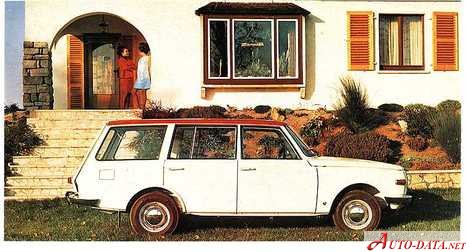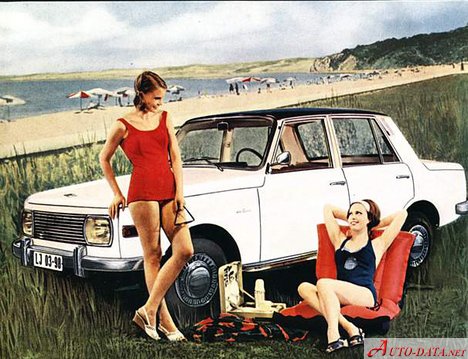
The Wartburg 353 1.0, producing 45 horsepower, was a foundational model within the Wartburg 353 range, manufactured between 1966 and 1969. It represented the entry point into the 353 series, a significant vehicle for the East German automotive industry. The 353 itself was part of the larger Wartburg lineage, building upon the earlier Wartburg 311 and 312 models, and utilizing a front-wheel-drive layout uncommon for many European vehicles of the time. This particular 1.0-liter variant served as the standard offering, providing basic transportation for a broad segment of the East German population.
Wartburg 353 1.0: An Overview
The Wartburg 353 was designed as a modern, practical sedan intended to replace the aging Wartburg 311. The 353 1.0 was the base model, characterized by its relatively modest engine output. It was positioned as the most affordable and accessible version of the 353, aimed at families and individuals needing reliable, if not particularly powerful, transportation. Later iterations of the 353 would include more powerful engines and improved trim levels, but the 1.0 remained a core part of the lineup during its production run.
Powertrain & Engine Architecture
The heart of the Wartburg 353 1.0 was its 993 cc (60.6 cubic inches) three-cylinder, two-stroke engine. This engine, designated with various internal codes depending on the specific year of manufacture, was notable for its unusual design. Two-stroke engines, while offering a high power-to-weight ratio, typically require a mixture of gasoline and oil to lubricate the internal components. The Wartburg engine utilized a pre-mixing system, requiring drivers to add oil to the fuel tank. This was a characteristic, and often criticized, aspect of Wartburg vehicles. The engine featured a carburetor fuel injection system and a compression ratio of 7.5:1. It produced 45 hp at 4250 rpm and 98 Nm (72.28 lb-ft) of torque at 3000 rpm. The engine was transversely mounted, driving the front wheels.
The 353 1.0 was initially equipped with a four-speed manual transmission. This transmission was designed to handle the relatively low torque output of the engine. The gear ratios were optimized for fuel efficiency and acceptable acceleration in everyday driving conditions. The transmission was a fully synchronized unit, a feature considered modern for its time.
Driving Characteristics
The driving experience in a Wartburg 353 1.0 was defined by its modest performance. With only 45 horsepower propelling a vehicle weighing approximately 960 kg (2116.44 lbs), acceleration was slow, and overtaking required careful planning. The top speed was around 120 km/h (74.56 mph). However, the front-wheel-drive layout provided reasonable handling, particularly in slippery conditions. The two-stroke engine delivered a distinctive sound and a somewhat jerky power delivery, especially at lower speeds. Compared to later 353 models with larger engines, the 1.0-liter version felt significantly underpowered. The manual transmission required precise shifting to maintain momentum, and the lack of power meant that the engine often needed to be revved to its limit.
Equipment & Trim Levels
The Wartburg 353 1.0 was a spartan vehicle by modern standards. It was designed for practicality and affordability, and as such, came with a limited range of standard features. The interior typically featured cloth upholstery, a basic dashboard with minimal instrumentation, and simple door panels. Standard equipment included a steering wheel, seats for five passengers, and basic lighting. Optional extras were limited, but could include a radio, upgraded upholstery, and occasionally, a sunroof. The trim level was largely consistent across all 353 1.0 models during its production run, with variations primarily stemming from minor cosmetic differences or factory-installed options.
Chassis & Braking
The Wartburg 353 1.0 utilized a relatively simple chassis design. It featured an independent front suspension with coil springs and a rigid rear axle with leaf springs. The suspension was tuned for comfort rather than sporty handling. The braking system consisted of disc brakes on the front wheels and drum brakes on the rear wheels. This configuration was typical for vehicles of its class and price point during the 1960s. The tires were typically 170/70 R13, mounted on 13-inch steel wheels. The steering was a recirculating ball system, providing adequate, but not particularly precise, control.
Market Reception & Comparison
The Wartburg 353 1.0 was primarily sold within the Eastern Bloc countries, with limited exports to Western Europe. It was generally viewed as a reliable, if unsophisticated, vehicle. Critics often pointed to the two-stroke engine’s oil consumption and the car’s lack of refinement. However, its affordability and practicality made it a popular choice for those seeking basic transportation. Compared to other vehicles available in the Eastern Bloc, such as the Škoda 105/120 or the Lada 1200, the Wartburg 353 1.0 offered a comparable level of performance and reliability. Fuel economy was rated at 9.9 l/100 km (23.8 US mpg), which was reasonable for the time. The 1.0-liter engine was less demanding on fuel than the larger engines offered in later 353 models.
Technical Specifications
| Brand | Wartburg |
| Model | 353 |
| Generation | 353 |
| Type (Engine) | 1.0 (45 Hp) |
| Start of production | 1966 |
| End of production | 1969 |
| Body type | Sedan |
| Seats | 5 |
| Doors | 4 |
| Fuel consumption (combined) | 9.9 l/100 km (23.8 US mpg) |
| Maximum speed | 120 km/h (74.56 mph) |
| Kerb Weight | 960 kg (2116.44 lbs) |
| Max. weight | 1320 kg (2910.1 lbs) |
| Trunk (boot) space (minimum) | 525 l (18.54 cu. ft.) |
| Length | 4220 mm (166.14 in) |
| Width | 1640 mm (64.57 in) |
| Height | 1495 mm (58.86 in) |
| Wheelbase | 2450 mm (96.46 in) |
| Engine displacement | 993 cm3 (60.6 cu. in) |
| Number of cylinders | 3 |
| Power | 45 Hp @ 4250 rpm |
| Torque | 98 Nm @ 3000 rpm (72.28 lb.-ft. @ 3000 rpm) |
| Fuel injection system | Carburettor |
| Drive wheel | Front wheel drive |
| Number of gears | 4 gears, manual transmission |
| Front brakes | Disc |
| Rear brakes | Drum |
| Tires size | 170/70 R13 |
Legacy
The Wartburg 353 1.0, while not a particularly sophisticated vehicle, played an important role in providing transportation for a generation of East Germans. Its simple design and robust construction contributed to its relatively good reliability, although the two-stroke engine required regular maintenance and careful operation. Today, the Wartburg 353 1.0 is a sought-after classic car among enthusiasts, particularly those interested in automotive history from the Eastern Bloc. Parts availability can be challenging, but a dedicated community of owners and restorers exists. The 1.0-liter engine, while the least powerful in the 353 range, is often considered the most original and representative of the model’s early years. Well-maintained examples command a growing value in the collector car market.