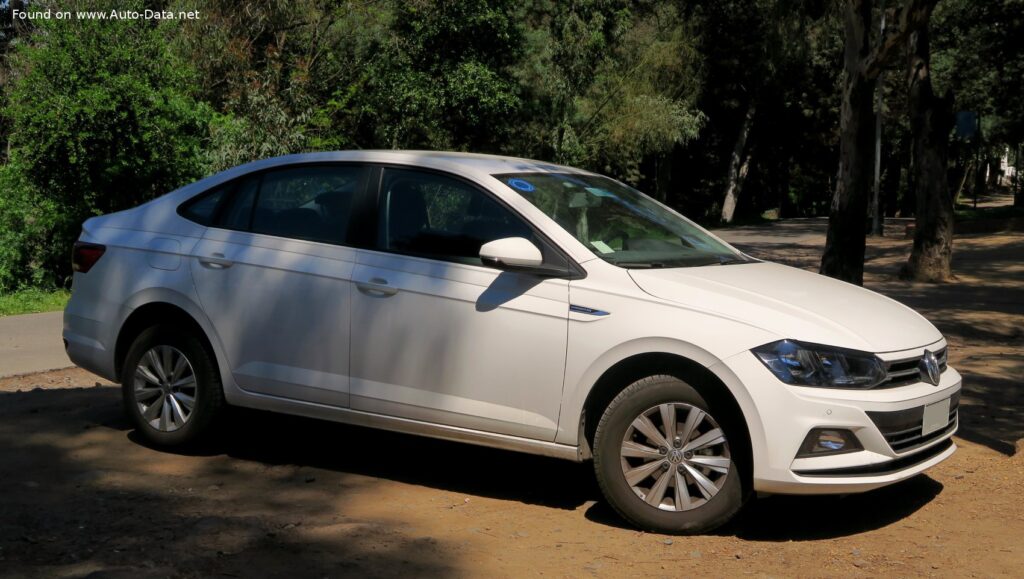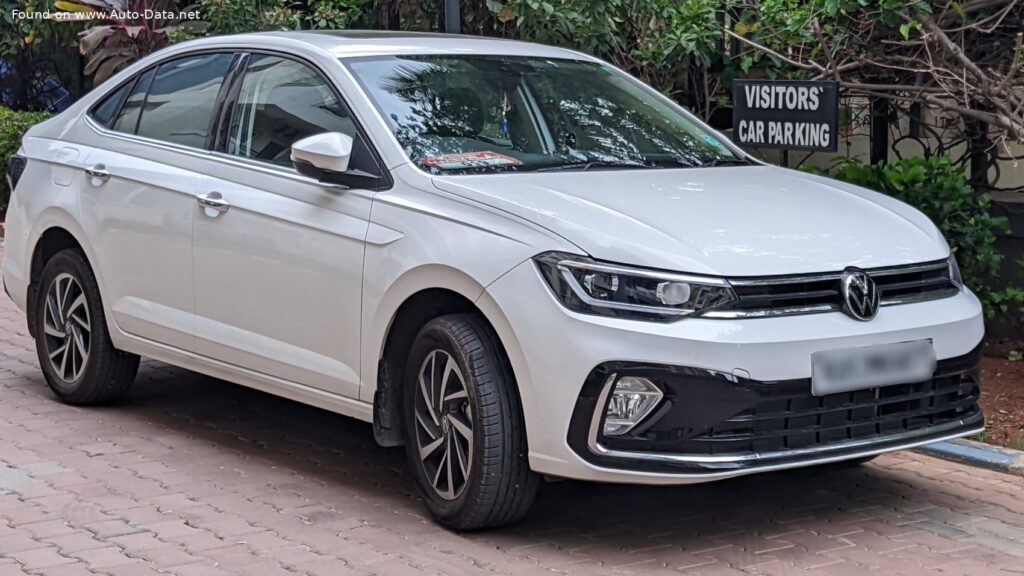
The Volkswagen Virtus (facelift 2023) 1.0 TSI (116 hp) represents an entry-level offering within the refreshed Virtus lineup, launched in July 2023. Positioned as a fuel-efficient and accessible option, this variant caters to buyers seeking a modern sedan with contemporary features without the higher price tag of more powerful trims. The Virtus itself is a compact sedan developed specifically for the South American market, based on the Volkswagen PQ24 platform, and the 2023 facelift brought updated styling, technology, and powertrain refinements. This 1.0 TSI model serves as a key volume seller for Volkswagen in regions where fuel economy and affordability are paramount.
Powertrain & Engine Architecture
At the heart of the Virtus 1.0 TSI is the EA211 series 1.0-liter turbocharged three-cylinder gasoline engine. This engine, displacing 999 cm³ (60.96 cubic inches), is a key component of Volkswagen’s modular engine family. It produces 116 horsepower at 5000-5500 rpm and 178 Nm (131.29 lb-ft) of torque between 1750-4500 rpm. The engine utilizes direct fuel injection, a technology that improves combustion efficiency and power output. A single scroll turbocharger with an intercooler further enhances performance. The engine features 4 valves per cylinder and an inline configuration.
The Virtus 1.0 TSI is equipped with a 6-speed manual transmission, channeling power to the front wheels. This transmission choice emphasizes driver engagement and contributes to the vehicle’s overall fuel efficiency. The EA211 engine incorporates a Start & Stop system, automatically shutting off the engine when the vehicle is stationary to conserve fuel and reduce emissions. Engine oil capacity is 4 liters (4.23 US qt / 3.52 UK qt), and the recommended oil specification is determined by regional requirements.
Engine Code & Fuel Injection
The engine is identified by its code, EA211, which signifies its place within Volkswagen’s engine family. The direct injection system is a crucial element of the engine’s design, allowing for precise fuel delivery and optimized combustion. This system contributes to the engine’s responsiveness and efficiency. The turbocharger is carefully matched to the engine’s displacement and characteristics to provide a broad torque curve, making the vehicle feel lively in everyday driving situations.
Driving Characteristics
The 116 hp 1.0 TSI engine in the Virtus delivers adequate performance for typical urban and highway driving. While not as quick as higher-powered variants, it provides sufficient acceleration for merging onto freeways and overtaking slower vehicles. The 6-speed manual transmission allows drivers to maintain optimal engine speed for efficient power delivery. The weight-to-power ratio of 10.1 kg/hp (98.9 hp/tonne) and weight-to-torque ratio of 6.6 kg/Nm (151.7 Nm/tonne) reflect the engine’s capability relative to the vehicle’s mass.
Compared to potential higher-output versions (which were not widely available in all markets), the 1.0 TSI prioritizes fuel economy over outright performance. The manual transmission provides a more engaging driving experience than an automatic, allowing for greater control over gear selection. The engine’s torque curve is relatively flat, providing usable power across a wide range of engine speeds. However, drivers may notice a slight delay in response during quick acceleration due to the smaller displacement and turbocharger lag.
Equipment & Trim Levels
The Virtus 1.0 TSI (facelift 2023) typically comes standard with features such as air conditioning, power windows, power door locks, and a basic audio system. Safety features generally include ABS (Anti-lock Braking System), dual front airbags, and rear parking sensors. The interior upholstery is typically cloth, with a functional and durable design. The dashboard layout is modern and ergonomically designed, with a focus on ease of use.
Optional extras available for this trim level may include alloy wheels, a touchscreen infotainment system with smartphone integration (Apple CarPlay and Android Auto), a rearview camera, and additional safety features like electronic stability control. Higher trim levels build upon the 1.0 TSI’s foundation, adding features like leather upholstery, automatic climate control, and advanced driver-assistance systems.
Chassis & Braking
The Virtus 1.0 TSI utilizes an independent McPherson strut suspension system at the front, providing a comfortable ride and responsive handling. The rear suspension employs a torsion beam setup, which is a cost-effective and space-efficient solution. The front brakes are disc brakes, offering good stopping power, while the rear brakes are drum brakes, a common feature in entry-level trims to reduce costs. The steering system is an electric power steering rack and pinion, providing light and precise steering feel.
The vehicle rides on 205/55 R16 tires mounted on 16-inch steel or alloy wheels. The ride height (ground clearance) is 145 mm (5.71 inches), providing adequate clearance for most road conditions. The front track measures 1511 mm (59.49 inches), and the rear track measures 1496 mm (58.9 inches). The minimum turning circle is 10.1 meters (33.14 feet), making it relatively maneuverable in tight spaces.
Market Reception & Comparison
The Virtus 1.0 TSI (facelift 2023) has been generally well-received in markets where it is offered, particularly for its combination of fuel efficiency, affordability, and practicality. Critics have praised its comfortable ride, spacious interior, and modern features. However, some reviewers have noted that the engine’s performance is adequate but not exceptional.
Compared to other trims in the Virtus lineup, the 1.0 TSI offers the best fuel economy, achieving approximately 5 l/100 km (47 US mpg / 56.5 UK mpg / 20 km/l). Its reliability is generally considered good, as the EA211 engine has been proven in numerous Volkswagen models. The 1.0 TSI is a compelling option for buyers who prioritize fuel efficiency and value over outright performance.
Technical Specifications
| Brand | Volkswagen |
| Model | Virtus |
| Generation | Virtus (facelift 2023) |
| Type (Engine) | 1.0 TSI (116 Hp) |
| Start of production | July, 2023 |
| Powertrain Architecture | Internal Combustion engine |
| Body type | Sedan |
| Seats | 5 |
| Doors | 4 |
| Fuel consumption (combined) | 5 l/100 km (47 US mpg, 56.5 UK mpg, 20 km/l) |
| Fuel Type | Petrol (Gasoline) |
| Weight-to-power ratio | 10.1 kg/Hp, 98.9 Hp/tonne |
| Weight-to-torque ratio | 6.6 kg/Nm, 151.7 Nm/tonne |
| Power | 116 Hp @ 5000-5500 rpm |
| Power per litre | 116.1 Hp/l |
| Torque | 178 Nm @ 1750-4500 rpm (131.29 lb.-ft. @ 1750-4500 rpm) |
| Engine layout | Front, Transverse |
| Engine Model/Code | EA211 |
| Engine displacement | 999 cm3 (60.96 cu. in.) |
| Number of cylinders | 3 |
| Engine configuration | Inline |
| Number of valves per cylinder | 4 |
| Fuel injection system | Direct injection |
| Engine aspiration | Turbocharger, Intercooler |
| Engine oil capacity | 4 l (4.23 US qt | 3.52 UK qt) |
| Kerb Weight | 1173-1208 kg (2586.02 – 2663.18 lbs.) |
| Max. weight | 1630 kg (3593.53 lbs.) |
| Max load | 422-457 kg (930.35 – 1007.51 lbs.) |
| Trunk (boot) space – minimum | 521 l (18.4 cu. ft.) |
| Trunk (boot) space – maximum | 1050 l (37.08 cu. ft.) |
| Fuel tank capacity | 45 l (11.89 US gal | 9.9 UK gal) |
| Length | 4561 mm (179.57 in.) |
| Width | 1752 mm (68.98 in.) |
| Height | 1507 mm (59.33 in.) |
| Wheelbase | 2651 mm (104.37 in.) |
| Front track | 1511 mm (59.49 in.) |
| Rear track | 1496 mm (58.9 in.) |
| Ride height (ground clearance) | 145 mm (5.71 in.) |
| Minimum turning circle | 10.1 m (33.14 ft.) |
| Drivetrain Architecture | Front wheel drive |
| Number of gears and type of gearbox | 6 gears, manual transmission |
| Front suspension | Independent type McPherson, Transverse stabilizer |
| Rear suspension | Torsion |
| Front brakes | Disc |
| Rear brakes | Drum |
| Assisting systems | ABS (Anti-lock braking system) |
| Steering type | Steering rack and pinion |
| Power steering | Electric Steering |
| Tires size | 205/55 R16 |
| Wheel rims size | 16 |
Legacy
The 1.0 TSI engine in the Virtus represents a modern approach to compact sedan propulsion, prioritizing efficiency and affordability. While not known for exceptional longevity issues, regular maintenance, including timely oil changes and adherence to Volkswagen’s recommended service intervals, is crucial for ensuring its long-term reliability. In the used car market, the Virtus 1.0 TSI (facelift 2023) is expected to hold its value reasonably well, particularly due to its fuel efficiency and the Volkswagen brand’s reputation for build quality. Its simplicity, compared to more complex powertrain options, may also contribute to lower maintenance costs over the vehicle’s lifespan, making it an attractive option for budget-conscious buyers.