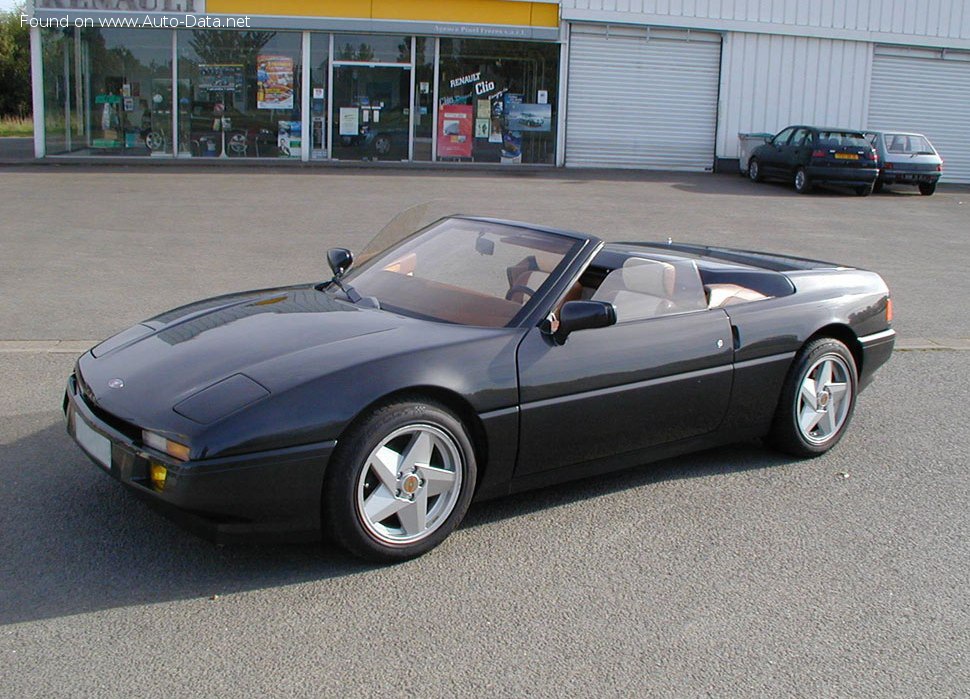
The Venturi 210 Cabrio 2.5 i V6, produced between 1990 and 1995, represented a significant offering from the small French manufacturer. Positioned as the flagship convertible within the 210 range, it aimed to combine performance and luxury in a relatively exclusive package. The 210 model line, built upon a steel backbone chassis, was Venturi’s attempt to create a grand touring sports car that could compete with established European marques. The Cabrio variant, specifically with the 2.5-liter V6 engine, was the more attainable version compared to the higher-performance, often turbocharged, models.
Venturi 210 Cabrio 2.5 i V6: An Overview
The Venturi 210 Cabrio 2.5 i V6 was designed to appeal to drivers seeking an open-top sports car experience with a focus on refined power and handling. It was a two-seater convertible, distinguished by its sleek lines and mid-engine layout. The car’s design was influenced by Italian styling houses, reflecting a desire to create a visually striking vehicle. Production numbers were limited, contributing to its relative rarity today. The 210 range, including the Cabrio, was intended to establish Venturi as a serious contender in the high-performance automotive market.
Powertrain & Engine Architecture
At the heart of the 210 Cabrio 2.5 i V6 lies a 2.5-liter, naturally aspirated V6 engine, designated as a PRV engine. This engine, a collaborative effort between Peugeot, Renault, and Volvo, was known for its smooth operation and respectable power output. The engine produced 210 horsepower at 5550 rpm and 289 Nm (213.16 lb-ft) of torque at 2500 rpm. It featured a 90-degree V-angle, contributing to its balance and refinement. The engine employed multi-port fuel injection and an overhead camshaft (OHC) valvetrain with two valves per cylinder. The engine was mounted longitudinally in the mid-engine position, contributing to a favorable weight distribution. The engine’s displacement was 2458 cm3 (150 cubic inches) with a bore of 91 mm (3.58 inches) and a stroke of 63 mm (2.48 inches). The compression ratio was 8:1.
The engine was paired with a 5-speed manual transmission, delivering power to the rear wheels. This configuration provided a direct and engaging driving experience. The gearbox was chosen to complement the engine’s characteristics, offering precise shifts and a sporty feel. The drivetrain architecture consisted of a rear-wheel drive setup, enhancing handling and providing a classic sports car driving experience.
Driving Characteristics
The Venturi 210 Cabrio 2.5 i V6 offered a compelling driving experience, characterized by its balanced handling and responsive engine. Acceleration from 0 to 60 mph was achieved in approximately 6.6 seconds, while 0-100 km/h took 6.9 seconds. The car’s top speed was rated at 245 km/h (152.24 mph). The mid-engine layout contributed to excellent weight distribution, resulting in neutral handling characteristics. The suspension, featuring double wishbones at the front and a spring strut setup at the rear, provided a comfortable yet controlled ride. The steering, a rack and pinion system with hydraulic power assistance, offered precise control and feedback. The car felt nimble and engaging on winding roads, making it a rewarding vehicle for enthusiasts.
Equipment & Trim Levels
The Venturi 210 Cabrio 2.5 i V6 was equipped with a range of features designed to enhance comfort and convenience. Standard equipment included leather upholstery, power windows, and central locking. The interior was designed with a focus on driver ergonomics, featuring well-placed controls and comfortable seating. Optional extras included air conditioning, a premium sound system, and upgraded interior trim materials. The dashboard layout was relatively simple and functional, prioritizing ease of use. The Cabrio variant featured a manually operated soft top, providing open-air driving enjoyment. The interior trim was generally well-appointed, reflecting the car’s positioning as a luxury sports car.
Chassis & Braking
The Venturi 210 Cabrio 2.5 i V6 utilized a steel backbone chassis, providing a rigid and lightweight foundation for the vehicle. The chassis design contributed to the car’s handling prowess and structural integrity. The suspension system, as mentioned previously, consisted of double wishbones at the front and a spring strut setup at the rear. The braking system featured disc brakes on all four wheels, providing ample stopping power. An Anti-lock Braking System (ABS) was included as standard equipment, enhancing safety and control. The car rode on tires sized 205/55 ZR16 at the front and 245/45 ZR16 at the rear, providing good grip and stability.
Market Reception & Comparison
The Venturi 210 Cabrio 2.5 i V6 received generally positive reviews from automotive critics. It was praised for its stylish design, engaging driving experience, and comfortable interior. However, it was also noted that the car’s price was relatively high compared to some of its competitors. Compared to other models in the Venturi lineup, such as the turbocharged versions, the 2.5 i V6 offered a more accessible entry point into the brand. It provided a good balance of performance and refinement, appealing to drivers who prioritized comfort and usability. Fuel economy was rated at 9.6 l/100 km (24.5 US mpg, 29.4 UK mpg, 10.4 km/l). Reliability was generally considered to be good, although parts availability could be a challenge due to the car’s limited production numbers.
Technical Specifications
| Brand | Venturi |
| Model | 210 Cabrio |
| Generation | 210 Cabrio |
| Type (Engine) | 2.5 i V6 (210 Hp) |
| Start of production | 1990 |
| End of production | 1995 |
| Body type | Cabriolet |
| Seats | 2 |
| Doors | 2 |
| Fuel consumption (combined) | 9.6 l/100 km |
| Fuel Type | Petrol (Gasoline) |
| Acceleration 0 – 100 km/h | 6.9 sec |
| Acceleration 0 – 62 mph | 6.9 sec |
| Acceleration 0 – 60 mph | 6.6 sec |
| Maximum speed | 245 km/h (152.24 mph) |
| Power | 210 Hp @ 5550 rpm |
| Torque | 289 Nm @ 2500 rpm (213.16 lb.-ft. @ 2500 rpm) |
| Engine layout | Middle, Longitudinal |
| Engine displacement | 2458 cm3 (150 cu. in.) |
| Number of cylinders | 6 |
| Engine configuration | V-engine |
| Cylinder Bore | 91 mm (3.58 in.) |
| Piston Stroke | 63 mm (2.48 in.) |
| Compression ratio | 8:1 |
| Kerb Weight | 1255 kg (2766.8 lbs.) |
| Trunk (boot) space | 150 l (5.3 cu. ft.) |
| Fuel tank capacity | 80 l (21.13 US gal | 17.6 UK gal) |
| Length | 4090 mm (161.02 in.) |
| Width | 1700 mm (66.93 in.) |
| Height | 1170 mm (46.06 in.) |
| Wheelbase | 2400 mm (94.49 in.) |
| Drivetrain Architecture | Rear wheel drive |
| Number of gears and type of gearbox | 5 gears, manual transmission |
Legacy
The Venturi 210 Cabrio 2.5 i V6, while not a high-volume seller, has gained a following among enthusiasts. Its rarity and unique design contribute to its appeal. The PRV V6 engine, while not without its quirks, is generally considered to be a reliable unit when properly maintained. Today, the 210 Cabrio 2.5 i V6 is a sought-after classic car, attracting collectors and drivers who appreciate its blend of style, performance, and exclusivity. Parts availability can be a concern, but a dedicated network of owners and specialists exists to support the preservation of these vehicles. The car represents a fascinating chapter in French automotive history, showcasing a bold attempt to create a world-class sports car.