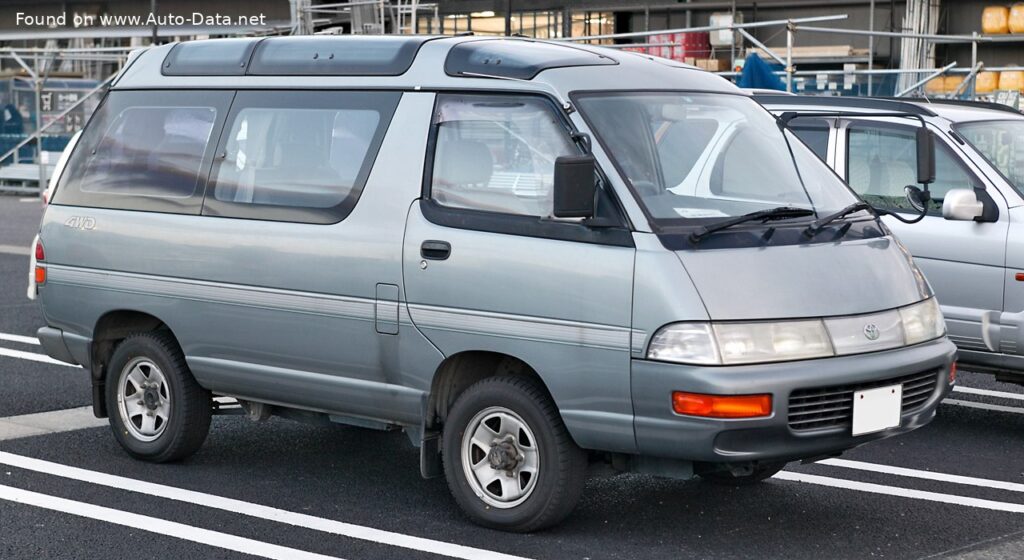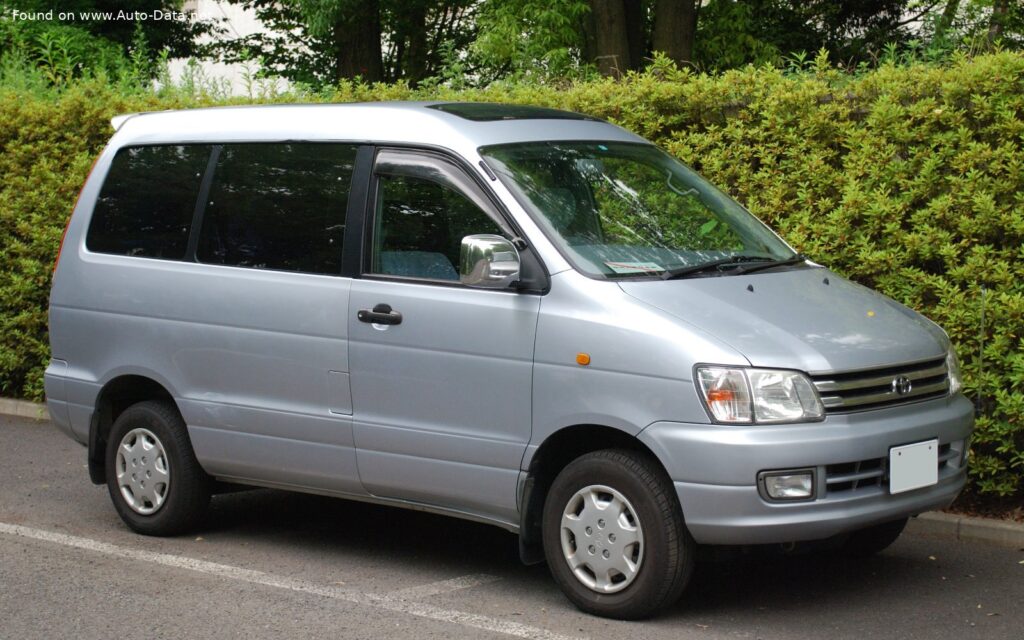
The Toyota Town Ace Noah 2.0 (130 Hp) Automatic represents a specific configuration within the third generation of the Toyota Town Ace Noah, produced between 1996 and 2001. This generation, designated as the 1996-2001 model year range, saw the Noah evolve into a more refined and spacious people carrier, targeting families and commercial users requiring flexible seating and cargo capacity. The 2.0-liter, 130 horsepower engine paired with an automatic transmission occupied a mid-range position within the Noah lineup, offering a balance between performance, fuel economy, and ease of use. It sat above the base models with smaller engines and below the more powerful, often turbocharged, variants.
Powertrain & Engine Architecture
The heart of the Town Ace Noah 2.0 Automatic is the 1RZ-FE inline-four cylinder gasoline engine. Displacing 1998 cc (121.93 cubic inches), this engine is a naturally aspirated unit known for its durability and relatively simple design. The 1RZ-FE utilizes a multi-port fuel injection system, delivering fuel directly to each intake port for improved combustion efficiency. The engine features a single overhead camshaft (SOHC) valvetrain with four valves per cylinder, contributing to a reasonable power output for its displacement. The engine’s architecture is a front-engine, longitudinal layout, a configuration common in rear-wheel-drive vehicles.
The automatic transmission paired with the 1RZ-FE is a four-speed unit. While not the most modern transmission by today’s standards, it was a reliable and widely used design during the vehicle’s production period. The transmission’s gear ratios are tuned for everyday driving, prioritizing smooth shifts and adequate acceleration rather than outright performance. First gear is relatively short for quick take-offs, while the higher gears are geared for comfortable highway cruising. The transmission is electronically controlled, offering adaptive shifting based on throttle input and vehicle speed.
Engine Specifications
The 1RZ-FE engine produces 130 horsepower at 5600 rpm and 181 Nm (133.5 lb-ft) of torque at 4400 rpm. This translates to a power-to-weight ratio of 9.8 kg/hp and a torque-to-weight ratio of 7.1 kg/Nm. The engine’s power per liter is 65.1 hp/l, indicating a moderate level of specific output. The engine is known for its relatively linear power delivery, making it predictable and easy to drive.
Driving Characteristics
The Town Ace Noah 2.0 Automatic delivers a comfortable and practical driving experience. The 130 hp engine provides sufficient power for typical urban and highway driving, although it’s not particularly sporty. Acceleration is adequate, but the vehicle feels most comfortable when driven at moderate speeds. The four-speed automatic transmission contributes to a smooth driving experience, but it can sometimes feel sluggish when attempting quick overtaking maneuvers. Compared to the lower-powered engines in the Noah lineup, the 2.0-liter version offers noticeably more responsive acceleration and better performance when fully loaded with passengers and cargo. However, it lacks the punch of the turbocharged variants, which provided significantly more power and torque.
The rear-wheel-drive configuration contributes to a stable and predictable handling characteristic. The vehicle’s relatively long wheelbase and wide track further enhance stability, particularly at highway speeds. The suspension is tuned for comfort, absorbing bumps and imperfections in the road surface effectively. However, this comfort comes at the expense of some handling precision, with noticeable body roll during cornering.
Equipment & Trim Levels
The Town Ace Noah 2.0 Automatic was typically offered in several trim levels, varying in features and interior appointments. Standard equipment generally included power windows, power steering, and air conditioning. Higher trim levels added features such as central locking, upgraded audio systems, and more luxurious interior upholstery. Interior materials were typically durable and practical, reflecting the vehicle’s intended use as a family or commercial vehicle. Seating configurations varied, with options for seven or eight passengers. The interior layout prioritized space and versatility, with sliding doors providing easy access to the rear seats. Optional extras included alloy wheels, a sunroof, and upgraded sound systems.
Chassis & Braking
The Town Ace Noah 2.0 Automatic features a torsion beam rear suspension, a cost-effective and space-efficient design. The front suspension utilizes a conventional torsion bar setup. This suspension configuration prioritizes ride comfort and load-carrying capacity over sporty handling. The braking system consists of ventilated discs on the front wheels and drum brakes on the rear wheels. This configuration was common for vehicles in this class during the 1990s. The braking performance is adequate for everyday driving, but it’s not particularly powerful. The vehicle’s curb weight of 1280 kg (2821.92 lbs) contributes to its stable handling and braking characteristics.
Market Reception & Comparison
The Toyota Town Ace Noah 2.0 Automatic was generally well-received by critics and consumers alike. It was praised for its spacious interior, comfortable ride, and reliable powertrain. The 2.0-liter engine was considered a good compromise between performance and fuel economy. Fuel consumption was rated at approximately 8 l/100 km (29.4 US mpg) in urban conditions. Compared to the smaller-engined models, the 2.0-liter version offered a noticeable improvement in performance, making it a more appealing option for those who frequently carried passengers or cargo. However, the turbocharged variants offered even more power and torque, albeit at a higher price point. The Noah competed with other Japanese minivans, such as the Honda StepWagon and the Nissan Serena.
Technical Specifications
| Body Type | Minivan, 4 Doors, 6 Seats |
| Engine Type | Inline-4, Gasoline |
| Engine Displacement | 2.0 l (1998 cm3 / 121.93 cu. in.) |
| Power | 130 Hp @ 5600 rpm |
| Torque | 181 Nm @ 4400 rpm (133.5 lb.-ft. @ 4400 rpm) |
| Fuel Type | Petrol (Gasoline) |
| Fuel Consumption (Urban) | 8 l/100 km (29.4 US mpg) |
| Transmission | 4-speed Automatic |
| Drivetrain | Rear Wheel Drive |
| Kerb Weight | 1280 kg (2821.92 lbs.) |
| Fuel Tank Capacity | 55 l (14.53 US gal | 12.1 UK gal) |
| Length | 4475 mm (176.18 in.) |
| Width | 1695 mm (66.73 in.) |
| Height | 1935 mm (76.18 in.) |
| Wheelbase | 2715 mm (106.89 in.) |
Legacy
The Toyota Town Ace Noah 2.0 Automatic has proven to be a durable and reliable vehicle, with many examples still on the road today. The 1RZ-FE engine is known for its longevity and relatively low maintenance costs. While the four-speed automatic transmission is not as sophisticated as modern transmissions, it has also proven to be reliable. In the used car market, the 2.0-liter version of the Noah is often sought after for its balance of performance and fuel economy. However, potential buyers should be aware of the vehicle’s age and potential maintenance needs. Common issues include wear and tear on suspension components and potential corrosion in areas exposed to harsh weather conditions. Overall, the Town Ace Noah 2.0 Automatic remains a practical and affordable option for those seeking a spacious and reliable people carrier.