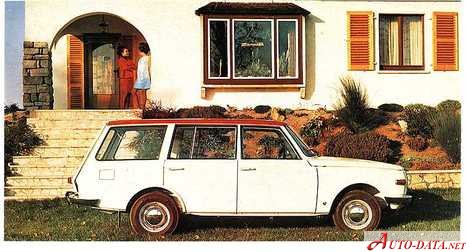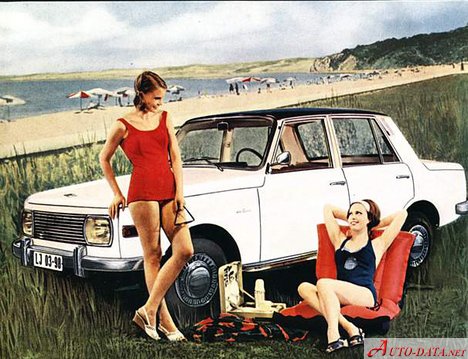
The Wartburg 353 1.0, producing 50 horsepower, was a significant variant within the broader Wartburg 353 range, manufactured between 1969 and 1975. Positioned as the entry-level model, it represented the most accessible option for consumers in the Eastern Bloc and export markets. The 353 itself was a product of the VEB Automobilwerk Eisenach, a state-owned automotive manufacturer in East Germany, and formed part of the larger effort to provide personal transportation within the communist system. It was built on a monocoque chassis and represented a modernization of the earlier Wartburg 311, though it retained the distinctive two-stroke engine technology that characterized the brand for decades.
Powertrain & Engine Architecture
The heart of the Wartburg 353 1.0 was its 992 cc (60.54 cu. in.) three-cylinder, two-stroke engine. This engine, designated as a variation within the broader Wartburg engine family, was notable for its unusual configuration. Unlike most automotive engines, it utilized a total-loss lubrication system, meaning oil was mixed with the fuel and burned along with it. This resulted in a characteristic smoky exhaust and relatively high oil consumption. The engine featured a carburetor fuel injection system, a common setup for the time, and an inline cylinder arrangement. The engine’s transverse mounting within the front-wheel-drive layout was also a defining characteristic. The 1.0-liter engine produced 50 hp (37 kW) at an unspecified RPM, and 76 Nm (56 lb-ft) of torque. The engine’s design, while simple and relatively inexpensive to manufacture, was inherently less efficient and produced higher emissions than contemporary four-stroke engines.
Transmission
The 353 1.0 was primarily equipped with a four-speed manual transmission. This transmission was synchronized on all forward gears, a feature that improved driving comfort and ease of use. The gear ratios were tailored to maximize the limited power output of the engine, prioritizing acceleration from low speeds over high-speed cruising. The transmission was mechanically operated, utilizing a traditional shift linkage. While an automatic transmission was briefly explored for the 353 range, it was never offered on the base 1.0-liter model due to cost and the limitations of the two-stroke engine’s torque characteristics.
Driving Characteristics
The driving experience in a Wartburg 353 1.0 was distinctly different from that of Western European or North American cars of the same era. The 50 hp engine provided modest acceleration, taking approximately 20 seconds to reach 100 km/h (62 mph). The engine’s powerband was narrow, requiring frequent gear changes to maintain momentum, especially when climbing hills or overtaking. The front-wheel-drive configuration provided reasonable handling, but the car was prone to understeer when pushed hard. The two-stroke engine’s unique sound and vibration were also prominent features of the driving experience. Compared to the later 1.3-liter versions of the 353, the 1.0-liter model felt significantly underpowered, making it less suitable for long-distance highway driving. The manual transmission, while basic, offered precise control, and the relatively light weight of the vehicle (920 kg / 2028.25 lbs) helped to mitigate the engine’s power deficit.
Equipment & Trim Levels
The Wartburg 353 1.0 was typically equipped with basic, functional interior appointments. Standard features included cloth upholstery, a simple dashboard with basic instrumentation (speedometer, fuel gauge, and temperature gauge), and manually operated windows and door locks. The interior was designed for practicality and durability rather than luxury. Trim levels were minimal; the 1.0-liter model represented the base specification. Optional extras were limited but could include a radio, a heated rear window, and upgraded upholstery. The exterior styling was relatively austere, with minimal chrome trim. The body was typically finished in a range of solid colors, with limited metallic paint options available.
Chassis & Braking
The Wartburg 353 1.0 featured an independent front suspension with coil springs and a rigid rear axle with leaf springs. This suspension setup provided a reasonable ride quality, although it was not particularly sophisticated. The front brakes were disc brakes, while the rear brakes were drum brakes. This combination was adequate for the car’s weight and performance, but lacked the stopping power of more modern braking systems. The steering was of the rack and pinion type, providing reasonably precise control. The car rode on 13-inch wheels with 170/70 R13 tires. Stabilizer bars were not typically fitted to the base 1.0-liter model, contributing to a slightly more pronounced body roll in corners.
Market Reception & Comparison
The Wartburg 353 1.0 was primarily marketed to consumers in East Germany and other Eastern Bloc countries. It was also exported to a limited number of Western European markets, where it was often positioned as a low-cost alternative to more established brands. Critics generally acknowledged the car’s affordability and practicality, but also noted its shortcomings in terms of performance, refinement, and fuel efficiency (despite the small engine size, the two-stroke design was inherently inefficient). Compared to the later 1.3-liter versions of the 353, the 1.0-liter model was significantly less desirable, particularly for drivers who frequently traveled on highways. The 1.3-liter models offered a noticeable improvement in performance and were generally considered to be a better overall value. The 353 1.0’s main competitors were other Eastern European cars, such as the Škoda 105/120 and the Zastava 750.
Technical Specifications
| Body Type | Sedan, 4 Doors, 5 Seats |
| Engine Displacement | 992 cm3 (60.54 cu. in.) |
| Engine Configuration | Inline 3-cylinder, Two-Stroke |
| Power Output | 50 Hp (37 kW) |
| Torque | 76 Nm (56 lb-ft) |
| Fuel System | Carburetor |
| Transmission | 4-speed Manual |
| Drive Wheels | Front Wheel Drive |
| Kerb Weight | 920 kg (2028.25 lbs) |
| Maximum Weight | 1320 kg (2910.1 lbs) |
| Maximum Speed | 150 km/h (93.21 mph) |
| 0-100 km/h Acceleration | 20 seconds |
| Trunk Space | 525 l (18.54 cu. ft.) |
| Fuel Consumption (estimated) | 8-10 l/100km |
| Tire Size | 170/70 R13 |
| Length | 4220 mm (166.14 in.) |
| Width | 1640 mm (64.57 in.) |
| Height | 1495 mm (58.86 in.) |
Legacy
The Wartburg 353 1.0, while not the most powerful or refined vehicle of its era, holds a significant place in automotive history as a symbol of East German engineering and the realities of life behind the Iron Curtain. The two-stroke engine, while technologically outdated, proved to be relatively durable and capable of withstanding harsh operating conditions. Today, the 353 1.0 is a relatively rare and sought-after classic car, particularly among enthusiasts of Eastern European automobiles. Its simple mechanical design makes it relatively easy to maintain and repair, although sourcing spare parts can be challenging. The 1.0-liter engine, while underpowered by modern standards, is generally considered to be more reliable than the larger 1.3-liter engine, which was prone to overheating. The car’s unique character and historical significance continue to attract a dedicated following, ensuring that the Wartburg 353 1.0 will remain a recognizable and appreciated vehicle for years to come.