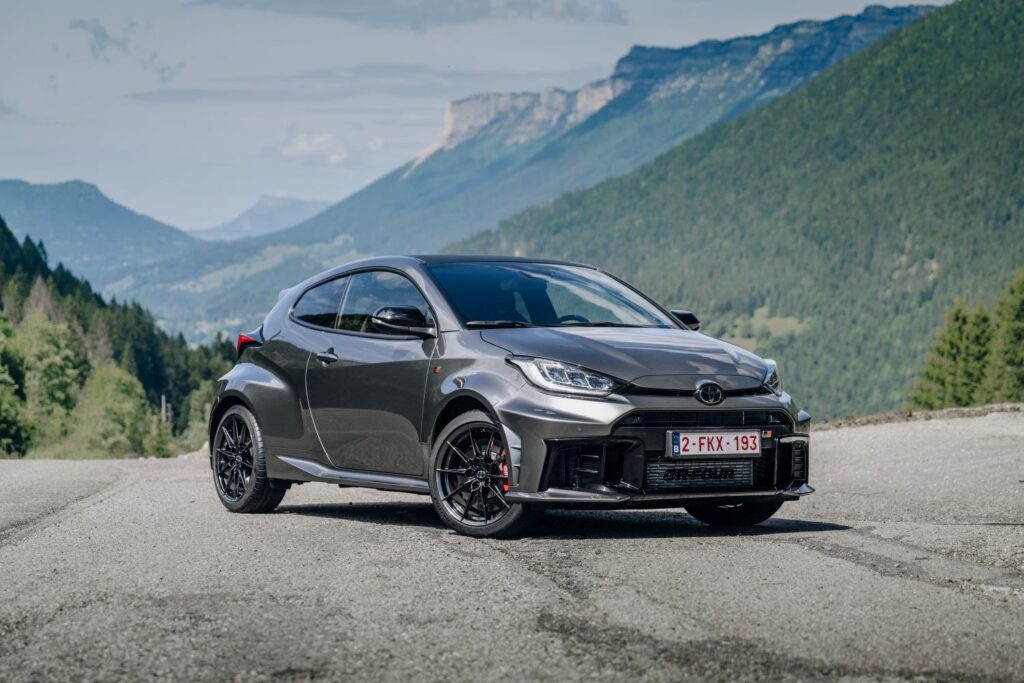
The Toyota Yaris GR 1.6 Turbo, introduced in July 2024 as part of the XP210 facelift, represents the high-performance pinnacle of the fourth-generation Yaris lineup. This variant, distinguished by its potent 280 horsepower engine and GR-FOUR all-wheel-drive system, is a significant departure from the standard Yaris models, targeting driving enthusiasts seeking a compact, yet capable, sports hatchback. It builds upon the foundation of the A3 platform (internally designated 1HX0) but incorporates substantial performance-oriented upgrades. The GR model is a three-door hatchback with seating for four, and is positioned as a direct competitor to vehicles like the Hyundai i30 N and Volkswagen Polo GTI.
Powertrain & Engine Architecture
At the heart of the Yaris GR is the G16E-GTS 1.6-liter turbocharged inline-three cylinder engine. This engine is not simply a modified version of the standard Yaris engine; it’s a completely new design, developed specifically for the GR model. It boasts a relatively high compression ratio of 10.5:1 and utilizes a combination of direct injection and multi-port manifold injection to optimize combustion efficiency and power delivery. The engine’s cylinder bore measures 87.5 mm (3.44 in) and the piston stroke is 89.7 mm (3.53 in), resulting in a displacement of 1618 cm³ (98.74 cu. in). The valvetrain employs a Dual Overhead Camshaft (DOHC) configuration with four valves per cylinder. A key feature is the use of a single-scroll turbocharger with an intercooler, which helps to minimize turbo lag and maximize boost pressure. The engine produces 280 hp at 6500 rpm and 390 Nm (287.65 lb.-ft.) of torque between 3250-4600 rpm, resulting in a power-to-liter ratio of 173.1 hp/l.
The GR is equipped with a 6-speed manual transmission, marketed by Toyota as an “iMT” (intelligent Manual Transmission). This isn’t a fully automated manual like some dual-clutch systems, but rather a conventional manual with software enhancements designed to improve shift feel and consistency. The iMT system subtly adjusts engine speed during upshifts and downshifts to create smoother transitions. Power is then distributed to all four wheels via Toyota’s GR-FOUR all-wheel-drive system. This system utilizes a multi-plate clutch to variably distribute torque between the front and rear axles, offering three driving modes: Normal (60:40 front/rear), Sport (30:70 front/rear), and Track (50:50 front/rear). This allows the driver to tailor the car’s handling characteristics to suit different driving conditions and preferences.
Engine Oil & Fluids
The G16E-GTS engine requires 4.3 liters (4.54 US qt | 3.78 UK qt) of engine oil, with a specific oil specification that is typically detailed in the owner’s manual. The cooling system holds 5.2 liters (5.49 US qt | 4.58 UK qt) of coolant. The engine also incorporates a Start & Stop System and a particulate filter to meet emissions regulations.
Driving Characteristics
The Yaris GR delivers a remarkably engaging driving experience. The combination of the turbocharged engine, all-wheel-drive system, and relatively lightweight construction (1280-1305 kg / 2821.92 – 2877.03 lbs.) results in impressive acceleration. The 0-100 km/h (0-62 mph) sprint takes just 5.2 seconds, while 0-60 mph is achieved in approximately 4.9 seconds. The GR-FOUR system provides excellent traction, allowing for confident cornering and acceleration even in challenging conditions. The three driving modes significantly alter the car’s behavior. In Normal mode, the car is relatively composed and comfortable for everyday driving. Sport mode sharpens throttle response and increases rear bias, making the car more playful. Track mode maximizes rear bias for optimal performance on a circuit. The iMT transmission, while requiring driver involvement, offers precise and satisfying gear changes. Compared to a standard Yaris, the GR is a completely different animal, offering a level of performance and handling that is far beyond the capabilities of the base models.
Equipment & Trim Levels
The Yaris GR is a performance-focused model, and as such, it comes with a relatively comprehensive standard equipment list. Interior features typically include sport seats with enhanced bolstering, a leather-wrapped steering wheel, and aluminum pedals. The dashboard layout is similar to other Yaris models, but with unique GR-specific accents and trim. Standard safety features include ABS (Anti-lock braking system), Vehicle Stability Control, and multiple airbags. Optional extras may include a premium audio system, navigation system, and various cosmetic enhancements. The GR trim is generally considered the highest specification available for the Yaris, focusing on performance rather than luxury.
Chassis & Braking
The Yaris GR features a reinforced chassis and a specially tuned suspension system to handle the increased power and performance. The front suspension utilizes an independent McPherson strut setup, while the rear suspension employs a double wishbone configuration. This provides a good balance of ride comfort and handling precision. The braking system consists of ventilated discs on all four wheels, with larger 356 mm discs at the front and 297 mm discs at the rear. The electric power steering system is calibrated for precise and responsive steering feel.
Market Reception & Comparison
The Toyota Yaris GR has been widely praised by automotive critics for its exceptional performance, engaging driving dynamics, and overall value. It has been lauded as one of the best hot hatchbacks on the market, often compared favorably to more expensive rivals. Fuel economy is rated at 8.3 l/100 km (28.3 US mpg / 34 UK mpg / 12 km/l), and CO2 emissions are 188 g/km (WLTP). Compared to the standard Yaris models, the GR offers significantly higher performance but at the cost of increased fuel consumption. The GR is also more expensive than the base models, but its performance capabilities justify the price premium for driving enthusiasts. Reliability is expected to be good, based on Toyota’s reputation for building durable and dependable vehicles.
Technical Specifications
| Body Type | Hatchback, 3 Doors, 4 Seats |
| Fuel Economy | 8.3 l/100 km, 28.3 US mpg, 34 UK mpg, 12 km/l |
| CO2 Emissions | 188 g/km |
| Acceleration 0-100 km/h | 5.2 sec |
| Acceleration 0-62 mph | 5.2 sec |
| Acceleration 0-60 mph | 4.9 sec |
| Maximum Speed | 230 km/h (142.92 mph) |
| Weight-to-Power Ratio | 4.6 kg/Hp |
| Weight-to-Torque Ratio | 3.3 kg/Nm |
| Power | 280 Hp @ 6500 rpm |
| Torque | 390 Nm @ 3250-4600 rpm (287.65 lb.-ft. @ 3250-4600 rpm) |
| Engine Layout | Front, Transverse |
| Engine Model/Code | G16E-GTS |
| Engine Displacement | 1618 cm³ (98.74 cu. in.) |
| Number of Cylinders | 3 |
| Engine Configuration | Inline |
| Cylinder Bore | 87.5 mm (3.44 in.) |
| Piston Stroke | 89.7 mm (3.53 in.) |
| Compression Ratio | 10.5:1 |
| Number of Valves per Cylinder | 4 |
| Fuel Injection System | Direct injection and Multi-port manifold injection |
| Engine Aspiration | Turbocharger, Intercooler |
| Valvetrain | DOHC |
| Engine Oil Capacity | 4.3 l (4.54 US qt | 3.78 UK qt) |
| Coolant Capacity | 5.2 l (5.49 US qt | 4.58 UK qt) |
| Kerb Weight | 1280-1305 kg (2821.92 – 2877.03 lbs.) |
| Max. Weight | 1645 kg (3626.6 lbs.) |
| Trunk (boot) Space | 174 l (6.14 cu. ft.) |
| Fuel Tank Capacity | 50 l (13.21 US gal | 11 UK gal) |
| Length | 3995 mm (157.28 in.) |
| Width | 1805 mm (71.06 in.) |
| Height | 1455 mm (57.28 in.) |
| Wheelbase | 2560 mm (100.79 in.) |
| Drivetrain | All wheel drive (4×4). Internal Combustion engine. |
| Number of Gears | 6 |
| Gearbox Type | Manual transmission iMT |
Legacy
The Toyota Yaris GR 1.6 Turbo is poised to become a modern classic among hot hatch enthusiasts. Its unique engine, sophisticated all-wheel-drive system, and engaging driving dynamics set it apart from its competitors. While long-term reliability remains to be fully assessed, Toyota’s reputation for building durable vehicles suggests that the GR powertrain should prove to be robust. On the used car market, the Yaris GR is expected to hold its value well, particularly among those seeking a high-performance, yet practical, hatchback.