
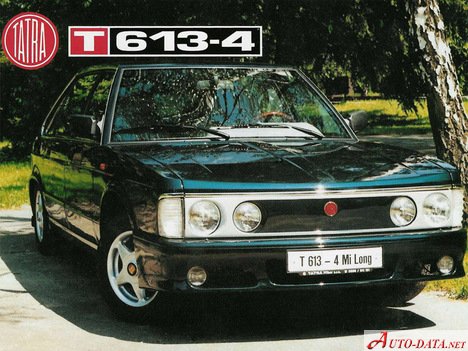
The Tatra T613-4mi 3.5 i V8 16V, produced between 1991 and 1996, represents a late iteration of the iconic Tatra T613 series. This model occupied the premium segment of the Tatra lineup, offering a blend of luxury, performance, and the unique engineering characteristics for which the brand was known. The T613 series, and specifically the 4mi variant, was built upon the backbone chassis design that Tatra had perfected over decades, offering a distinctive driving experience and a level of craftsmanship rarely seen in mass-produced automobiles. It was a flagship vehicle intended to showcase Czechoslovakian automotive engineering prowess.
Tatra T613-4mi: A Detailed Overview
The T613-4mi was the culmination of years of development, building upon the foundations laid by earlier T613 models. The “mi” designation signifies “modernizovaný” (modernized), indicating updates to the engine, interior, and overall refinement compared to previous versions. Production occurred during a period of significant political and economic change in Czechoslovakia, adding to the car’s unique historical context. The T613 was primarily intended for high-ranking government officials and party members, though a limited number were also available to private buyers.
Powertrain & Engine Architecture
The heart of the T613-4mi is its 3.5-liter, naturally aspirated V8 engine, designated as the 3.5 i V8 16V. This engine produced 200 horsepower at 5750 rpm and 300 Nm (221.27 lb-ft) of torque at 4000 rpm. The engine featured a 9.3:1 compression ratio and a dual overhead camshaft (DOHC) valvetrain with two valves per cylinder. Notably, despite the “i” designation, the engine utilized a carburetor fuel injection system, a somewhat unusual choice for a vehicle of this caliber in the early 1990s. This carburetor system, while maintaining a certain level of mechanical simplicity, contributed to the engine’s characteristic throttle response and sound. The engine was mounted longitudinally in the rear of the vehicle, a defining feature of Tatra automobiles. The rear-wheel drive configuration was standard.
The T613-4mi was exclusively offered with a 5-speed manual transmission. An automatic transmission was never offered on this specific variant. The gearbox was designed to handle the V8’s torque output and provide a relatively engaging driving experience. The rear-mounted engine and transmission layout necessitated a complex driveshaft arrangement, contributing to the car’s unique mechanical complexity.
Driving Characteristics
The driving experience in a T613-4mi is markedly different from that of a contemporary front-engined sedan. The rear-engine placement results in a distinct weight distribution, providing noticeable rear-end grip and a tendency towards oversteer. While not inherently unstable, the car requires a skilled driver to manage its handling characteristics effectively. The 200 hp V8 provides adequate performance, with a 0-60 mph time of approximately 9.5 seconds and a top speed of 230 km/h (142.92 mph). The carburetor-fed engine delivers a linear power curve, making it relatively predictable in its response. The 5-speed manual transmission allows for precise control over the engine’s power band. Compared to earlier T613 models, the 4mi offered improved refinement and a slightly more responsive engine, but it still retained the unique handling characteristics inherent to the rear-engine layout.
Equipment & Trim Levels
The T613-4mi was generously equipped, reflecting its status as a luxury vehicle. Standard features included power steering, ventilated disc brakes on all four wheels, and comfortable seating for five passengers. The interior was typically trimmed with high-quality leather and wood veneer, creating a sophisticated and luxurious ambiance. The dashboard layout was functional and well-designed, though it lacked the modern conveniences found in some contemporary vehicles. Optional extras included upgraded audio systems, electric windows, and a sunroof. The exterior was typically finished in a range of solid colors, with metallic paints available at an extra cost. The overall aesthetic was understated and elegant, emphasizing the car’s quality and craftsmanship rather than ostentatious displays of wealth.
Chassis & Braking
The T613-4mi utilized a robust chassis construction, featuring a central backbone structure that provided exceptional rigidity. The front suspension employed a spring-loaded rack system, while the rear suspension utilized an inclined lever design. This suspension setup was designed to provide a comfortable ride while maintaining good handling characteristics. The braking system consisted of ventilated discs on all four wheels, providing ample stopping power. Hydraulic power steering was standard, making the car relatively easy to maneuver despite its size and weight. Tire sizes were typically 205/55 R16 V or 225/50 R16 V, providing a good balance of grip and ride comfort.
Market Reception & Comparison
The T613-4mi was never a high-volume seller, due to its limited production and high price. It was primarily marketed to a select clientele, including government officials and wealthy individuals. Critics praised the car’s unique engineering, luxurious interior, and distinctive driving experience. However, some criticized its carburetor fuel injection system, which was considered outdated by the early 1990s. Compared to other luxury sedans of the era, such as the Mercedes-Benz S-Class or the BMW 7 Series, the T613-4mi offered a more unconventional and characterful driving experience. Its rear-engine layout and unique handling characteristics set it apart from its competitors. Fuel economy was relatively poor, at 12.5 l/100 km (18.8 US mpg), reflecting the engine’s displacement and the car’s weight.
Technical Specifications
| Brand | Tatra |
| Model | T613 |
| Generation | T613-4mi |
| Type (Engine) | 3.5 i V8 16V (200 Hp) |
| Start of production | 1991 year |
| End of production | 1996 year |
| Fuel consumption (economy) – combined | 12.5 l/100 km |
| Fuel Type | Petrol (Gasoline) |
| Acceleration 0 – 100 km/h | 10 sec |
| Acceleration 0 – 62 mph | 10 sec |
| Acceleration 0 – 60 mph | 9.5 sec |
| Maximum speed | 230 km/h |
| Weight-to-power ratio | 9.1 kg/Hp |
| Weight-to-torque ratio | 6 kg/Nm |
| Power | 200 Hp @ 5750 rpm |
| Torque | 300 Nm @ 4000 rpm |
| Engine layout | Rear, Longitudinal |
| Engine displacement | 3495 cm3 |
| Number of cylinders | 8 |
| Engine configuration | V-engine |
| Cylinder Bore | 85 mm |
| Piston Stroke | 77 mm |
| Compression ratio | 9.3:1 |
| Number of valves per cylinder | 2 |
| Fuel injection system | Carburettor |
| Engine aspiration | Naturally aspirated engine |
| Valvetrain | DOHC |
| Kerb Weight | 1810 kg |
| Max. weight | 2260 kg |
| Max load | 450 kg |
| Trunk (boot) space – minimum | 430 l |
| Fuel tank capacity | 72 l |
| Length | 5130 mm |
| Width | 1800 mm |
| Height | 1505 mm |
| Wheelbase | 3130 mm |
| Front track | 1532 mm |
| Rear (Back) track | 1532 mm |
| Drive wheel | Rear wheel drive |
| Number of gears and type of gearbox | 5 gears, manual transmission |
Legacy
The Tatra T613-4mi represents a fascinating chapter in automotive history. While its production numbers were limited, the car has gained a devoted following among enthusiasts who appreciate its unique engineering, luxurious interior, and distinctive driving experience. Today, the T613-4mi is a sought-after classic, with well-maintained examples commanding high prices. The powertrain, while not known for exceptional reliability compared to some contemporary engines, is generally robust when properly maintained. The car’s complex mechanical systems require specialized knowledge and expertise, making it essential to find a qualified mechanic for servicing and repairs. The T613-4mi stands as a testament to the ingenuity and craftsmanship of Czechoslovakian automotive engineers, and it continues to captivate enthusiasts around the world.
